
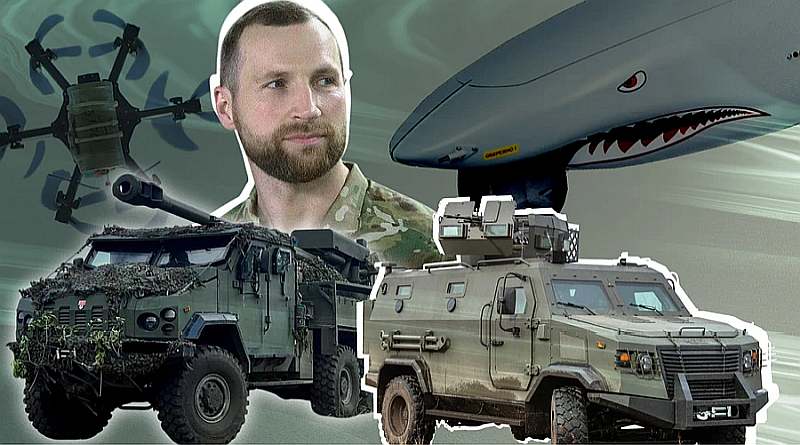
Bohdan Miroshnychenko / Defense Industry
Armament production has numerous problems: short contracts, procurement scandals involving ammunition and other complex equipment, inefficiencies in drone procurement, flawed quality control and company capabilities, non-functional export rules, lack of funding, etc. All these factors ultimately lead to poor support for troops on the front line.
Neither Mykhailo Fedorov nor any other “half-year defense minister” has been able to come close to solving these issues.
To be fair, this task is exceedingly difficult. To conduct deep reforms, the head of the defense department needs not only to advocate bright ideas with a mandate from Zelensky but also to find a complex balance between military command, the president’s office, deputies, the National Security and Defense Council, arms associations, international partners, and combat individual corrupt groups with strong media and political influence.
Due to personal mistakes, system resistance, or simply a lack of time in office, Fedorov could not resolve all the pressing issues in the sector, so this “burden” passes to his successor – Yevhen Khmara.
Khmara takes over the Ministry of Defense during an extremely tense period. Defense companies are worried about delayed contracting, the military awaits clarity on the supply of shells, drones, and vehicles for the second half of the year, and international transfers of weapons and technologies for export have been blocked due to improperly drafted resolutions. Ahead is a possible new wave of mobilization in the Russian Federation, and thus the system must work steadily. With or without Fedorov.
“Defense Industry” surveyed manufacturers, arms associations, military personnel, and Ministry of Defense representatives. We reveal the chronic issues remaining in the Ukrainian defense complex and the challenges the new minister faces.
Nearly Disrupted Tenders
Transferring armament procurement to tender procedures was almost the main “armament” reform of the former leadership of the Ministry of Defense. Tenders are not Fedorov’s innovation – such procedures have long been in place in the Defense Procurement Agency. However, Fedorov’s team decided to implement them more widely. How does it work?
Currently, procurement mostly happens “by name,” meaning the General Staff names a specific drone from a specific defense manufacturer that needs to be purchased, and the Defense Procurement Agency (DPA) contracts it. This scheme is effective in terms of speed, but it creates corruption risks and kills competition.
Tenders imply that the command will only provide technical specifications, and the Ministry of Defense will independently seek contractors. This was supposed to lower prices and improve transparency for international partners investing billions of dollars in Ukrainian armaments production.
It was expected that by summer, the Ministry of Defense would start mass contracting through tender procedures, but the technical specifications for these procurements were delayed. In the DPA, the “Defense Industry” stated that as early as June, they appealed to the Ministry of Defense to provide the technical specifications, as “the situation was close to critical.”
As of mid-August, the Agency was provided with a very small portion of the TTP for procurement. This prompted associations to issue a public warning about the potential disruption of weapon supplies by the end of 2026.
However, the situation was not as dramatic as it seemed to the associations. In fact, weapon contracting never stopped, even for a week, and continues to this day. The AOZ noted that some of the funds allocated for tenders were redirected to “by name” purchases. This means the Ministry of Defense continued to sign contracts under the old procedure until the new one was launched. Various manufacturers confirmed to “Oboronka” that contracting was actively ongoing in July.
At the same time, some funds were left hanging. The publication “Babel” writes that the Ministry of Defense is currently operating with funds from a European loan, and thus partners have certain transparency requirements. Therefore, tenders must start working as soon as possible.
The TTP for tenders was supposed to be prescribed in the newly created Ministry of Defense Competence Centers. These structures were to work in close cooperation with military command. Industry interlocutors with “Oboronka” insist that these centers are launching very slowly and are critically understaffed. A common opinion in the market is that bureaucratic resistance to these centers’ operations was exerted by the General Staff, which allegedly did not want to support the implementation of the new initiatives.
Overall, it seems that Fedorov’s team set an excessively high bar for the speed of changes. As a result, the system began to fail for various reasons.
Importantly, after Fedorov’s dismissal, the tender implementation process he initiated did not stop. Two events coincided in mid-August. First, manufacturers finally lost patience, and a public scandal began about the procurement failure. Second, personnel changes occurred in the General Staff following the appointment of Drapaty as the new Commander-in-Chief. Under market pressure and with the support of the new military leadership, the Ministry of Defense began to quickly issue TTP for tenders.
“Today, a nearly magical Saturday happened at the Ministry of Defense. The vast majority of TTP, which the market had been waiting for months, were approved literally last evening and this morning and forwarded for procurement launch. Some contracts that had been awaiting signing for a long time suddenly moved forward,” wrote Igor Fedirko, Director of the Ukrainian Council of Gunsmiths.
Hope has emerged that tenders will indeed soon become widespread. However, since this is happening with a delay, manufacturers will have significantly less time to fulfill contracts by the end of the year. Therefore, the fate of deliveries for the second half of the year continues to be decided and will now depend on the Ministry of Defense’s ability to quickly issue advances, and the defense companies’ ability to accelerate production.
The situation is complicated by the departure from the position of AOS head Arsen Zhumadilov. The change in the procurement body’s team may mean a temporary paralysis of its work while new leaders get up to speed. In a comment to “Oboronka,” Zhumadilov said he does not plan to take the team with him, so key managers may remain in their positions if the Ministry of Defense can motivate them to stay.
“We had very little ‘manual operation,’ and much was algorithmized and defined by our guiding documents. So even when I leave, everything will continue to work. I am absolutely confident of this,” Zhumadilov assures.
“Long” Shells, Short Contracts
Drones undoubtedly dominate the battlefield and have largely replaced artillery. However, heavy howitzers still remain irreplaceable in many combat situations: inclement weather, area bombardments, concentrations and fortified positions, stopping assaults, and “seepage” in plantings, the need for rapid target destruction, suppression fire, etc.
Meanwhile, enemy drones are reaching farther. The kill zone in some areas already reaches 20 km, while a standard 155 mm shell fires up to 14 km. It has become obvious that artillery needs to be equipped with longer-range shells. In 2026, Defense Minister Fedorov gave total preference to long-range shells of 30+ km, which he publicly stated several times. What’s the risk here?
For starters, a brief overview. There are dozens of different types and brands of 155 mm shots. For example, the standard M107 shoots 14-18 km depending on the powder charge. The M795 reaches 22.5 km, L15 up to 30 km, and there are extended-range shells like the HE ER-BT, which can hit all 35 km. The shell’s range mainly depends on the quantity and quality of the powder.
The most common shell in the world is the “short” M107 at 14 km, which is well-supplied to Ukrainian troops and provided by international partners, but using them is dangerous due to their short range. However, the higher the shell’s range (18, 22, 30, 35 km), the more scarce it is on the global market. This is all due to powder charges, which are contracted worldwide for many years in advance.
“The price of long-range powder today reaches $300 per kg, whereas before the big war it cost $30. Buying directly from manufacturers is very difficult—you have to look for various speculators who earn 300% on each contract. Today, a long-range shot costs about $5500, of which $3600 is the powder charge,” said a source involved in artillery ammunition production in a comment to “Oboronka.”
Ukraine does not have its own production of long-range powders, and 1 billion UAH, allocated by Brave1 for explosives, is certainly insufficient to build such a complex enterprise. “When Ukraine builds its own powder production, a long-range shell will cost not $5,000, but $2,000,” he said.
According to the mentioned interlocutor, to diversify risks, it was necessary to contract not only the longest-range shells, as the Ministry of Defense does, but to proportionately purchase shells of different types for different distances (besides the basic 14-kilometer ones), thus gradually increasing the range of artillery fire. If Ukraine relies solely on long-range ammunition, there is a risk of under-supply both in contracts and international assistance. As a result, a deficit may arise, and the military may once again end up with “short” M107s.
There is also a military logic for purchasing ammunition of various ranges, not just 30+ km. The artillery themselves say that supplies should not consist only of the longest-range ammunition. This is due to the fact that long-range shells are much more expensive (and therefore there are fewer of them), they are less accurate, significantly wear out the barrel resource, and overheat the artillery installation, hindering the ability to make many shots.
“Ideally, the proportion should be: 33% long-range at 30+ km, 33% medium range at 22+ km, and 33% M107 at 14-18 km. A commander should have different options depending on tasks and combat conditions,” said to “Defense” the commander of the 7th Artillery Brigade of the NGU “Gregit” Vitaliy Kornienko, pseudonym “Hephaestus”.
Even if we assume that international partners will help provide the Defense Forces with shells of various ranges, Ukraine itself makes agreements with its own producers in such a way that the risks for supply only increase. This is primarily about the length of contracts.
The tender for long-range shells in 2026 was concluded only by the beginning of summer, and the company must deliver the products by the end of the year. This means companies have 7 months to contract components and produce batches of some of the world’s most deficient shells, having the shortest possible planning horizon.
“The market for powders today is a seller’s market. It’s a product needed like hotcakes around the world – there’s a huge queue for it. And if you want to be at the beginning of the queue now, you should have thought about it last year. And for supply next year, you should have thought about it in March,” a munitions manufacturer told “Defense”.
Standard contracts “until December 31” leave little room for production optimization, response to force majeure (such as missile strikes or powder supply disruptions), and force buying components in smaller quantities, of lower quality, and much more expensive than could be the case with long-term prepayments.
Currently, AOZ is preparing to conduct another tender for shells. Interviewed market representatives fear that it will again be announced “until December 31,” and then no contractor will be able to meet the deadlines.
The issue of short-term contracts is not new, and so far no defense minister has managed to resolve it. This affects manufacturers not only of munitions but also any complex weaponry with a long production cycle. The short planning horizon is linked to the rapid obsolescence of technology on the front lines and legislative inconsistencies that have remained unresolved for years. Although some Ukrainian products are becoming more complex, which requires effective production to be contracted for at least 12-18 months.
The Ministry of Defense previously reported the implementation of long-term contracting, but in practice, it does not work. “Oboronka” wrote in detail about this issue in a separate article last year—little has changed since then.
Manufacturers are trying to compensate for the short length of contracts by investing their own profits into pre-ordering components. Essentially, they begin producing products without certainty of purchase. These resources could have been invested in product development or building backup production capacities for emergencies.
Medical Evacuation Without Vehicles
In 2026, an odd situation arose with the provision of transport for medical evacuation teams. According to “Oboronka,” the state, albeit with significant delay, contracted tens of thousands of ground robots (NRC), but throughout the year almost did not sign new contracts for armored vehicles.
There is a widespread belief that frontline evacuations will now be conducted exclusively using ground robotic complexes, but this is incorrect. In reality, different types of transport are needed for evacuating the wounded. Ideally, an armored vehicle should work in tandem with the NRC. The robot traverses the most critical section with the wounded, and then an armored vehicle quickly takes over to avoid drone threats.
“Due to very delayed evacuations, many side effects occur in the wounded. For instance, worsening hypothermia and hemorrhagic shock due to loosened tourniquets. Therefore, it is better if the wounded receive aid already in transit.
In our armored vehicle, there is artificial ventilation, patient monitoring, external defibrillation devices, and a cardiopump. Numerous times, we have picked up wounded and begun blood transfusions and cardiopulmonary resuscitation already in the vehicle.
Thanks to the fact that an armored vehicle is sent to the NRC with the wounded, we can slightly adjust the point where the crew will pick up the wounded. If the wounded cannot be reached and loses consciousness in the NRC capsule, the armored vehicle must meet them and provide assistance more quickly. And since the evacuation group is in an armored vehicle, we can take that risk,” said “Oborontsi” commanders of the First Separate Medical Battalion who evacuate the wounded to the NRC.
Therefore, to evacuate the wounded, units must be equipped with enough armored vehicles so that the military does not keep them “for a rainy day” and are not afraid to aggressively drive them to meet the NRC in case of threat or to independently complete a task if needed. Currently, the military interviewed by “Oborontsi” from different front sections indicate that “armor” is in significant shortage.
From its own sources, “Oborontsi” knows that negotiations have been ongoing with one of the partner countries since the beginning of the year to finance the production of a large number of Ukrainian medical armored vehicles. “Oboronka” contacted the responsible deputy in the Ministry of Defense about the status of this project but did not receive a reply.
The second issue is that the state mainly contracted electric NRCs for evacuation, which often move at a walking speed. Besides the fact that the NRCs started arriving at the front with delays, the military often criticizes the concept of evacuating the wounded in such vehicles, as it poses a significant risk.
“Please understand that a modern NRC is usually unsuitable for evacuating the wounded! It is a means for evacuating the bodies of the deceased, nothing more. It’s a solution applied out of desperation due to the lack of proper means. There’s nothing else. In this matter, we have a complete functional failure,” wrote Igor Lutsenko, a military member and co-founder of the “Center for Aerial Reconnaissance Support”.
There is a faster NRC “Maul” on the market, which operates on a hybrid engine and evacuates the wounded from the danger zone much more quickly. Although it proved its effectiveness last year, mass supplies of this means or its analogs under state contracts have not occurred.
Commander of the unmanned systems control platoon of the “Da Vinci Wolves” battalion of the 59th Brigade of the Armed Forces of Ukraine, Oleksandr Yabchanka, told “Oborontsi” that not all “fast” NRCs are suitable for evacuation, as not all areas have smooth roads and stable communication, meaning the operator may not be able to physically reach high speed. There are combat situations where the use of slower electric models may be appropriate.
But in any case, different transport is needed for medical evacuation for various tasks and in sufficient quantities. You cannot focus on one thing, especially when talking about experimental types of weaponry. The lack of money is hardly an argument, as a soldier’s life saved even economically costs the budget more than any armored vehicle. Not to mention the ethical side of this issue.
“I want to have slow electric but predictable NRKs like the “Thor,” I want to have fast NRKs like the “Maul,” I want to have buggies. We need enough medical armored vehicles for the second stage of evacuation, and they are currently 80% deficient. If we increase the number of NRKs and armored vehicles, we will increase the survivability of soldiers on the front line by 30% and reduce evacuation time to three hours instead of eight,” said “Defenders” Chief of Medical Service of the 2nd Corps of the National Guard of Ukraine “Khartyya” Bohdan Korylchuk.
Failed Export
As is known, the capabilities of Ukrainian weapons manufacturers are only about half loaded. Therefore, defense companies are asking to open arms exports to be able to earn on the global market and invest this money in product and production development. Manufacturers are also asking to open technology transfers to be able to open companies abroad, form new partnerships, and attract more Western funds into the production of their products for the Defense Forces. This is especially relevant in conditions of lack of state orders and the need to technologically develop equipment faster than the Russians.
The political issue of export has already been resolved. The President clearly stated a year ago: it needs to be opened. But since then, different centers of power have been unable to agree on a specific mechanism. It is unclear who is responsible for opening exports: the Ministry of Defense, the Ministry of Economy, the National Security and Defense Council, or separate strategic advisors of the President’s Office with unclear powers.
Since Zelensky’s statement, rules have changed at least twice, and none have worked properly. Because of this, the matter has effectively stalled while Ukraine’s niche in the world market is gradually occupied by Western companies.
A vivid example of this is the plant of the company “Ukrspecsystems” in Britain, whose opening was announced at the level of an international delegation and ambassador; everyone already thinks it is operational, but in fact, the enterprise still cannot start operation due to inability to obtain a technology transfer permit.
Fedorov’s team made their attempt to resolve the export issue, but their new decree turned out to be extremely problematic. Weapons and components were decided to be subjected to an export duty of 20-30%, called an administrative fee. This effectively kills the competitive advantages of Ukrainian manufacturers. The export itself was strictly limited to countries signatories of the Drone Deal, which is not characteristic of the domestic weapons market. Other reasons why this decree is non-functional were described in a separate article by “Oboronka”.
Such highly regulated rules are related to the fact that several different centers of influence worked on opening exports. After Fedorov’s departure, the process of making amendments stopped.
“The discussion platform on the export regulation has now moved to the office of the head of the NSDC. Associations are preparing their own proposals for amendments to the regulation. We hope that when they are ready, the Ministry of Defense will take these comments into account in the new version of the mechanism,” said “Oboronka” the executive director of the National Association of Defense Industry of Ukraine (NAUDI) Serhiy Honcharov.
Quality Control Reform Continues
Military personnel often interviewed by “Oboronka” complain about the lack of logic and quality control in the supply of various types of drones and electronic warfare equipment. Retrofitting equipment from the box and replacing components at their own expense has become such routine practice that separate positions have begun to be allocated for it in units.
The complexity and variability of products are gradually increasing, the range of products is expanding, and they are becoming more modern. The task of the Ministry of Defense is to make the quality control system and the capabilities of manufacturers work effectively and keep up with the times.
In Fedorov’s office, their own reform was being prepared, and heated discussions continued in the market around this. “Oboronka” sources in the Ministry of Defense reported that the process is currently continuing, although it has noticeably slowed down due to personnel changes.
* * *
All the mentioned problems can be summarized in one sentence – the lack of a national strategy for the defense industry complex. Currently, in Ukraine, it is institutionally unclear who should think about the chronic problems of weapons production and promote their solution at all levels of government.
“There should be people who are engaged day and night in the structural problems of the defense industry sector, determine priorities and future directions. So far, there is no corresponding systematic work,” summarized the head of the association “Technological Forces of Ukraine” Anastasia Mishkina.
Collage: Oboronka
