
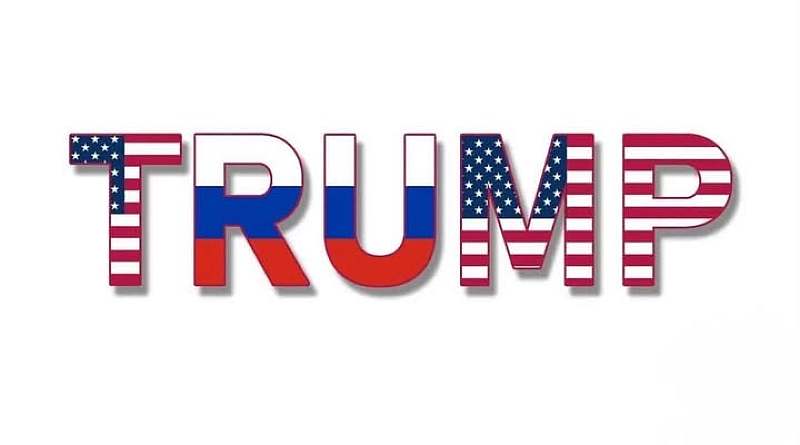

The most cynical and foolish decisions are usually made by rulers on Saturday night. Before the weekend, when people are already resting, and public attention is scattered. As we can see, this rule applies in any country.
Late in the evening on Friday, October 16, Trump effectively suspended the application of key sanctions against Russia by decree, as provided by the law of the late Senator Lindsey Graham, which he himself signed on September 18. Meanwhile, the provisions of the law regarding Iran continue to apply.
Initially, this much-suffering bill was blocked in Congress for over a year, then it was rewritten. Iran was added to the sanctions against Russia, third countries, and companies that help circumvent restrictions and finance the Russian war machine.
Now the application of a significant part of the new sanctions against Russia is on pause. Trump used the waiver mechanism provided by the law with the wording that at this stage it corresponds to the national interests of the USA.
This is not just inconsistency and chaos. And not just election tricks to save the Republican Party from falling ratings.
This is an actual weakening of sanctions pressure on Russia, the possibility to continue trading oil, receiving billions for war, purchasing the necessary equipment and parts for the military-industrial complex through intermediaries. Against the backdrop of previous Washington decisions regarding Russian diesel, it is also a dangerous signal of readiness to resume direct economic ties with the aggressor state.
And this is truly terrible.
Democratic congressmen have already condemned this blatant playing into Putin’s hands and his aggressive policy. Some Republicans had also previously expressed concern over the weakening of sanctions against Russia. But it is deep night in America now, and we will still see the reaction to the latest decision of the White House.
A week ago, during a meeting with a bipartisan US Congress delegation, Republicans and Democrats spoke with great enthusiasm about the need to strengthen sanctions against Russia. And I think the latest flips of the White House cause genuine shock to many of them.
Unfortunately, even a change in the configuration of Congress after the midterm elections does not guarantee the stoppage of the processes of legitimizing Russia that have been launched now. Congress has important legislative and oversight powers, but not all administration decisions can be blocked by parliamentary tools.
Stopping this dangerous process can primarily be achieved through powerful political and societal pressure, to which the White House must respond.
Therefore, all pro-Ukrainian organizations, friends of Ukraine, our partners, and lobbyists must focus on conveying to the American public how the rehabilitation of Putin harms American interests themselves.
The weakening of Russia is not only a question of Ukrainian but also American security. The rehabilitation of the Kremlin strengthens the axis of authoritarian regimes, disrupts the world order, encourages new aggressions, and undermines the role of the US as a guarantor of international security.
And, of course, a question for the Ukrainian negotiating team: how did it happen that Dmitriev and Co. turned out to be more effective in influencing American negotiators who form positions and influence Trump’s decisions?
Why do Russian representatives have the opportunity to promote their interests in Washington, while Ukrainian diplomacy failed to prevent decisions that essentially ease the Kremlin’s funding of the war?
A separate question: where is the Ukrainian ambassador to the US? Who should now be actively engaged in Congress, coordinating the work of Ukrainian lobbyists and pro-Ukrainian organizations, mobilizing all our friends — both Republicans and Democrats.
Where is the inter-parliamentary friendship group, whose representatives were allowed into Congress in previous years only by Yermak’s order? Where is the systematic parliamentary diplomacy that Ukraine needs now more than ever?
We need urgent consultations with American lawmakers from both parties, coordination with European allies, and a joint strategy to counteract the dangerous rehabilitation of Russia.
These are difficult times that require very measured and professional diplomacy, uniting with new allies, and seeking unconventional steps.
We need diplomacy in action. Not a monopoly on foreign policy, but a unification of everyone who has international experience, contacts, and the trust of our partners.
Zelensky must finally meet with his predecessors and parliamentary faction leaders to think together about how to act in the new international reality. Because now the issue is not about political ratings, personal ambitions, or who competes with whom.
The issue is how to preserve Ukraine.

Late on Friday, Donald Trump announced the lifting of virtually all sanctions and tariffs from Russia under the Lindsey Graham Act, which Trump himself signed a month ago. Sanctions against Iran remain in place.
By October 18, Trump had to notify Congress of his decision — and he announced it.
“With this order, I revoke the application of sanctions, restrictions, and tariffs under the Graham Act. I have submitted official confirmation to Congress that the lifting of these measures at this stage is in the national interests of the United States,” said the president’s decree on the White House website.
“Donald Trump has once again shown he sides with a bloodthirsty dictator and those supporting Russia’s war, rather than with the majority of Americans, Congress, and America’s European allies,” responded Democratic Senator Richard Blumenthal, who worked with Lindsey Graham on creating this law. – “Lifting sanctions has nothing to do with U.S. national security. The purpose is to appease Vladimir Putin. I hope my Republican colleagues will join me in condemning this shameful and cowardly step.”
I have not yet seen statements from Republicans.
Obviously, Trump announced this late on a Friday before the weekend for a reason. In America, it’s a tradition to make loud and unpopular statements at such times, when media and public attention is usually lower. It seems to be one of the favorite traditions of the Trump administration. And I suspect that before the new Congress session begins in January, we will see more such surprises on Friday evenings.

Suspension of the “hellish sanctions” does not reduce global uncertainty.
The approach of the U.S. Congressional midterm elections, scheduled for November 3, forces the White House to make decisions where economic feasibility begins to prevail over consistent sanctions rhetoric.
Donald Trump signed an order to suspend the 100-percent duties on goods from the largest buyers of Russian oil and gas, which were set to be implemented on October 18. Simultaneously, additional 500-percent tariffs on imports from the Russian Federation were frozen, preventing the escalation into an uncompromising trade war.
The main reason for such a sharp turn lies in the American administration’s feverish effort to reduce prices at U.S. gas stations, as rising fuel costs affect Trump voters’ wallets and lower the Republican Party’s ratings.
Strict tariff restrictions would inevitably clash with agreements with Vladimir Putin concerning the supply of Russian diesel fuel to the international market.
The attempt to punish third countries for purchasing energy resources from Russia, while simultaneously urging them to increase purchases, would push global prices up, destroying Washington’s already fragile plans to stabilize the fuel sector.
The American strategy is based on redistributing global flows, whereby Russian diesel does not necessarily need to head directly to U.S. ports. When other countries actively purchase fuel from Russia, their need for products from other global producers decreases, allowing freed-up volumes to be redirected to American consumers and effectively relieving price pressure.
The White House expects that such logistical reshuffling will help avoid sharp shortages at gas stations in the most populous states, where voter sentiment traditionally shifts just days before the election. At the same time, Washington is trying to maintain a balance between political declarations and the hard status quo: the global energy market turns out to be much more complex than any election slogans.
In practice, the permission to trade does not automatically saturate the market because a real drop in prices requires a physical increase in supplies.
Moscow has partially lifted its own export ban and allowed 500,000 tons of diesel to be exported, but this measure only partially meets buyers’ needs.
Carriers and traders are forced to factor in the risk of a potential reversal of Washington’s course, as the Graham law passed by Congress remains in effect. The political decision to suspend measures can be reviewed at any moment, should the pre-election dynamics or diplomatic context require the White House to revert to a tough stance.
In conditions of high prevailing uncertainty, global traders prefer to act with maximum caution, reluctant to conclude long-term contracts without reliable legal guarantees. Ultimately, the suspension of “hellish sanctions” does not solve the current energy problems of the U.S., but sends Putin and his regime signals of weakness from Western counterparts, which automatically lead to the activation of catastrophic attacks by the Russian aggressor against embattled Ukraine.

Almost 2 years ago, speaking at the Kyiv Security Forum, I specifically talked about how, after the election of the new administration in the United States of America, Europeans and free democratic countries in general, together with Ukraine, should act as if the United States is no longer in the security balance on the side of the free world. And at the same time, of course, they should try to bring America back on their side, work on this. But probably, at the time, few took these words seriously.
Today, we see that the President of the United States of America has decided to use a loophole in the long-awaited and loudly advertised Lindsey Graham law. Apart from strict sanctions against Russia and those who assist the Russian Federation in its aggressive war against Ukraine and the free world, the law contained provisions that allowed exceptions. Trump used these provisions and indefinitely lifted part of the sanctions against the Russian Federation. He also sent Congress a justification in which he somehow explained that this decision is in the national interests of the United States of America.
What does this mean for us? What does this mean for Europe?
Unfortunately, this means that the current United States administration will continue to play into Moscow’s hands and pressure us in the near future. And this is despite senators urging Trump to impose sanctions against Russia and cancel this diesel deal, and congressmen expressing a similar position. They could not persuade him.
Putin aims to undermine the West from within. By acting in this way, the American administration not only assists the aggressor but also undermines the very foundations of the United States’ national security.
By allowing Russia to earn additional funds, the current American administration helps Moscow conduct a genocidal war against Ukraine. It also indirectly contributes to the aggressor country’s further attempts to destroy European unity and capacity—through terrorist acts, sabotage, diversions, financing right- and left-radical political forces.
The window of opportunity for us is very, very short.
This means that today we must appeal to the societies of countries that are under threat just as we are, with arguments about the need not just to continue supporting Ukraine but to radically change the mindset and realize: without Russia’s strategic defeat, we will not emerge from this war. There will be no future—a stable, prosperous, capable of developing future—for Europe.
No one—neither the European Union nor individual countries of the European continent—will be able to quietly sit this out, expecting everything to somehow pass.
Of course, it is painful. Of course, it looks like betrayal on the part of the United States of America—betrayal of its partners and, undoubtedly, us, Ukrainians.
The picture emerges of how the US withdrew its troops from Afghanistan in a chaotic and tragic manner… Few remember that the agreements for this withdrawal were reached by the same political team, which now makes new decisions that shock the world.
I clearly remember, at the end of August-September 2021, watching these horrific images and thinking: the same could happen to us. At that time, the US was not yet supplying us with weapons in large volumes, and the war in Ukraine had not yet reached such a scale. But for some reason, this thought formed very clearly in my mind. And, of course, I just wanted to push it aside and never return to it…
The most important thing today is to face reality.
The most important thing is to remobilize internally, stop the terrible spending on populist programs, have the government stop grabbing everything they lay eyes on, and have the country subordinate everything to survival and victory, strategic victory over the enemy. And equally, to subordinate all efforts to this goal in cooperation with the free countries of the world.
This is possible. We can achieve this.
And, strangely enough, even this US administration, once it feels that Ukraine is changing the situation on the battlefield, will again want to be alongside and support those who look like winners in the eyes of the world and demonstrate their capability.
But for this, of course, efforts are needed from us at the limit of the possible, and from many partners a change in thinking and actions is needed.
