

Information on current losses of the Russian Federation due to sanctions as of 10/17/2026.
1. Ukrainian Defense Forces struck a Gazprom gas processing plant 2400 km from the border.
– Ukrainian Defense Forces attacked the Surgut Condensate Stabilization Plant named after Viktor Chernomyrdin in the Khanty-Mansi Autonomous Area of Russia. A fire broke out at the facility after the strike.
– OSINT analysts ASTRA used satellite images and other available materials to determine the probable site of the strike on the plant’s territory.
– The facility is located approximately 2400 km from the Ukrainian border and is part of the Gazprom Pererabotka structure.
– The Surgut Condensate Stabilization Plant is one of Russia’s largest facilities for processing gas condensate. Its design capacity is 12 million tons of raw materials per year. The plant produces gasoline, diesel, and aviation fuel, liquefied hydrocarbon gases, and stable gas condensate.
2. Ryazan Refinery of Rosneft halted a primary oil processing unit after a drone attack.
– The Ryazan oil refinery of Rosneft, which supplies fuel to the Moscow region, among others, stopped one of its primary oil processing units after a fire caused by a drone attack on October 15.
– A fire occurred on Unit AT-6, the equipment was damaged, and it was then emergency halted. Inter-shop communications, including pipelines and pipeline racks, were also damaged.
– Three other primary oil processing units at the refinery continued to operate. Unit AT-6 had already been stopped due to damage from a drone attack on September 6.
3. Ukrainian drones are causing increasingly large disruptions at Russian airports.
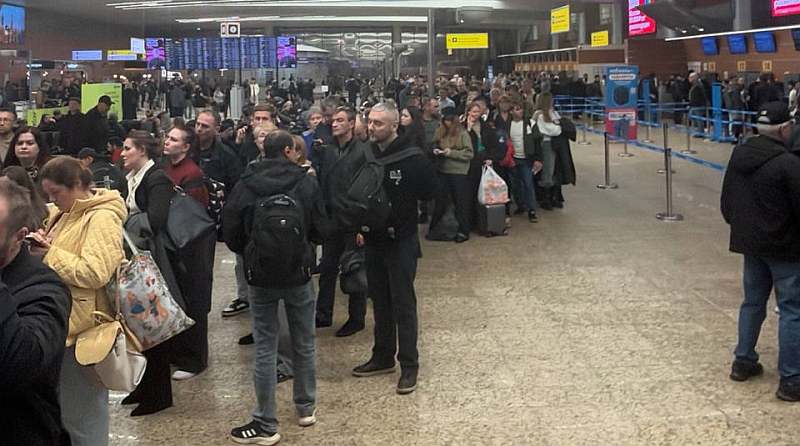
– From October 10 to 16, over 4,000 delays and more than 630 flight cancellations were recorded at Moscow’s aviation hub due to Ukrainian drone attacks.
– By 1:00 PM on October 17, the number of cancellations had already exceeded the total for the previous day: 184 flights were canceled on Friday, and more than 200 on Saturday. In Sheremetyevo, 151 flights were canceled on Saturday compared to 122 on Friday, with 58 more delayed. In Vnukovo, 45 flights were canceled and 129 delayed. Domodedovo saw 61 delays and 8 cancellations. In Saint Petersburg’s Pulkovo, 33 flights were canceled by 1:00 PM on Saturday, compared to 29 for the entire Friday. The mass disruptions have been ongoing since October 8. On the night of October 13, Vnukovo was closed for 8 hours and 51 minutes. On the night of October 14, Vnukovo, Domodedovo, and Zhukovsky were closed for 8 hours and 39 minutes, while Sheremetyevo for 7 hours. It was the longest simultaneous shutdown of Moscow’s four airports at least since the beginning of the year.
– On the night of October 16, restrictions were in place in Vnukovo and Sheremetyevo for 5 hours and 23 minutes, in Domodedovo for 7 hours and 5 minutes, and in Zhukovsky for 6 hours and 25 minutes. On the night of October 17, Vnukovo, Domodedovo, and Zhukovsky were closed again for 7 hours and 30 minutes, Sheremetyevo for 4 hours and 58 minutes.
– The disruptions are part of the Ukrainian operation M&M. Since the beginning of September, drones have almost daily disrupted air traffic over Moscow. Only during one of the recent weeks, they caused the cancellation of 345 flights in Moscow’s airports.
4. Russian seaborne exports of oil products fell to a multi-year low in early October.
– In the first 10 days of October, Russian seaborne exports of oil products decreased to 979,000 barrels per day. Shipments of diesel fuel and gasoil dropped by 11% compared to the average daily rate in September, and ligroin by 4%.
– Diesel fuel and gasoil supplies fell to 146,000 barrels per day — the lowest level since early 2016 when Vortexa statistics began. Ligroin exports decreased to 299,000 barrels per day. Meanwhile, fuel oil shipments slightly increased to 534,000 barrels per day.
– In the first 10 days of the month, no seaborne shipments of gasoline or aviation fuel were recorded. By late October, export flows may begin to recover after Moscow eased restrictions on diesel fuel exports.
– This decision came into effect on October 11 following an agreement between Donald Trump and Putin regarding Russian fuel entering foreign markets. However, supplies to the US may only commence in two to three weeks, as contracts need to be concluded by both sides.
– Russia had restricted oil product exports to protect the domestic market after Ukrainian strikes on refineries. Further recovery of supplies remains at risk due to Kyiv’s promises to continue attacks on Russian oil infrastructure. Meanwhile, Russia plans to import gasoline at least until the end of the year.
5. Russian bots are spreading fake videos featuring celebrities to discredit Democrats before the U.S. elections.
– Russian propaganda networks have launched a disinformation campaign ahead of the U.S. Congressional midterm elections on November 3. The operation targets Democratic Party candidates: false materials are spread about 29 out of 36 gubernatorial candidates and 20 out of 35 Senate candidates.
– Since September, AI-generated videos have appeared on the social network X, where well-known actors and musicians supposedly criticize Democrats. Other videos contain fabricated accusations of corruption and violations.
– Bot networks are used to promote the videos, artificially increasing the number of views.
– The campaign is part of the Russian disinformation operation “Matryoshka,” where fake news is published on websites that mimic well-known media. Moscow is trying to influence not only presidential campaigns in the U.S. but also congressional and gubernatorial elections by supporting Republicans and causing reputational damage to their opponents.
– The campaign occurs amid Donald Trump’s approval rating dropping to 36%—the lowest of his two presidential terms.
6. Trump paused the implementation of new sanctions against Russia, paving the way for economic negotiations with the Kremlin.
– Donald Trump has refused to implement new sanctions against Russia mandated by a law he signed in September. The decision suspends several restrictions, including 500-percent tariffs on Russian goods and 100-percent tariffs on imports from countries that buy Russian oil and gas or help bypass sanctions.
– This may ease Moscow’s restoration of economic ties with the U.S., although current sanctions remain in effect. On October 16, Trump signed an executive order not to apply the sanctions, restrictions, and tariffs provided by the Lindsey Graham Act on sanctions against Russia and Iran.
– The document also provided for new restrictions against Russian officials, banks, defense, and energy sectors, as well as members of the “shadow fleet.” The order does not set an end date for the suspension of restrictions.
– Trump explained the decision as being in the national interests of the U.S. and reported that he submitted the relevant justification to Congress. This step continues the change in Washington’s policy towards Moscow. On October 9, Trump announced an agreement with Putin regarding the entry of Russian diesel fuel into the world market, including the American market.
– On the same day, the U.S. Treasury Department allowed the relevant operations until April 2027. Meanwhile, Washington pressured Kyiv, demanding a halt to strikes on Russian refineries.
– American representatives threatened to limit the transfer of intelligence data to Ukraine if the attacks continued. There were also issues with warnings about Russian missile strikes and restrictions on the military version of Starlink.
– Trump publicly stated that it is more difficult for him to negotiate with Volodymyr Zelensky than with Putin.
– American negotiators also discussed the possibility of unfreezing some Russian state assets and agreements concerning Lukoil’s foreign assets.
