

We are used to living in a country driven by sheer PR. And sometimes, when an irresponsible society chooses irresponsible leaders, believing in promises that will never be fulfilled, it might even seem effective. This is essentially the foundation of populism.
But when real, serious, and dangerous challenges arise before populists — and not only populist leaders but a populist society too — it suddenly becomes clear that these challenges cannot be addressed with populism.
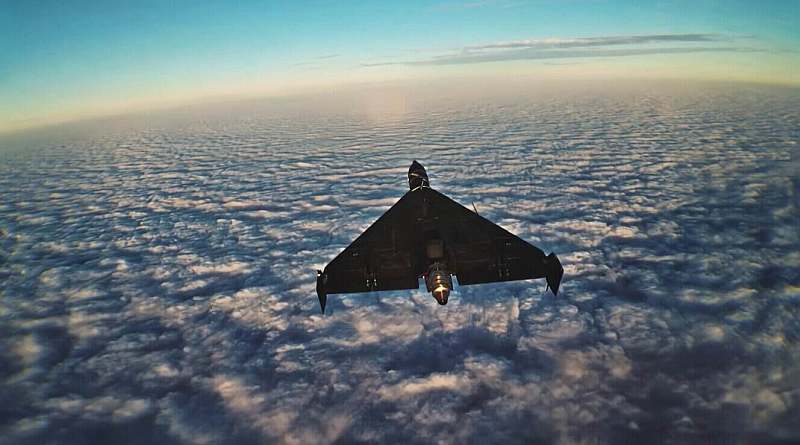
The reactive drones currently attacking Ukraine, terrorizing Kyiv and other Ukrainian cities, did not appear out of nowhere. Their first models started appearing a long time ago, and it was evident that Russia would do everything to establish their mass production.
What was Ukraine doing during this time?
We were dismissing the government, changing the defense minister, protesting those changes, changing commanders. We were doing everything but not systematically preparing to repel attacks from reactive drones.
It turned out that the counteraction system, which worked effectively against “Shahed” drones with relatively low speed, is largely powerless against high-speed reactive drones.
Yet, it could have been predicted in advance that Russia would use this type of weapon. We could have been preparing means of counteraction, training people, building a defense system.
Instead, we thought we would sort it out over time, something would just show up. Predicting real military threats is evidently much more difficult than predicting imaginary and unrealistic elections every next fall or spring, as our society is used to.
Today, employees of the President’s Office say that MANPADS prove effective against reactive drones. And that’s true. But we have effectively reduced a significant portion of the mobile groups that fought drones at the beginning of the war, switching to other counteraction technologies. Now it turns out they do not provide an adequate response to the new threat. The new means of combating reactive drones are also not yet ready.
The same applies to energy.
We are waiting to see what will happen with the energy of our cities this winter. Although it is quite obvious: Russia will produce and use weapons designed to destroy energy infrastructure not only in the center or east but throughout Ukraine.
However, most Ukrainian cities have not properly prepared for possible energy crises that could occur this winter, especially if it is a cold one.
At one time, I spoke from the rostrum of the Verkhovna Rada about my native Lviv, which wanted to take loans not for life support systems, not for creating independent and distributed energy, but for the construction of roads and social infrastructure facilities. At the time, the city leadership laughed at me, saying I did not understand anything.
Time has passed. And Lviv, as it was, remains extremely vulnerable to a large-scale energy crisis.
The paradox is that Lviv is not unique in this regard. A similar situation is faced by most Ukrainian cities. There has never been and still is no centralized state policy to equip cities with independent and distributed power generation, including cogeneration.
Just as there is no sufficiently systematic policy to counteract new types of Russian weapons aimed at destroying our cities.
Is there a way out of this situation? Clearly, there is.
And it is certainly not in yet another discussion about the next elections, although the situation is largely caused by the terrible inefficiency of state governance.
Holding normal democratic elections during a major war is unrealistic. Therefore, the solution needs to be sought elsewhere.
Society must pressure the authorities not to bring one person or another to power. It must demand professional state protection. It must demand the involvement of professionals regardless of their political views, if these people truly know how to organize defense, weapon production, and the protection of cities and energy.
Instead, we continue to think that truly important and valuable reburials for Ukrainian historical memory can simultaneously serve as tools for maintaining government ratings.
We are somehow still convinced that our pantheons should include the Soviet pilot of Ukrainian origin, Ivan Kozhedub, who was not a supporter of Ukrainian independence and remained part of the Soviet military-political system. Meanwhile, we hardly talk about those who, even while being in the Soviet army at one time, later defended true values of freedom and human dignity. For example, about General Petro Hryhorenko — a Ukrainian patriot, human rights activist, one of the founders of the Ukrainian Helsinki Group, and a fearless defender of the Crimean Tatar people. No one even seriously considers the question of someday returning his remains to Ukraine.
I am not convinced that now is the best time to bring back anyone’s remains to Ukraine. But if the state is doing this, it should at least remember the true heroes our authorities somehow do not mention.
Because any populism — whether it concerns irresponsibility in defense technologies, defense policy, energy, or historical memory — always has consequences. And these consequences are usually negative.
The solution for modern Ukraine is for the president, government, representatives of the parliamentary majority, and representatives of the opposition to finally start speaking openly and honestly about the problems we face and how to solve them.
And these problems are obvious.
We need a modern and effective defense industry not as a source of corruption flows, but as a tool for state protection. Real war planning is needed, involving the best specialists, including those who were once removed from military service for political reasons and subsequently forgotten, even though they defended Ukraine at the beginning of the full-scale invasion.
We need to systematically think about the protection of our cities, Ukrainian energy, and all life-support systems in general.
We need to seriously consider our relations with our allies, the European Union, and neighboring states. Because if far-right and anti-Ukrainian forces prevail in European countries, and support for Ukraine weakens, we will face even greater threats.
There are very many challenges. They are complex. And there are no simple answers to them.
Calls for another round of elections, which obviously no one will conduct during the war, will not save Ukraine.
Nor will publicity stunts concerning resistance to mobilization, which are primarily beneficial to Russia. Tarnishing the reputation of the military recruitment centers instead of addressing the real problems of the mobilization system will not save us. Supporting those who want to escape their duty at any cost and hide instead of those willing to serve in the army and defend Ukraine will not save us.
Populism will not save us. Fighting political opponents instead of the enemy will not save us. Believing that a state can be defended with the help of promotional Telegram channels, a controlled information agenda, and endless PR will not save us.
War is a reality where PR eventually collides with physics.
A drone flies at a real speed. A missile has a real trajectory. A power unit either works or it doesn’t. A city either has backup generation, or it remains without light and heat. An army either has people, weapons, and professional command, or it doesn’t. Here, you cannot substitute results with ratings, a Telegram channel, or televised images.
Only a responsible state and a responsible society can save Ukraine. A state capable of predicting threats, not just reacting to them after tragedies. A society that demands from politicians not beautiful words and pleasant promises, but competence, honesty, and results.
Because the price of populism during war is not just lost elections or a bad rating.
The price of populism during war is the existence of the state.

Make yourself comfortable. Because it’s going to be long. Read, share. Maybe it will reach someone.
What can I say? We missed Russia’s technological breakthrough in jet drones. And I do not want to spread panic or another “all is lost.” I want to ask a very simple question: how did it happen that Russia developed jet drones, tested them, launched them into production, started to scale and use them, while we encounter the mass application of this technology when our response to it still needs scaling?
I am more than sure that intelligence reported on these developments. More than once. I very much hope that this information reached the top exactly as it was. Although as someone who twice worked as an advisor to the Deputy Minister of Defense, I have seen different things. Including seeing reports taken to the top that have very little in common with reality.
All this time, the Ministry of Defense of Ukraine, through the Defense Procurement Agency DOT, contracted interceptor drones, the ones popularly known as “pisyuns,” to shoot down regular “Shaheds.” They contracted many. Paid a lot of money. And here I immediately want to eliminate the possibility of twisting my words: I am not saying that these interceptors were unnecessary. They were needed. They worked and still work on the targets they were designed for. The question is quite different: where was the parallel response to the next technological step of the enemy at this very moment?
For the fifth year, the war shows the same thing: it’s a technological race. You find a cheap and effective way to shoot down the enemy’s weapon — they change the characteristics of that weapon. They find a way to bypass your countermeasures — you must already have the next solution ready. And preferably not when the new threat has been flying over your head for the fourth day, but a bit earlier.
Today, the Minister of Defense says that Ukraine has four potential interceptors for jet-powered “Shaheds,” which have already undergone field trials, and now the task is to bring these solutions to the required level as quickly as possible and scale production to thousands of units. Excellent. Without sarcasm — it’s really excellent that they exist. But I’m interested in the word “now.”
Because I know what stands between “we have a promising product” and “there are thousands of these products in the troops, systematically closing the sky.” I don’t know this from Facebook. I was twice an advisor to the Deputy Minister of Defense and have seen enough of the procedures for coding, need formation, procurement, and contracting to fully understand how long it can take for the state machine to go from “here it is, it works” to “here are thousands of units in the troops.” Yes, procedures have been simplified. Since March, even the sequence has been changed to “coding — need — contract.” But after that, the manufacturer still needs to produce not ten or one hundred products. They need to scale production to thousands. They need components, production capacity, people, money, contracts, supplies. And then these thousands still need to physically reach the troops.
And I have an absolutely childish question: what is Russia supposed to do all this time? Stop production? Say, “Oh, sorry guys, we’ll wait until you code, contract, and scale up”?
No. It will do exactly what it is doing now. And this is no longer a hypothetical future threat. As early as the beginning of August, during one of the massive strikes, the Air Force reported that most of the 115 deployed Shahed-type strike UAVs were jet-powered. The main direction of that attack was precisely the Kyiv region. And during the attack on August 26-27, already about a third of the 258 strike UAVs were jet-powered.
And here we are with what we have. Kyiv and the region have been living for several days in a mode where, frankly, I’ve stopped understanding which alarm it is, which night, and which day it is. It’s flying, being shot down, something reaches its target, something burns, then the next one flies. Yes, we also shoot down jet drones. And we’ve had interceptors for them not just today — successful interceptions of such targets were reported a few months ago. But if today the Minister of Defense says that the key task is to scale the appropriate solutions to thousands of units, it means we don’t yet have the necessary scale of response.
And that is the main thing for me. I don’t ask why Ukraine hasn’t invented anything. It has. I don’t ask why nothing is being shot down. It is. I don’t ask why interceptors for ordinary “Shaheds” were bought. It was right to buy them. I ask why we faced the technological transition of the enemy without having a scaled response to it.
Because if the new threat was known in advance, and we start scaling countermeasures only when the enemy scales the application of the threat itself — that is a lost technological cycle.
How long it will take to close this gap, I don’t know. And I won’t guess. But I know very well that state procurement, contracting, and scaling production do not happen overnight. And Russia, judging by everything, is not going to give us a technological pause for this time.
So we can reassure ourselves as much as we want with the words that solutions already exist. A solution that exists in a few samples and a solution that is present by the thousands in the troops are two completely different realities. And between these two realities, we live now. Literally.
To the sounds of what is being shot down over Kyiv, the response to which we should have started scaling earlier.
And this is not “betrayal.” Not “everything is lost.” Not an attempt to politically bury someone. This is a statement of a very unpleasant fact: this time we missed the technological step of the enemy. And now we’ll be catching up. The only question is how long and at what cost.
In the cover image: Jet strike drone Geran-3 in the sight of a Ukrainian interceptor drone. Frame from the video “Sternenko Community”
