
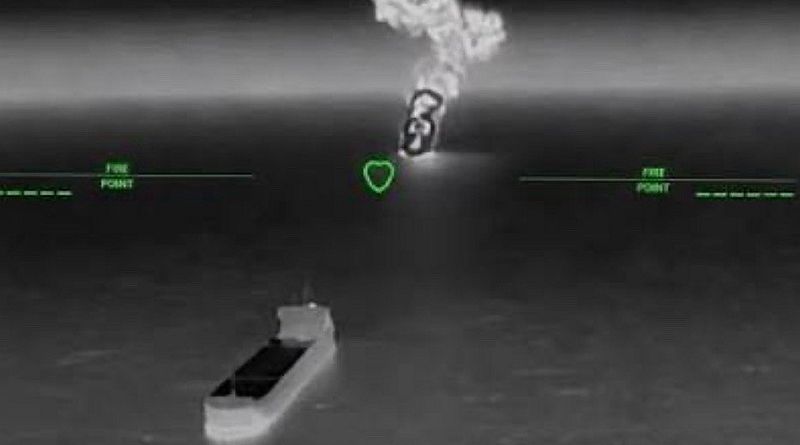

Starting from July, the UAV Forces of the Ukrainian Armed Forces announced a large-scale air operation in the Azov Sea and the Kerch Strait. According to Ukrainian statements, in just a few days, an unprecedented number of ships were attacked by kamikaze drones—up to 48 units, mostly tankers of the Russian “shadow fleet” delivering fuel for Putin’s military group. This kind of systematic “strangulation” of logistics to Crimea significantly deprives the entire Kremlin military campaign of strategic sense.
Critical analysis of the maritime war helps to outline the real military damage scale for Russia.
Official reports from the Ukrainian SBS show a rapid increase in numbers: initially, strikes on 8 tankers were announced on the night of July 7, then on 9 and even 12 ships in the following days.
The SBS command reported the destruction of 9 tankers, of which the General Staff of the Armed Forces of Ukraine verified 6.
Russian sources and officials confirmed UAV attacks in the Taganrog Bay, but as always with significant reservations: “hits were recorded on two empty tankers, one crew was evacuated, and a sailor was injured.” There is still no full evidence of mass destruction or sinking of ships.
Indeed, river-sea class tankers, “Volgoneft” projects, and similar ones, up to 140 meters long, are highly resilient. Light FPV drones or medium kamikaze UAVs can pierce the superstructure, destroy the navigation bridge, or damage the deck, temporarily disabling the vessel, but they rarely lead to fatal detonation, especially if the tanker is in ballast. Later released footage with holes in the sides confirms damage forcing ships into repair, but not their destruction.
Simultaneously with the naval blockade of the Azov Sea, Ukrainian drones attacked the energy infrastructure of Crimea: the Saki TPP, substations “Mayanaki,” “Novoozerna,” etc. Analysts from the German publication Bild noted that Kyiv is implementing a classic Denial of Access strategy, i.e., blocking access. It aims to deprive the occupation group of mobility due to fuel shortages and cut off power to military facilities, air defense bases, and electronic warfare complexes.
To think that because of this “Putin’s war loses meaning” is still an exaggeration, but it points to fundamental changes in the course of hostilities. Although Crimea is still connected to mainland Russia by a land corridor through Mariupol and Melitopol, and a sprawling railway network, this is not enough for full control. At the same time, for the Russian leadership, holding the peninsula has sacred political significance, which is why Putin is furious.
The main success of Ukraine in this campaign lies not in the physical destruction of the fleet, but in economic pressure. Shifting combat operations to the Sea of Azov, which Moscow considered its “safe inland lake,” sharply raises the cost of insuring civilian ships, scares crews, and forces Russia’s Ministry of Transport to rearrange logistics, attracting scarce air defense forces for convoys. This is an effective tactical tool in a prolonged war of attrition, forcing the beleaguered aggressor to seek peace.

A tanker is generally hard to completely destroy. In the famous shattered convoy PQ-17, the Soviet tanker “Azerbaijan” was carrying a load of linseed oil (which ignites like gunpowder). It was directly hit by torpedoes, exploding 9 tanks, but the crew contained the fire, and the ship made it to Arkhangelsk under its own power.
The British tanker MV Imperial Transport was split twice by torpedoes during the war: the bow sank, but the stern was saved, towed in, a new bow attached, and it successfully sailed until 1958.
Tankers with damaged hulls and German “Stukas” embedded in their decks reached besieged Malta.
Thus, our SBS are doing absolutely right by targeting the bridge specifically. This results in a fire, a disabled crew, and destroyed equipment. Some will be completely burned, some will have a charge hit slightly lower: the radio and radar may survive, but the propeller and rudder group will be damaged.
In both cases, a classic Mission Kill occurs. The ship is sidelined for months. It’s not just about welding a hole in the hull. Restoring the bridge means buying new Chinese radars, echo sounders, and gyroscopic compasses and trying to “sync” them with steering machines and engines (often Western-made, installed during construction).
There are not many specialized electronic engineers at regular southern repair yards (SRZ), accustomed to cleaning bulk carriers’ hulls and changing propellers. They work at manufacturing plants. That’s Nizhny Novgorod or Astrakhan. A blind tanker needs to be towed there through the entire lock system, to shipyards already packed with tankers under construction of project 15781. The result: lengthy, costly, and definitely not in this navigation season.
In Rostov-on-Don and Azov, it is physically impossible for more ships to dock and load simultaneously due to strict restrictions on berth length and channel depth. In June 2026, due to technical delays and constant inspections, the total average daily traffic of tankers through the Kerch Strait was only about 15–20 units.
So we caught them at the perfect moment: loaded with crude oil on their way to waiting “Panamaxes” and “Aframaxes” in the Black Sea, or attempting to break into Crimea with refined oil products. We hit them right in queues at the bridge or on transit to Kerch.
The Russians physically could no longer cover them: the shallow depths prevent the Black Sea Fleet ships from entering the Taganrog Bay and the Sea of Azov, so “river-sea” vessels are used for shuttle missions. Moreover, the surviving tankers that transported crude oil (dark petroleum products) cannot be quickly switched to transporting light petroleum products to save the army’s logistics — tanks need to be thoroughly cleaned and steamed.
A good operation. We are intensifying the crisis both in Crimea and in the budget.

Why strikes on tankers in the Sea of Azov are not just about destroying ships or blockading Crimea, but a whole special operation.
After the first two days of strikes on small tankers, the most likely logic was precisely the blockade of Crimea. 8 and 9 tankers of 7,000 tons each. And I remind you, the head rooster himself said that Crimea needs no less than 70,000 tons of fuel per month to survive. So, everything pointed to a blockade. But today, when after 96 hours of the operation, the number of affected tankers is more than 70 (!), a completely different picture emerges. So let’s quickly analyze it.
1. The logic of these tankers is a feeder fleet. These are small tankers of the “river-sea” class, like Volgoneft, Sanar (at least 3 of these were hit, numbered 1, 4, and 17), or Primomaks. They have a tonnage of 7,000 tons, they can be loaded at large mainland refineries (Volgograd, Samara cluster, or Saratov) with pure oil after processing and descend through the Volga-Don Canal to the Sea of Azov. And this sea cannot accept large ocean tankers of 100,000 tons. The feeder fleet has to go out through the Kerch Strait and transship the oil to bigger brothers in the port of Kavkaz or nearby in the Black Sea.
And this is also a special operation. Rough arithmetic, not exact. The volume of oil is 7,000 tons — 8,500 cubic meters. Pumps can transfer up to 1,000 cubic meters per hour, so a small tanker unloads into a large one in up to 8 hours. And 14-15 such tankers are needed to fill an entire tanker like the Blue, which was hit by the SBU this week. It was filling this way.
2. Such a transshipment operation occupied most of the Volga-Don Canal vessels. If in May there were 40-50 such tankers in the Sea of Azov, by June there were more than 100. And our command chose the perfect time for the operation. When the roosters thought we were blind and they were just gaining momentum in such logistics, we were already blocking it.
3. If I called the strikes on Kronstadt, Peter, Ust-Luga, Vysotsk, and others the Baltic, then this operation can surely be called Azov. And it’s not just about tankers.
The city of Azov, like Taganrog and Rostov-on-Don, is also important from the perspective of agricultural product exports. And, oh marvel, we have already worked on these points. And now, besides blockading Crimea, stopping the feeder fleet for shadow oil exports, we are closing ports for grain as well.
For a moment, these ports previously accounted for up to 10 million tons of grain for export. That is almost a quarter of the entire marshlands export. And when we closed Mariupol and Berdyansk, that’s when you can consider the start of this operation. Because today is its continuation, and it’s definitely not us, just small ships that Madjar is pressuring. Above I described how vast this system is and what else will emerge from this operation, we will soon see.
A brief conclusion, as the operation is still ongoing.
What we are getting in terms of consequences for the marshlands: the halt of movement through the Volga-Don Canal (monitors confirm), further blockade of Crimea, the shutdown of the Sea of Azov ports for receiving grain (watch the video), a significant decrease in the transfer of oil to large tankers (I remind you, this method had several days with a tanker standing for transfer from smaller ones). And this is certainly not all; the consequences could become historical. It takes some time for evaluation. And we have it, while in Russia the clocks are already ticking 🙂.
And we must add the finesse of the operation. Today SBS also showed the destruction of tugs. And it’s not just the smallest and irrelevant compared to a large tanker schooner. They actually tow the “blind” tankers of the feeder fleet, which Birds remove the bridges from. Without navigation, where can they sail to or dock?) That’s why tugs are also important. Blind tankers are left floundering like excrement in the ice hole of the Sea of Azov).
Photo: video screenshot of the GUR MOD
