
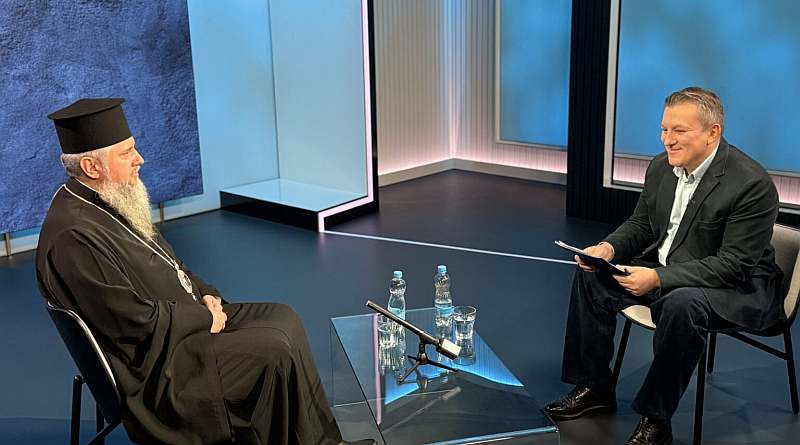
Rostyslav Khotyn / Radio Svoboda
In an extensive interview with Radio Svoboda, Metropolitan Epiphanius of Kyiv and All Ukraine, the head of the Orthodox Church of Ukraine, discussed:
- whether he is satisfied with the number of parishes moving from the UOC (Moscow Patriarchate) to the OCU;
- why Russia demands the preservation of the UOC (MP) status as a condition of peace with Ukraine;
- why the Vice President of the USA defends the UOC, whose rights in Ukraine are allegedly “being oppressed”;
- whether the Russian leader Vladimir Putin has indeed “fallen under the influence of the devil,” starting the war against Ukraine;
- whether any secret negotiations are being conducted with the UOC about a possible unification;
- why the process of recognizing the tomos by other local churches has effectively stalled;
- why the UOC (MP) monks in the Kyiv-Pechersk Lavra did not rush to put out the fire after the Russian drone hit the Assumption Cathedral in June;
- whether Ukraine will ever have its own monastery on Mount Athos, not just a cell?
– Currently, the Orthodox Church of Ukraine accounts for about 8,500 parishes, maybe more. This might be a bit more than the Ukrainian Orthodox Church. During the full-scale war by Russia against Ukraine, 1,400 parishes moved from the UOC to the OCU. You probably expected more?
– A little more, because, according to the statistics and our latest count, there are now over 9,000 religious communities belonging to the OCU, and officially about 2,000, or maybe even more than 2,000 religious communities, have joined our large family of the Orthodox Church of Ukraine from the Moscow Patriarchate. This process continues. It is gradual because communities decide according to Ukrainian law, make the appropriate decision, and register it with the state authorities, as there are certain conditions.
According to the Constitution and Ukrainian legislation, any religious community has the right to change its affiliation. In this case, it concerns the Orthodox communities that currently belong to the Moscow Patriarchate in Ukraine. They go through this legal procedure, change their charter with state authorities, and join the OCU. Of course, everyone might wish for this to be faster, but this process is complex.

We always testify to this peacefully, calmly, and with love because we see provocations from the Russian church. They do it specifically to show others that this process is happening by force, but it’s not true because the majority of the community makes the decision and changes jurisdiction accordingly.
– So there’s no pressure?
– There’s no pressure. They talk about an alleged seizure, but it’s the community itself that makes the decision and it turns out that their own community, which belonged to the Moscow Patriarchate, is trying to seize its own church? Well, it looks a bit strange, but it’s a democratic process, a process of free choice. We live in a democratic free country, and therefore, according to the law, any community has the right to change jurisdiction.
Churches and “peace plans”
– Now the church has become a topic of some speculation when it comes to searching for a peace plan for Ukraine. For example, “peace plan” of deputy Oleksiy Honcharenko. I’ll quote from his column. “Freedom of conscience in Europe is a norm. If someone wants to go to a church connected with Moscow, let them. The state just needs to ensure they talk about God there, not betrayal of the Motherland…”. What’s wrong with this?
– Well, in general, this issue is on the agenda during, as we know, previous negotiations between Ukraine and Russia. We saw a certain draft, a project of peace agreements, in which it was clearly stated, there was a point about maintaining the presence of the Russian Orthodox Church in Ukraine. This concerns language as well. It’s practically in one sub-point about the church and about the language. So we see that it is important for the aggressor country to maintain the existence of its Russian Orthodox Church in Ukraine, which by name is the Ukrainian Orthodox Church, but is affiliated (with Moscow), this church is directly institutionally connected to the ROC.
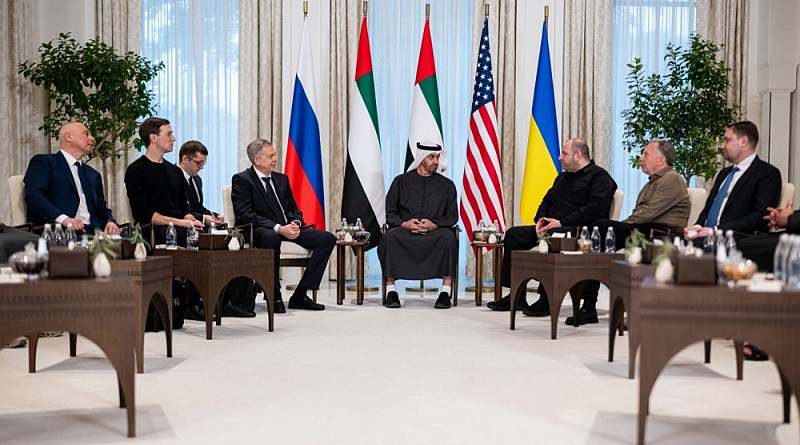
That is, it is an integral part of the ROC, and as we see, the aggressor country, Putin, tries to use religious organizations to achieve their goals. We have many examples of court cases already proven, showing how representatives of this church worked and continue to work for the Russian Federation, for the occupation of Ukraine. Therefore, of course, Russia will set conditions during negotiations regarding maintaining the presence of its church because the church is an important institution. It can be considered ‘soft power’.
Analyzing past decades, it can be understood that if we had a single Orthodox church in the 1990s, perhaps there would not have been these events regarding the occupation of Crimea and the temporary occupation of other parts of our Ukrainian regions, because the church is the spiritual foundation, the spiritual cornerstone of our Ukrainian state.
And without this strong spiritual foundation, without a strong united Orthodox church, we cannot build a strong, unified, democratic Ukrainian state. Unfortunately, not everyone understands this. But the aggressor country understands this well, as they use this leverage for occupation, for practically destroying our Ukrainian independence.
And so now we see some voices trying to speak about some kind of reconciliation, but this is not reconciliation, this is capitulation.
Because if we fulfill the conditions that the aggressor country is setting for us now, we will capitulate. What have we been fighting for?
What have we been fighting for five years after the full-scale invasion and 12 years after the start of this war? But in general, this war has been going on for several centuries. The enemy is the same one; it tried to destroy us, enslave us spiritually, and we were under occupation for several centuries.
And again, as we see, the northern neighbor tries by any means to spiritually enslave us again, but this will never happen because it has been more than 8 years since we received the tomos for autocephaly, and more than 35 years since we have been fighting with our independent Ukrainian church.
– So Ukraine should not agree to any special status of the ROC in Ukraine even under pressure? We should not agree to this – am I understanding you correctly?
– We have freedom of conscience. The law is in effect, and not just in words, as for 30 years there has been an All-Ukrainian Council of Churches and Religious Organizations in Ukraine. And now we are chairing this Council. On a rotational basis, as in the European Union, the chairmanship passes every six months, so in the All-Ukrainian Council of Churches, the chairmanship passes to the next member.
And now, for half a year, until the New Year, I am fulfilling the duties of the head as the primate of the OCU. The Council of Churches represents the absolute majority of religious communities in Ukraine, and even Jews say that in Ukraine now, despite the war, there is more freedom for faith than perhaps in Europe. This indicates that we have freedom, and everyone has the right to practice their faith freely, and no one encroaches on the rights of those who wish to be part of the ROC.
But they must clearly state that they are not the Ukrainian Orthodox Church, but the Russian Orthodox Church in Ukraine, because they mislead many Orthodox Ukrainians.
A Ukrainian comes to a church, sees the sign “Ukrainian Orthodox Church,” and thinks it’s the Orthodox Church of Ukraine, that it’s a Ukrainian church, but in fact, it’s a Russian church. We are not against their representation in Ukraine in the future.

But why is there not a single community for Orthodox Ukrainians in the Russian Federation right now? Practically no institution exists, while Russia, on the other hand, tries to have a huge structure of the Orthodox Church in Ukraine and use it for its shameful purposes.
– The State Service for Ethnopolitics and Freedom of Conscience conducted an examination twice – twice, I repeat – and recognized points of affiliation of the Ukrainian Orthodox Church with the ROC. Could you name two or three main signs that the UOC has not severed ties with Moscow, with the ROC?
– Well, if we talk about the statute. The UOC representatives appeal to the fact that back in May 2022, they held the so-called council in Feofania and refer to it for changing their statute, although it has not been published to this date. So, according to which statute are they currently living if it has not been published? And supposedly, all points regarding the connection with the ROC were removed from it.
But even in this statute, it is clearly stated that their connection is still based on the charter handed over to the now-deceased then-Metropolitan Filaret, where it was clearly stated that they have a direct connection with the Orthodox world through the Russian Orthodox Church. That is, it is an inseparable part of the ROC. This is clearly stated in their statute.

There are certain norms, if they consider themselves an independent autocephalous church, they must contact the Ecumenical Patriarch, the Ecumenical Patriarchate, because in the Orthodox world the right to grant independent status belongs only to the Ecumenical Patriarchate. They have not done this, and there has not been any statement to this day.
If you open the website or calendar of the ROC – to this day, Metropolitan Onufriy and other members of the episcopate of the so-called Ukrainian church are members of the ROC Synod, belonging to various institutions of the Russian church. So why can’t a statement be made and disputed? And to this day we have heard no statements and objections regarding their non-belonging.
So formally, they say, because it is convenient for them in Ukraine now, that they are independent, but in fact, they are an integral part, as confirmed by the State Service, affiliated directly with the Russian Orthodox Church. They were given conditions. This does not concern a change of faith – just to certify that they leave the ROC. Unfortunately, they do not do this, and on the contrary, deny it in Ukrainian courts.
And now there is a whole process from their side regarding the denial. But it is actually so – they are an integral part of the Russian Orthodox Church.
Who in Russia is under the “influence of evil forces”?
– The late honorary patriarch Filaret once said that by starting a war against Ukraine, Russian President Vladimir Putin “fell under the influence of the devil.” Is this a statement of reality or a poetic exaggeration?
– Yes, we understand and see that the Russian Federation is now the “empire of evil.” As in the past, we know this happened, because indeed the devil influences. Whether a person believes or not, evil acts in the world.
God acts, but the opposing force, the evil force, also acts. This is the devil, Satan, as we call it. And we see that this tyrant is the embodiment of evil, which tries to destroy not only Ukraine.
For now, the war is happening in Ukraine, but we understand that this evil will not stop at Ukraine. It has broken into our common peaceful Ukrainian home. And we always testify and speak, and ask for the support of Europe, America, and the entire democratic world, to curb this evil in Ukraine so that it does not further spread in Europe and who knows how the situation might develop further. And it is really so, that we see in the person of the Russian tyrant the embodiment of this evil.
– What would you say to Patriarch Kirill if you met him? He so fervently supports Russia’s war against Ukraine, even declaring, as someone said, an “Orthodox jihad,” telling Russian soldiers that if you die in the war against Ukraine, all your sins are forgiven and you will go to heaven. What would you say to Patriarch Kirill?
– We are unlikely to meet in the near future. But we are called to testify to the truth. As the Orthodox Church of Ukraine, we testify to the truth that this ideology, co-created by the bloody Patriarch Gundyaev, is a murderous ideology. And we see that the preaching of this ideology, propagated practically for several decades, has led to such negative consequences.

And therefore, as the Orthodox Church of Ukraine, we condemned this “Russian world” ideology as heresy. And not only us, but many Orthodox theologians worldwide, as well as at the Conference of European Churches last year and this year, confirmed it at the Committee level, and it has become an official document condemning this destructive murderous ideology of the “Russian world” as heresy.
We see that the Russian Orthodox Church has practically turned into an institution that supports Putin and the Russian state. In Russia, the Russian Church is an integral part of this general machinery, essentially a department for religious affairs of the Russian government.
By openly supporting this war and blessing it, initially they somewhat silently supported it, but in recent years we see open support from the leader of the ROC.
This includes participation in various events, blessing of soldiers, blessing of weapons, and so on, claiming they fight for something holy and sacred. Although we know that this war is not holy but diabolical.
This war was condemned by Ecumenical Patriarch Bartholomew, who called it diabolical. In reality, it is so because any war brings grief and murder. It cannot be holy or sacred.
The USA and the Ukrainian Church Situation
– The Ukrainian church issue echoes across the ocean. In particular, in the US Congress, a bill has been registered by congressmen from both parties, “On Countering Russia’s War Against Faith.” It expresses concern about the situation in the occupied territories. We know that churches were destroyed, priests killed, and pressure exerted on people to join the ROC. What is the situation in the occupied territories? Does it concern you?
– Yes, of course, it is concerning. The situation in the occupied territories is very difficult. Our church is practically not present there now. This applies to Crimea and these four regions that are temporarily occupied: Luhansk is almost completely, Donetsk is 75%, partly Kherson and Zaporizhzhia. And in these territories, we are practically not present because it is very dangerous.
We withdrew our priests because several priests were killed. So, being in the occupied territories now is very complicated and dangerous. There are a few priests who are there, they conduct services, but secretly, because if they are found, it could end very badly. And practically many temples have been destroyed.

In general, over the past years after the full-scale invasion, more than 700 churches and religious buildings have been destroyed. Both in the occupied territories and in the territories currently controlled by the Ukrainian government. So, for the Russians, as we see, nothing is sacred. They destroy everything in their path. And this was evidenced recently, in June, when a Russian drone hit the Dormition Cathedral of our Kyiv-Pechersk Lavra.
So for them, as we see, even the churches from where they practically took Christianity? From Kyiv! They talk about the so-called “single baptismal font” – well, this “Russian world” promotes the unity of three peoples, “unity of the baptismal font,” and so on. But when they lose and realize that they cannot enslave us, they try to destroy, practically destroying the foundations from which they took their roots.
– More about the USA. Previously, Vice President J.D. Vance made certain claims that the UOC (Moscow Patriarchate) is being oppressed, saying it’s abnormal and there is no freedom of conscience. What are your contacts with the American administration? Previously, during Donald Trump’s first term, you met twice with Secretary of State Mike Pompeo. What are your current contacts with the Americans to convey to the American side, particularly the conservative wing of American politics, that everything is fine with freedom of conscience in Ukraine?
– We cooperate, we travel, we participate in various events, we testify the truth. Because, in fact, Russian propaganda tries to penetrate everywhere. And we see this in the USA. They hire lobbyists for big money, famous lawyers – Robert Amsterdam or Tucker Carlson. These are such powerful voices that practically broadcast all this Russian propaganda for money.
And some people, without understanding the situation, may of course misunderstand, but in Ukraine, as we witness, there is no persecution. The law operates in Ukraine, and there is complete freedom of religion. And this is not just in words, but in action.
However, if there are violations, everyone is equal before the law. The church does not cover up responsibility. Therefore, those who have violated, who have betrayed Ukraine’s interests, naturally must face punishment.
Therefore, there are hundreds of cases in Ukrainian courts, and we have many examples of how the clergy of the Moscow Patriarchate in Ukraine worked and continue to work in the interests of the aggressor country.
Negotiations with the UOC
– What model do you see as optimal still? Is it the prohibition of the UOC (MP), perhaps their incorporation into your church, or maybe a voluntary union? What would be the ideal model, which scenario would seem most optimal to you?
– It is difficult to say which model is the best. And what is the best model now regarding peaceful negotiations between Ukraine and Russia? We are in a similar situation. I always say that now the best diplomats, presidents of the world are trying to find a formula under which peace will come to Ukraine. Although we are talking about true, lasting, real peace, not just any peace. We mentioned the occupied territories. We can capitulate and what? There will be peace? Yes, but we do not seek such peace.

Similarly, in the church issue, there is no specific formula according to which we can say what will happen in the future. We are open as the OCU. We have repeatedly called, are calling. I have personally addressed Metropolitan Onufriy and all who are with him. We created a relevant Synodal Commission in order to at least begin basic communication, start a dialogue, sit down at the negotiating table. But from their side, there is no desire.
Therefore, the state cares for its security, the state cares for the safety, the spiritual security of Ukraine in general. And we see the processes that are happening, but they practically do not react, do not want to communicate. And we have certain contacts, but so far even from their side, there is no desire for such an informal meeting, not to mention any official meeting.
– But there are secret contacts, as I understand?
– There is communication between bishops, between clergy, and there are invitations to communicate, to an informal meeting. But until now, such developments have not received permission or blessing from the higher leadership of this church.
And whenever it reached the top, they blocked it; there have been many such efforts over the past five years, but there is no desire from Metropolitan Onuphrius and the leadership of the Moscow Patriarchate in Ukraine to sit at the negotiating table. We are open, we are ready to communicate, to find levers for unity, but if one side is willing and the other is not…
The UOC (MP) and Metropolitan Onuphrius have not commented on this issue.
We see a similar situation now in the negotiations between Ukraine and Russia. There is a powerful mediator, but so far there have been no real meetings, contacts at the highest level. And now we see even less, because one of the sides, the aggressor country, aims to destroy us. And we have heard the conditions being set: denazification and demilitarization. In other words, practically capitulation.
And we are offered the same conditions, only in church language, to admit that we were wrong, that we are not an autocephalous church, that we have no ordination, and so on. To repent, but we will never accept this, because we have fought and will fight to the end, since the truth, we know, always prevails in any case. This concerns both the church issue and the establishment of a just peace in Ukraine. And if we analyze the entire history of world existence, we see that in the end, the truth of life, light, and truth always prevail. But we must endure these trials, which the Lord will not give us beyond what we can bear.
– You probably know the situation inside the UOC very well. It is clear that Metropolitan Onuphrius is a person with old ties in Moscow, but is there a “healthy” wing there? How influential is it? A wing that would like to unite with the OCU. Are there, so to speak, constructive forces within that church?
– We saw certain signals. There were signatories – about 400 parishes – these are priests, not bishops,
but there is a younger episcopate that would like (to unite), but there is no agreement from the leadership and the Synod.
The leadership and the Synod are the governing bodies of the Moscow Patriarchate in Ukraine.
They do not allow it. And we saw examples, for instance, at one time in Khmelnytsky, the community of the Pokrovsky Cathedral decided to change jurisdiction, and the local metropolitan, who had served there for several decades, announced that he was ready to communicate with the OCU and was ready to meet. And that same evening, the Holy Synod was convened remotely and he was removed from the diocese without his request, without submitting a statement, and therefore others are afraid – even those who have the desire – they are afraid that they will be punished, and therefore do not show any initiative now. But such internal communication is informal. And I think the time will come when that truly pro-Ukrainian part will still join our Orthodox Church of Ukraine, and those who do not wish to – well, we will not force them.
The situation in the Kyiv Pechersk and other lavras
– Regarding the Kyiv Pechersk Lavra. It was transferred to the OCU, but part of the Lower Lavra is still controlled by the UOC, where there are its monks and priests. How do you get along with them and what is the situation in the Kyiv Pechersk Lavra? Is everything peaceful, or is there some tension there?
– Everything is peaceful and calm. Let us recall that a few years after my election in 2019, journalists asked me if I believed I would serve in the Kyiv-Pechersk Lavra. I firmly said yes, we would serve in our Ukrainian sanctuary. This is a sacred place of the Ukrainian people and belongs to us, not the Russian Orthodox Church.

Back then, it was practically the administrative center of the Moscow Patriarchate, but gradually – with God’s help – we restored services in the Upper Lavra. This includes the Assumption Cathedral and the Refectory Church, and now practically all the churches in the Lower Lavra belong to the OCU. Services are held there, our monastery is growing, expanding, and establishing itself.
There is still a part of the monks from the Moscow Patriarchate there, they are observing and, I think, with time, some of them may join our community. This process is gradual, and it is important that everything happens peacefully. However, it is an irreversible process because some want it all to happen instantly, quickly, in one day. But these are people with whom we need to work and communicate.

But I am convinced that in time, other sacred places – not only the Kyiv-Pechersk Lavra but also the Pochayiv Lavra and many other churches – will join the Orthodox Church of Ukraine. We need to demonstrate patience, it takes time, but for the church, a year or a few years is not a long time. Because we live by different criteria, as they say, the church has been built and established over centuries. And in the life of the church, there have been different periods, just as in the life of our Ukrainian state there have been times of prosperity and times of decline and ruin.
But now we live in a difficult time of trials, yet it is also a historical time.
For how many previous generations have strived for centuries to have their independent Ukrainian state, to have their independent Ukrainian church, and much has been sacrificed on the altar of our Independence.
But a generation has passed, which through the trials of the Soviet era lost that historical connection with the destruction of our Ukrainian nation, and unfortunately, not everyone appreciated our state independence after its restoration, now 35 years ago, not everyone understood how important freedom is. Because freedom is a gift from God. And we must now preserve it, affirm it, multiply it, and pass it on to future generations. For this test and great responsibility before the nation has befallen us and our generation. And we must preserve this great gift of freedom from God.
– I read that when there was a strike by a Russian drone on the Holy Dormition Cathedral of Kyiv-Pechersk Lavra in June, most of the monks of the UOC (MP) did not come to extinguish the fire… What does this say?
– It shows that they are mercenaries there, they don’t care. They said: it’s not ours, let it burn. Only a few came just to watch, because they are not actually present there, and it’s clear they are temporary. If it were their home, every person, if their house was burning, would rush to put out the fire.

This indicates that, unfortunately, they do not value what they possess. They are mercenaries, temporary tenants in our Ukrainian shrines. And this is a temporary phenomenon, because those who want to stay – we do not oppose, please stay, continue your full life-servitude there. But if you wish to continue serving the interests of the “Russian world” – then please find a place where it will be comfortable for you to serve these interests.
– By the way, about other lavras. Sviatohirsk and Pochaiv do not yet belong to the OCU, but, for instance, Pochaiv Lavra is said to be almost a “stronghold of the Russian world” in western Ukraine. How can this situation be corrected? Do you hope any changes will come?
– Yes, of course, changes will definitely occur. It is a gradual process, moving like a wave from the west to eastern Ukraine. For instance, if we analyze the situation in Lviv and Ivano-Frankivsk regions, there are, de jure, no more communities of the Moscow Patriarchate in these two regions. In the Ternopil region, there are currently a few dozen communities – and these are surrounding exactly Pochaiv Lavra, which is indeed the last stronghold of the Russian church in western Ukraine.

But no one believed that the Kyiv-Pechersk Lavra would belong to the Orthodox Church of Ukraine. Circumstances will arise where the Pochaiv Lavra will also belong to the OCU. The Sviatohirsk Lavra—we call it a lavra because it was granted the status of a lavra by the Russian Church at Yanukovych’s behest—is one of the major monasteries of eastern Ukraine. It takes time, and I am convinced that the Lord will create such conditions under which these holy sites, which are important Orthodox sanctuaries for the Ukrainian people, will belong to the true recognized autocephalous Ukrainian church.
– I want to ask you about the topic of the patriarchate. There’s a lot of talk: supposedly, the tomos didn’t grant Ukraine a patriarchate, there’s no patriarch, some even call for a new tomos, and so on… But do you agree that the Ukrainian Orthodox tradition is, after all, a metropolis, and it is indeed the Kyiv Metropolis, as it has been for centuries… How do you see this topic of the patriarchate?
– Everything gradually, step by step. We fought for the autocephaly, for the independence of the Ukrainian Church for over 30 years, and at this stage, we obtained the tomos—a document that certifies that the Ukrainian Church is independent, autocephalous, and is part of the Orthodox Churches, occupying its honorable 15th place. But at this stage, we are satisfied because historically, of course, after the restoration of our state Independence, the Kyiv Patriarchate was created, headed by the Kyiv Patriarch. But over time, we do not deny that the Ukrainian Church will aspire to patriarchate in the future.

We always talk about this, but it takes time, it takes time for affirmation. We are currently working on establishing the Ukrainian church as independent. We are uniting all Orthodox Ukrainians around us. And in time, I believe this issue will be resolved positively.
– But currently, is the patriarch for Ukrainians the Ecumenical Patriarch Bartholomew?
– We are an independent local Ukrainian church. The Ecumenical Patriarchate is first in the diptych, that is, in the list of other local Orthodox churches, with certain special rights. But we are also in this list at the 15th place, meaning we are a fully autocephalous independent Orthodox church, the Ukrainian Orthodox Church.
For us, of course, the Ecumenical Patriarchate is the mother church, and therefore we are grateful to His All-Holiness, Ecumenical Patriarch Bartholomew, because he truly made a historic decision in 2019. Imagine if now, during the war, we did not have a recognized Orthodox Ukrainian church. The situation would be even more difficult, and therefore we are grateful to the Ecumenical Patriarch.
This decision is truly very important, as it almost gave a second wing for the existence of the Ukrainian state.
We have the Act of Proclamation of Independence of the Ukrainian state, and now we have the tomos, which is like a second act affirming this spiritual independence. Ukraine, therefore, has two full-fledged wings.
Of course, this is not easy, it is difficult, but as a church, we are now a spiritual support for the Ukrainian people in this challenging time of trials due to war.
– I’ve heard opinions that Patriarch Bartholomew should visit Ukraine more often. What do you have to say about that?
– Well, he has been to Ukraine, we have invited him. And we hear from the President of Ukraine about inviting religious leaders of the world to Ukraine at this time. This applies to the Pope and the Ecumenical Patriarch as well.

We expect that such a visit will definitely take place, but in such difficult conditions, with constant shelling of Ukraine, from a safety point of view, unfortunately, neither the Ecumenical Patriarch nor the Pope has made a decision to visit Ukraine yet. However, I am convinced that such visits will happen in the future.
When any world leaders visit, it is very important because it encourages us and inspires further struggle.
Why did the recognition of the OCU stop?
– Regarding the recognition by other churches of the Orthodox Church of Ukraine and the tomos. Currently, the OCU is recognized by the Ecumenical Patriarchate, the Alexandrian Patriarchate, the Greek Church, and the Cypriot Church. Why has this process stalled? Why do other churches not recognize as actively as one would like?
– This relates to the geopolitical situation. And we will see that after the end of this war, recognition by other local churches will occur. Unfortunately, Moscow influences this, and we see this clearly. Some Orthodox churches are still under Russian influence.
But after the end of this war, we believe that Russia will collapse and will not have such influence and power, and other churches will join this process of recognizing our autocephaly, although we have communication with other churches, cooperation with the episcopate, sometimes not at the level of leaders, that is, through even the Ecumenical Patriarch we have a connection with other local Orthodox churches.
At this stage, only the Russian Orthodox Church officially severed Eucharistic unity with the Ecumenical Patriarch. Other local churches have not done this and will not do so, and therefore we have this communication. And this is just like diplomatic recognition, that is, establishing relationships, I am convinced that in time we will definitely achieve this.
– Should the process of recognition by churches from states such as Georgia, Albania, Bulgaria, or Romania of the Ukrainian tomos involve not only the church, to work not only through your church channels but also through the Ukrainian state?
– We are working together on this issue at different levels, and there are certain achievements, but to make complete decisions, more time is needed.
And sometimes we don’t disclose many things that are happening because it only harms the process. When Moscow finds out, it persistently starts to obstruct. Although it has always obstructed and will continue to do so. Therefore, the process continues. We do everything in our power, what depends on us, and, of course, the Ukrainian state is interested in this and supports, assists.
– At the end of November, the Ecumenical Patriarch Bartholomew gathers the primates of the ancient patriarchates in Constantinople-Istanbul: the Jerusalem, Antioch, and Alexandrian. Of them, only the Alexandrian recognized the OCU. Do you think there might be a request from Patriarch Bartholomew to these prestigious ancient patriarchates to recognize the OCU and the tomos? In Syria, where the Antiochian Patriarchate is located, the situation has changed, Russian influence is now less in Syria, and the Antiochian Patriarchate could somehow work with you… So what do you think, could there be any push?
– Much depends on the position of the Ecumenical Patriarch; he always proposes and acts so that his decision is recognized because it was his decision to grant autocephaly to the Ukrainian Orthodox Church, the Orthodox Church of Ukraine.

Therefore, we’ll see, we won’t speculate, but again, this process continues. Meetings will take place, perhaps joint services, worship services, because during the performance of services, the name of the Primate of the Ukrainian Church is mentioned in the diptych. When the Ecumenical Patriarch went to the Romanian, when the Bulgarian and Romanian patriarchs came to the Ecumenical Patriarch in his homeland, during the performance of services, the name of the Primate of the Ukrainian Church is mentioned in the diptych. So, this process is gradually proceeding successfully, but again, time is needed for this.
Ukraine on Athos
– You recently visited Mount Athos. Why is it important to spread Ukrainian influence on the Holy Mountain?
– A year has passed. Exactly a year since the Primate of the Ukrainian Church officially visited the Holy Mountain Athos on a pilgrimage. Because the Holy Mountain Athos is such a special, unique place in the Orthodox world. It is called a monastic republic. At one time, the Russian Federation invested a lot of resources there.
And monks and abbots from various monasteries told me that during Putin’s last visit to Athos (2016), he gathered everyone and offered to cover any expenses in exchange for allowing thousands of monks from Russia to come to the Holy Mountain of Athos. However, they did not agree, refusing the support, even though there had been significant investment by the Russian state.
Athos has always been very important for Russians. They speculated, saying, look, the Ecumenical Patriarch recognized and granted autocephaly, but on Mount Athos, Ukrainians are not accepted. However, we witnessed that most monasteries on the Holy Mountain of Athos accept the Ukrainian church and serve together with the primate of the Ukrainian church.

Now we have friendly relations with many monasteries, and we are restoring the Ukrainian cell on Athos. Currently, there are many Ukrainian pilgrims, including many soldiers who go for spiritual rehabilitation to the Holy Mountain of Athos. So, we are now establishing, or rather, reviving this millennial history of connections between Ukraine-Rus and the Holy Mountain of Athos.
Recently, monks from the Holy Mountain of Athos visited us and served the liturgy at the Kyiv-Pechersk Lavra on the feast day of Saint Anthony of Pechersk, who was on Athos and brought this tradition to Ukraine-Rus.
And we are just reviving those connections that have a thousand-year history.
– If there is a Ukrainian cell on Athos, is it fair to have the ambition to someday have a full-fledged Ukrainian monastery on Athos? If Bulgarians have a monastery there, and Romanians have a skete treated like a monastery, could Ukraine aspire to have its own monastery on Athos someday?
– We need to take the first step. We have been given the opportunity to restore one of the cells. From the time of the Cossacks, when Catherine II practically destroyed the Cossack Zaporizhian Sich, there were several thousand (Cossack monks). And the historical Ilyinsky Skete on Athos had many monks from Ukraine.
We are gradually restoring the cell. It takes time and resources, but unfortunately, these are lacking because all resources go to support our Ukrainian army. Everything has its time, and as they say, God’s will is paramount. We won’t speculate, but we believe that our presence, the Ukrainian presence on Athos, will be stable in the future.
Source
Copyright © 2021 RFE/RL, Inc. Reprinted with permission from Radio Free Europe/Radio Liberty
Cover Image: Metropolitan Epiphaniy and Rostyslav Khotyn during an interview for Radio Liberty. October 2026. Photo: Radio Liberty
