
Fabian Hoffmann / Translation by iPress
According to Fabian Hoffmann, a research fellow at the University of Oslo in Norway, the Western missile defense model is increasingly yielding to the attacker in terms of economic and production capabilities: ballistic missiles can be produced faster and cheaper than interceptors. The depletion of PAC-3 and other interceptors in wars in Ukraine and the Middle East has only highlighted a problem that has been brewing for decades. He proposes two paths: enhancing the capacity for retaliatory strikes as a deterrent foundation and/or investing in cheap, mass-produced interceptors. Without a change in approach, the West risks continuing to increase costs without narrowing the gap with adversaries.
The Western strategy of ballistic missile defense does not work against adversaries who produce weapons on an industrial scale. Now, there are only two options left.
“There’s no use trying,” she said, “one can’t believe impossible things.”
“I dare say you haven’t had much practice,” said the Queen. “When I was your age, I always did it for half an hour a day. Why, sometimes I’ve believed as many as six impossible things before breakfast.”
Lewis Carroll, “Alice Through the Looking Glass” (1871)
Judging by the volume of recent commentaries on the subject, the global shortage of ballistic missile interceptors has caused a real stir.
The concern is entirely understandable. By estimates, the United States has already used two-thirds of its PAC-3 stockpile in the Middle East, and European countries appear to have no interceptors to share. Thus, observers are questioning how Ukraine is supposed to defend against increasingly intense strikes with Russian ballistic missiles. However, this should not have come as a surprise. The West’s inability to effectively defend against ballistic missiles in various theaters of war is a reckoning for the fantasy in which Western officials have lived for decades.
Why this happens is explained by the well-known arithmetic of missile defense.
It will take years to replenish interceptor stocks depleted in Ukraine and the Middle East. Although production lines are significantly more powerful than before 2022, they still produce only from ten to several dozen interceptors per month. Meanwhile, the adversaries and competitors of the West—China, Iran, North Korea, and Russia—are expanding their ballistic missile arsenals on an increasingly industrial scale, outpacing Western manufacturers even despite significant efforts by the latter.
Moreover, this production is extremely costly. An interceptor costs several times more than the ballistic missile it is supposed to destroy, and usually, two or more interceptors are needed to achieve an acceptable probability of destroying the target. As a result, the cost imbalance in modern missile defense can approach or even exceed a ten-to-one ratio. And this is without accounting for initial costs on radars, launchers, and control systems, without which interception would be impossible.
Thus, modern missile defense creates a structural reality that gives the attacker an advantage over the defender. The war with Iran and the depletion of American interceptor stocks have exacerbated the problem, but its root cause arose long before them. Therefore, the current situation was entirely predictable. It surprises Western officials because they seemingly mistakenly believed that missile defense could be a realistic long-term solution. In reality, it never was.
Western states are now frantically trying to replenish missile defense stocks while simultaneously transferring everything they can to Ukraine to protect its cities, critical infrastructure, and industry. European capitals, together with Washington, have invested billions in missile defense and continue to do so. However, from the current standpoint, it can be argued that the return on these investments is minimal. While the West is rapidly expanding the capacities of existing interceptor production lines, the adversaries’ production is growing even faster. In many ways, the West is running twice as fast just to stay in place.
To get out of the missile defense conundrum where Western states have so comfortably settled, they must first acknowledge that the current state of affairs is unacceptable. After this, politicians face two options.
The first is to come to terms with the imbalance between offense and defense and draw a logical conclusion from it. In a world where the attacker can produce ballistic missiles faster and cheaper than the defender can produce interceptors, the best available tool for maintaining effective deterrence might be a reliable capability to retaliate. In this approach, missile defense is still needed, but its role should be narrower: to protect critically important objects for a limited time rather than serve as a long-term solution for territory defense.
Secondly, work three times as hard to overturn this imbalance by investing in means that have a real chance to change the cost ratio in favor of the defender: interceptor programs designed for mass production at a unit price that is just a fraction of previous generation interceptors’ cost.
Such programs exist in Ukraine and other European countries, but they have not yet proven their effectiveness. Nevertheless, betting on them is the only realistic path if depriving the enemy of the ability to achieve their goals through strikes is to remain a central element of Western missile defense doctrine.
Policymakers can choose one of these options or, ideally, combine both. The most important thing is to start acting.
The White Queen of Lewis Carroll claimed she could believe in six impossible things before breakfast. Western missile defense policy had just one: the belief that the production of traditional interceptors could keep pace with enemy ballistic missile arsenals and counter them even when produced on an industrial scale. This belief has sustained it for over two decades. It seems breakfast has finally ended.
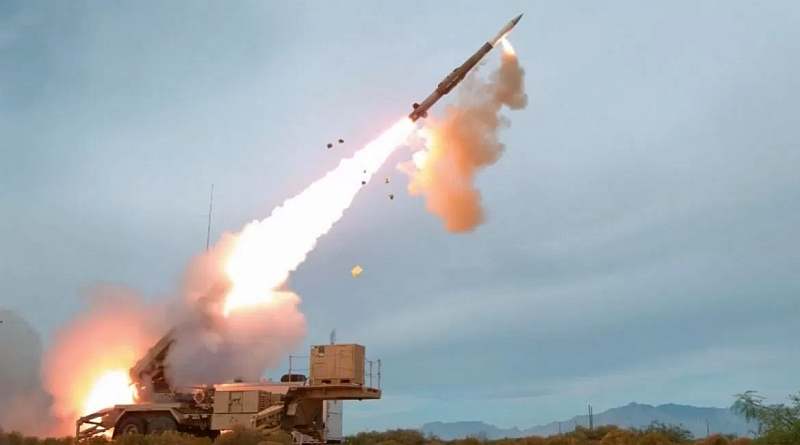
On the cover: Launch of a PAC-3 MSE missile from the Patriot air defense system. Photo: U.S. Army
