

The Russian military adventure against Ukraine has long reached a strategic dead end, yet the Kremlin is preparing to throw hundreds of thousands of lives into the fire of its sick geopolitical ambitions. According to several sources, Vladimir Putin is secretly developing a plan for a new wave of large-scale forced mobilization in Russia. The main trigger for this decision is the dictator’s obsessive drive to capture Donbas at any cost and to simulate imaginary successes in a blatantly lost war.
Putin’s main enemy has long been his personal stubbornness, bordering on clinical imperial mania and an absolute unwillingness to acknowledge obvious tactical mistakes and global strategic failures. Over four years of exhausting war, the Russian army has lost its core personnel and a colossal amount of equipment. However, the Kremlin’s master continues to live in an information vacuum.
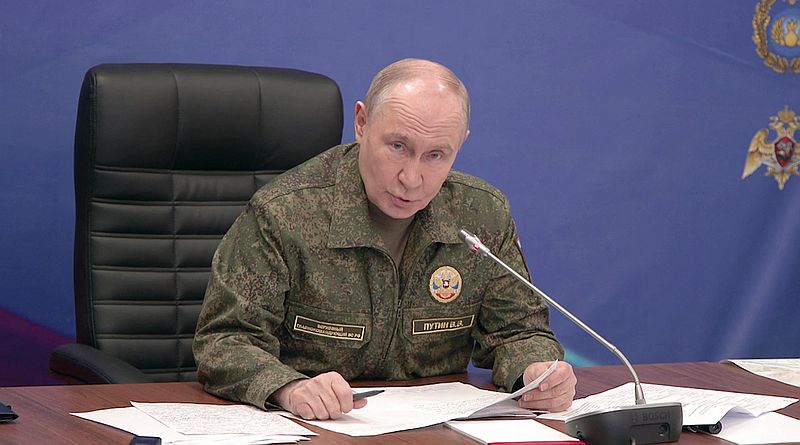
On July 3, Putin visited one of the auxiliary command posts, where he listened to the next “victorious reports” from the head of the Russian General Staff, Valery Gerasimov. The Kremlin leader stubbornly and blindly believes in claims of the “complete capture of Kostiantynivka” and the mythical “steady advance” in the summer phase. While the ruins of wiped-out Donetsk cities are presented to the dictator as great triumphs, the real cost of these “successes” is tens of thousands of Russian soldiers’ corpses littering the fields of Donbas. To hold the scorched land and attempt further assaults, the Kremlin critically lacks manpower, making forced mobilization-2026 inevitable.
While Putin dreams of maps of capturing the Donetsk region, the socio-economic foundation within Russia itself is rapidly collapsing. A real shock to the regime came from the latest data from the state-run VTsIOM. In just one week at the end of June 2026, Putin’s approval rating plummeted by 3.5 percentage points, falling to a minimum of 66.9% – the most rapid decline in trust since the start of the war, comparable only to the effects of the pension reform.
The main driver of public discontent has been the severe internal fuel crisis and worsening economic situation in the regions. Instead of addressing internal problems, Putin traditionally tries to shift responsibility to external forces. In his latest speeches, he ordered special services and diplomats to actively “search for Kyiv’s instigating partners” in the West, accusing them of prolonging the conflict and strikes on Russian refineries. This paranoid search for the guilty only underscores the Kremlin’s impotence in the face of a systemic crisis.
Realizing that Russians no longer want to die voluntarily for his ambitions, Putin is preparing harsh coercive mechanisms. The new million-strong mobilization of 2026, according to the Kremlin’s plan, is intended to solve two tasks. First, to plug holes in the front lines in the face of the inevitable collapse of defensive lines. Second, to attempt to seize the strategic initiative in Donbas to demonstrate a “victory” to a war-weary population.
However, tightening the screws amid plummeting ratings and fuel shortages risks turning compulsory conscription into a detonator for internal explosion. The dictator’s imperial stubbornness has completely detached him from reality, and for the sake of illusory victories, he is ready to lead Russia to total economic and demographic collapse.
