
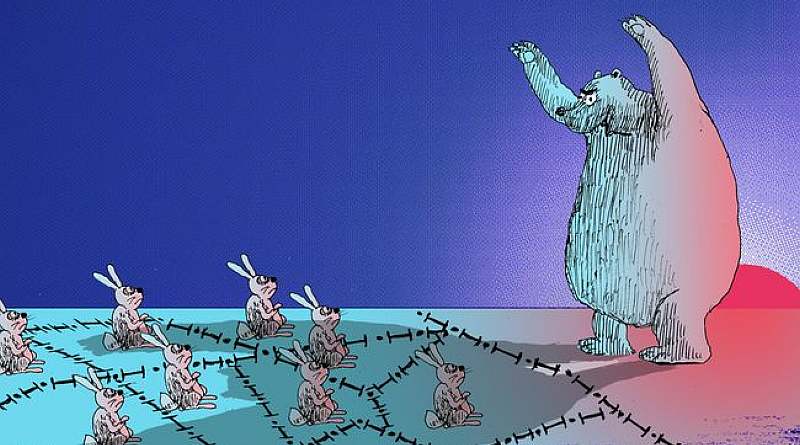
Pekka Virkki, CEPA / Translation iPress
The Helsinki journalist Pekka Virkki, author of the book “Autopsy of Post-Finlandization,” writes about the long legacy of Finlandization in Europe. It concerns not only Finland’s post-war fate but also the influence left by the Soviet strategy in EU intelligence, business, and politics. Virkki criticizes Angela Merkel’s argument that Ukraine could follow Finland’s experience of “peaceful coexistence” with Russia. In his opinion, this path meant not stable neutrality, but self-censorship, KGB penetration, and systemic limitation of sovereignty. The author draws a direct line from Finlandization through “Schröderization” to Moscow’s current influence networks in the EU. He urges Europe to learn from this experience – especially now, when calls for dialogue with the Kremlin are resurfacing.
The legacy of Finlandization extends much further than most people realize and could prove useful in confronting Russia.
At the presentation of her memoirs, former German Chancellor Angela Merkel explained: one of the reasons Ukraine remained outside NATO was the perceived success of Finland – a neutral northern country bordering Russia, yet possessing a developed economy and a functioning society.
This logic, shared by many politicians besides Merkel, was simple. If Finland can thrive as a non-aligned neighbor of Russia, why couldn’t Ukraine do the same? As a “bridge” between Russia and NATO, Kyiv could benefit from its position as economic, political, and cultural gateways connecting the EU and the then-Russia-led Eurasian Union.
The events of 2022 showed that Finnish non-alignment policy was less resilient than many assumed. Following Russia’s full-scale invasion of Ukraine, Helsinki quickly aimed for NATO membership. Thanks to Finland’s strong military potential and the Biden administration’s political determination, the accession process proceeded relatively smoothly – despite the war raging just across the border. Since then, Finland has proven its value as an ally.
However, in the long term, the legacy of Finnish-Russian relations is much more complex.
After World War II, Finland was drawn into the Soviet sphere of influence, yet avoided both communist rule and full membership in the Warsaw Pact. Instead, the country developed a unique survival strategy: maintaining independence, the Finnish state made peaceful coexistence the cornerstone of its foreign policy.
This entailed more than ritual declarations of friendship and cooperation. The result was extensive economic interdependence driven by political considerations, deep Soviet intelligence penetration into political parties, state apparatus, and the media, as well as significant limitations in the defense capability.
This policy, more broadly—the very process of expanding Soviet influence within a neighboring non-socialist state—eventually became known as “Finlandization.” Throughout the Cold War, discussions around this complex and multifaceted phenomenon regularly flared up in connection with topics of détente, arms control initiatives, and transatlantic relations. Finland could be viewed both as a successful example of a non-aligned country that maintained its sovereignty and as a society shaped by self-censorship, the influence of the KGB, and what Bernard-Henri Lévy called “the popular democracy of the mind.” In Soviet strategic thinking, Cold War-era Finland served as a model for Western Europe.
After the collapse of the Soviet Union and Finland’s accession to the EU in 1995, former agents and contacts of Eastern Bloc intelligence services found their way into the structures of the European Union. This reflected both the natural adaptation of national elites to the new geopolitical reality and the implementation of Russian intelligence strategies, which later became more widely known, including the use of Finnish agents to influence decision-making in the EU. Finns, acting alongside former “Stasi” agents and German industrial lobbyists, helped secure Russian influence in the EU long before Cyprus and Malta opened the Schengen area to oligarchs with “golden passports.”
Those who warned about these processes were often dismissed, sidelined, or harassed. In 1995, Felix Karasev, probably the most important mentor of Putin during his service in the KGB, intervened in the activities of Finland’s State Security Service through an old contact in the country’s Presidential Office. Thus, the path was cleared: Russian oligarchs were able to obtain Finnish citizenship, and projects like “Nord Stream” advanced. Its predecessor was initiated in 1997 by the Finnish state company Neste and the Russian “Gazprom.”
As Merkel’s words testify, the special relations between Moscow and Helsinki did not lose relevance after the collapse of the Soviet Union. Instead, they evolved and merged with what was later called “Schroederization.”
In my book “Dissection of Post-Finlandization,” first published in 2023, I argued that the legacy of Finlandization shaped the country’s political culture, its security institutions, and its relations with Russia long after the end of the Cold War. Many of the main conclusions of this book were later confirmed by research from the Finnish Institute of International Affairs (FIIA), which examined Russia’s activities to influence Finland in the 2000s.
The main author of the report, Sinikukka Saari, urged think tanks and research institutions in other countries to conduct similar studies, emphasizing that hybrid threats are shaped by local traditions, institutional cultures, strengths, and vulnerabilities. Her observation points to a broader lesson: despite some recurring patterns, Russian influence operations also adapt to national circumstances and historical legacies.
A telling comparison can be found in Germany. Alongside the newly published English edition of my 2023 book – “Autopsy of Post-Finlandization: The Roots of European Appeasement of Russia” – the book by Georg Mascolo and Katja Gloger “Fiasco. An Investigation of German Policy towards Russia” (Das Versagen: Eine investigative Geschichte der deutschen Russlandpolitik) provides a detailed description of Russia’s influence within European, in this case, German political and business elites. Both works together show how Moscow exploited different historical and institutional environments in Europe to achieve many of the same strategic goals.
If Europe truly considers renewing dialogue with the Kremlin, the road ahead is fraught with pitfalls: some more obvious, others less apparent. The same goes for plans to make the EU a true “hard power” and a more favorable environment for defense, technology, and intelligence.
In both cases, there is no excuse for those who neglect the lessons of the past. Appeasement has many faces, and Russia has repeatedly demonstrated an impressive ability to adapt – often disguising hostile influence operations with rhetoric of peace, free trade, multilateralism, and liberal integration. Europe’s ability to see through these slogans, resist short-term business interests, and carefully scrutinize networks of Russian influence could determine whether it repeats the mistakes of the past – or not.
Illustration: Victor Bogorad
