
Oleksandr Kovalenko / Obozrevatel
In July, Russian occupying forces intensified concentrated drone attacks on Odesa and the region, and also began to use tactical aviation very actively for missile strikes in the region. What is behind this, what means the enemy is currently using in this new phase of attacks, and how to counteract it? Let’s figure it out.
More details on this in the new material of the joint project OBOZ.UA and the group “Informational Resistance”.
The last large-scale and concentrated terror against Odesa and the region by Russian Occupying Forces occurred in December 2025 – January 2026. At that time, the enemy systematically struck energy infrastructure facilities, creating a blackout effect for several weeks, and also attempted to disrupt logistics at Palanka via the Mayak bridge. For these purposes, Shahed-136 kamikaze drones were actively used, and ballistic missile 9M723 strikes with fragmentation and cluster warheads were carried out.
It is worth noting that Russian Occupying Forces regularly systematize their strikes on various regions of Ukraine and regional centers with an unwavering priority on the capital – Kyiv. That is, the enemy cannot simultaneously maintain maximum intensity of strikes on Kharkiv, Zaporizhzhia, Odesa, or Sumy, but only in a “swing” format and with a certain sequence. Regarding Odesa specifically, the increase in strikes occurs on average once a quarter, and the current wave of terror was quite expected after the winter phase but has several features.

July Terror
During the period from July 11 to 13, in the midst of strikes on Odesa and the region, Russian Occupying Forces used a total of over 170 kamikaze drones, 26 missiles Kh-59/69, 6 missiles Kh-31P, and one 9M723.
Taking into account the use of the missile component, such a scale of simultaneously engaged means of destruction was comparable to the “grain terror” of 2023. The nuance is that the forces now primarily strike with drones and aviation missiles X-59/69 and X-31P, which are launched from tactical aviation.
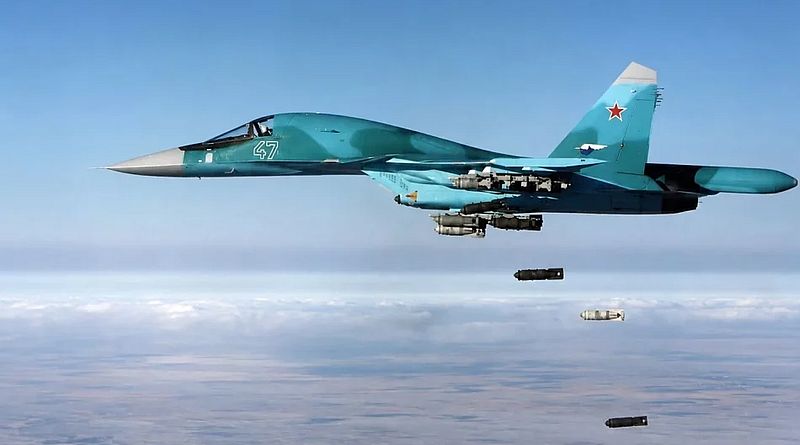
This means not the X-101 and 3M14 “Kalibr” or P-800 “Oniks”, as well as 9M723 OTRK “Iskander-M”, but specifically aviation X-59/69 and X-31P, prompting the opponent to use front-line aviation such as Su-30SM, Su-34, Su-35, and even the Su-57, which is “unmatched in the world”.
In this case, it is not only about using carriers that exhaust their resources but also about the threat of their destruction – despite the fact that launches are carried out in the airspace of the temporarily occupied peninsula of Crimea. Destroying an airborne target like a fighter under certain conditions is a much more guaranteed result than with a ground mobile launcher.
Means used by the enemy
To strike Odessa and the region, the forces have actively deployed multifunctional fighters Su-30SM, Su-35, and nearly fifth-generation Su-57, as well as the front-line bomber Su-34. They are used to launch X-59/69 missiles as well as X-31P, simultaneously providing cover for each other. This covering function is especially entrusted to the Su-35.
These combat aircraft (for launches at Odessa and the region) predominantly use the airspace of the temporarily occupied peninsula of Crimea, with maximum proximity in the area of Cape Tarkhankut, the zone of Chornomorske – Olenivka, which is about 100 km to Odessa. At such a distance, the available means of destruction in the Air Force of the Armed Forces of Ukraine currently (just currently) cannot prevent the terror of the forces.
Much can be changed by JAS 39 Gripen fighters with METEOR missiles, which have a target range of up to 200 km and the best in their category of “air-to-air” missiles – “no escape zone”. But that’s in the future, and for now… not yet.

Primarily, such aggressor strikes address tactical issues. But considering the deployment of the unique for the Russian Air Forces Su-57, which are regarded as the most modern in the combat composition of the troops, one can speak either about the excessive attention of the command to such strikes or about the limited capabilities of the used resources – not so much for carrying out tasks that solve important issues on the battlefield, as for continuing the implementation of the unchanged concept of civilian terror.
It is notable that the Su-57, which Russian propaganda touts as fifth-generation stealth aircraft competing with the F-22 and F-35, are very visible to all radar systems. Nearly all monitoring channels report their entrance into the airspace of the Azov Sea. Such “stealth”…
As for the means of strike, as I mentioned, there are several types, namely – X-59/69 and X-31P.
The medium-range missile X-59M “Ovod-M”, as well as the X-59M2/MK2 modification, has a target engagement range of up to 285-290 km, but the greater the distance, the lower the accuracy. Optimal target engagement range is 100-150 km. Warhead weight varies from 150 to 320 kg depending on the modification.
It is known that before the full-scale invasion of Ukraine, Russia’s stockpile of X-59 missiles was estimated at 500 units, and their active use began on March 26, 2022 – 4-16 missiles per day.
The missile was developed back in 1975 and adopted for service in 1980. Initially, its main carrier was the Su-17, and after their decommissioning – the Su-24. Currently, the X-59 modifications are used by Su-30, Su-35, Su-57 fighters and the Su-34 frontline bomber.

The Su-57 also uses the X-69 modification, which is the same as the X-59 but rectangular instead of round, specifically designed for internal bay placement in this fighter. The X-69 has a slightly longer range and larger warhead due to its shape, but otherwise is a “square copy” of the X-59.
Additionally, X-59 missile family performed poorly during the Chechen war, demonstrating not only low accuracy but also complete dependence on weather conditions.
X-59/69 are effectively intercepted by nearly all arrays of short and medium-range air defense systems, and today this is the only way to minimize damage and threats from them.
As for X-31P – it is an old Soviet anti-radar missile, adopted into service in 1989. Its effective range is about 70 km, although the maximum is stated as 110 km. The warhead weight is up to 100 kg.
Despite being a product of the Soviet military-industrial complex, it remains the opponent’s most effective means of penetrating layered air defenses and delivering precise strikes. The Kh-31P is not used arbitrarily to terrorize civilians, but is specifically used to target either air defense elements such as radars and launchers, command posts, etc., or for precise strikes on other types of targets where a guaranteed result is needed by bypassing all enemy defenses.
The Kh-31P missiles have one of the lowest interception rates compared to all other missile systems, which is their main danger.

Thus, it can be stated that Russia has significantly intensified missile terror on Odesa and the region, using tactical-level resources and minimizing the operational-tactical component but increasing the wear on aviation, especially unique (which I strongly disagree with on a qualitative principle) Su-57s, simultaneously creating threats for their downing.
However, the current terror is distinguished not only by the activation of the missile component.
Reactive Testing
Reactive kamikaze drones based on Shahed-238 named “Geran-2” and “Geran-3” were very actively operating towards Odesa during the second week of July in single and paired groups, sometimes with “non-stop” launch frequency.
It is evident that Russia repeatedly tested a set of new tactics for using reactive drones in the region, with production priority now gradually being allocated in the ROV.
I have repeatedly noted that Odesa and the region serve as quite a convenient testing ground for Russian occupiers to test new forms of terror, such as the ersatz rocket “Banderolet” or the current Shahed-238, as well as to test the tactics of their application. In less than a week, we were able to document at least a dozen different tactical experiments with reactive drones.
Today, Odesa and its region are the most intensive areas for the enemy’s use of reactive kamikaze drones and missiles like the Kh-59/69 and Kh-31P.
Terror as a Distraction and Conclusions
The current surge of terror against Odesa and the region as a whole can be explained as the enemy’s desire to test new reactive weapons and tactics, as well as an attempt to distract from the ROV catastrophe in the Southern operational zone — on the mainland, peninsula, and maritime parts.
As of today, we can speak of the complete failure of the ROV’s spring-summer offensive campaign, the inability of the occupiers’ command to solve the logistics lockdown problem growing in the southern mainland, and to lift the isolation of the Crimean peninsula or unblock the Sea of Azov. Moreover, strikes on the Russian Federation’s commercial fleet from the Sea of Azov have spread to the Black Sea.
In this regard, as we can see, there are at least two reasons. The practical military goal is honing the use of kamikaze drones, which will, in the not-so-distant future, become a more widespread, if not primary tool of terror. The propaganda goal is to distract attention from the disaster of the Russian fleet in the Sea of Azov with isolated strikes on cargo ships in Ukrainian waters. Also, by launching aerial rockets, to shift the focus from isolated Crimea and, in general, the crisis of the Southern operational zone.
Of particular note is the sharp increase in the use of aerial rockets and tactical aviation, which may also be related to the deficit of “Iskander-M” OTRK ammunition on the Crimean peninsula and the fear of deploying 3M14 “Kalibr” carriers in open seas. In this case, I can compare it to the more frequent use of 5V55 and 48N6DM anti-aircraft missiles of the S-300 and S-400 complexes by the ROV instead of 9M723 “Iskander-M” OTRK.
It is also notable that a consistently limited number of aviation assets participate in the terror, typically two Su-30SM and Su-34, as well as one Su-35 and Su-57. In total, six units participate in a terrorist sortie. Never has there been an instance of, for example, 15 or 20 combat aircraft in the air to scale a missile strike, or a simultaneous repetition of such intense strike practice in other directions. It cannot be said that the Russian Aerospace Forces have a shortage of these combat machines.
Considering all of the above, I note that the reason for the intensification of strikes on Odesa is both a practical necessity and demonstrative convulsions of helplessness. However, without obtaining the corresponding means of counteraction, specific aviation and missile systems, it seems impossible to operationally neutralize this terror at present. The only option is to minimize damage through active deployment of short and medium-range air defense systems.
Pictured: Russian Su-34. Photo: Ministry of Defense of the Russian Federation
