
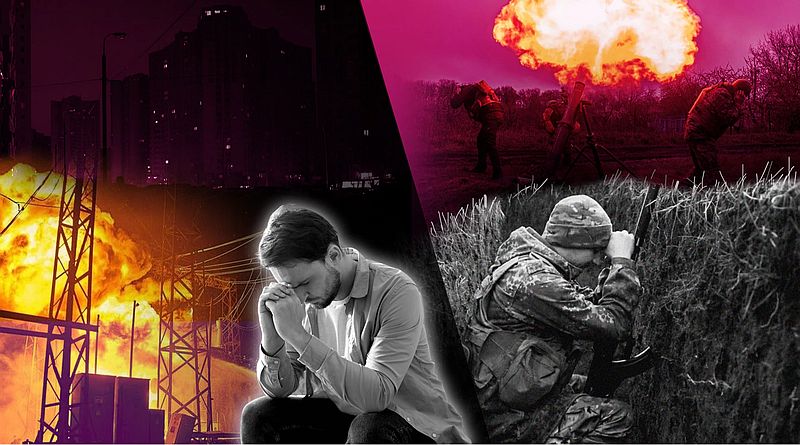

About the current moment.
1. I observed similar beauty from inside the process 3 years ago. Only in a more sophisticated form. Therefore, I will not comment on anything. Because my comments would offend the feelings of believers from different sides. I will note one thing.
There is no need to run around shouting that we’ll all die tomorrow. A pattern of Ukrainian reality: political turbulence arises when there is a certain stabilization in the war, and some inertia forms. That is, sudden risks are comparatively less.
After July 19, our main partners will react extremely cautiously to any irritants. Even if we suddenly liberate Transnistria or capture Orban. So there shouldn’t be any significant drops in international contacts, the routine will be maintained.
If our Parliament indeed goes on vacation until mid-August (although technically they can be assembled at any moment), then the political fuss will be turned off for 4 weeks. This is not necessarily good. Because some decisions could be prepared and carried out. But it is what it is.
In the coming weeks, the Cabinet will be settling in, there will once again be an epic with the division of departments (maximum madness from a bureaucratic point of view, requiring tons of paperwork to be overhauled, thousands of documents to be resubmitted/revised, etc.), personnel will start moving, and so on. Therefore, if this is happening, better now than in September. That would be a disaster.
I hope and trust in the prudence of the military-political and military leaders, as well as their support groups. The guard corps supported their close leader. “Alpha” will organically be for their own in any chair. A number of high-level Armed Forces of Ukraine commanders publicly went into opposition to the commander-in-chief. All this must return to a constructive channel and transform into a greater harm to the Russian Federation. Otherwise, by winter, there will be trouble.
2. Almost three months ago (18.04) I wrote a post about the scariest aggregate in war – the calculator. With a remark about the “oil charm” of the Russian Federation: “If trends continue, in three months it will hurt, and in half a year a chain reaction of collapse may begin.”
Three months have passed. It already hurts them. But it is important to emphasize certain points.
War is a multifaceted, multilayered phenomenon. In a single timeframe, there are videos from Sumy, where an older sister shields her younger sibling during a bombing, photos of a murdered family in Kyiv, videos from the Sea of Azov with prevention of the Russian fleet, a fire at another Russian oil refinery, and videos from the front.
All of this exists in parallel. One does not cancel out the other.
Since the beginning of the month, Russia has killed 25 people in Kyiv alone. I almost show some figures by region every day. You can calculate the number of victims yourself and extrapolate these figures to the end of summer.
Also, daily (!) Russians destroy 5-7 gas stations in the frontline regions. By the end of summer, this will be around 300 added to those already burned.
Together with aggressive strikes on railways (earlier, the railways reported 200 damaged locomotives), Russia, in a state of perpetual war crimes, attacks medical personnel, intensifies attacks against rescuers, and attempts to disrupt postal services and retail networks.
Currently, for example, even in relatively peaceful communities in the Kharkiv region, the train is no longer a reliable mode of transport. It’s hard to plan anything.
In May-June, the Russians targeted agricultural machinery and farms; now (as predicted) attacks on crops are intensifying (along with attacks on ports).
Add all this to the calculator and extrapolate until the end of summer.
What is slightly better than expected at the moment is the electricity situation (although not everywhere). Partly, the weather helped—there is no prolonged scorching heat. Partly, people wisely dispersed from large cities, so there are no extreme loads, reducing the incentive to use scarce missiles. Also, several measures were taken to mitigate damage.
It can be predicted that by autumn, front-line regions (from Chernihiv to Kherson) will face worse fuel availability (though our business will find supply formats), worse overall logistics, and life-support systems. In general, it will become more dangerous.
Advisor to the former defense minister, Sergey Beskrestnov, recently noted that the Russians will increase strikes at depths of up to 100 km. I’ve been writing about this for a few months. Take a ruler and measure who/what falls within these conditional 100 km…
By autumn, a certain set of humanitarian challenges will arise.
For example, some formally peaceful communities in the Kharkiv region have taken in many refugees. To a large extent, these are relatives/acquaintances from other areas of the region, so it’s a sacred duty. However, the communities’ infrastructure is already under great pressure. Water, electricity, transport—everything.
The cumulative effect of Russian attacks and their possible increase (due to the same reactive drones) will create conditions in some communities for people to leave, who will need to settle somewhere before winter.
If there are attacks on life-support systems of major cities and regional centers (say, if hellish heat sets in August), a complex humanitarian task will arise.
Because most of those who, for example, stayed in Kharkiv, won’t go anywhere, even when/if the situation significantly worsens. These are, in any case, hundreds of thousands of people, thousands of children.
What’s the conclusion?
The damage can, in broad terms, be anticipated. Because we roughly know how many missiles and drones Russia launches, with some adjustments. It will be difficult; there will be casualties and destruction. Hundreds of people in peaceful cities, if the current trend continues, will be killed, several thousand wounded.
But nothing, except for a severe and prolonged destabilization of life-support systems (water, sewage, electricity) in large cities (several simultaneously), will affect Ukraine’s ability to hold its defense. That’s the bottleneck. Air defense systems are being prioritized for its protection.
Russia will be able to harm somewhere, and not elsewhere. Ukraine will stand firm in any case. But everyone should be mentally prepared and determine their tactics based on their real situation.
3. What about the Russians?
The fuel crisis we’re witnessing is more accurately called a gasoline-logistics crisis with price consequences.
To give a sense of the figures.
Russia has traditionally extracted 500-520 million tons of oil and produced about 270 million tons of petroleum products from it, exporting around 230 million tons of crude oil. This included the production in Russia of:
• approximately 85-90 million tons of diesel,
• 40-45 million tons of gasoline,
• 40+ million tons of fuel oil,
• 10+ million tons of aviation kerosene, etc.
The domestic consumption of both diesel and gasoline in Russia is around 40 million tons each. Thus, Russia has a significant surplus of diesel, with about 40 million tons of this product being exported.
However, gasoline and aviation kerosene were consumed almost completely, and if there was any export, it was minimal. In addition to crude oil, fuel oil, naphtha, and several chemical products were shipped for export.
The army mainly consumes diesel. Farmers predominantly need diesel. Railroads – diesel. Public transport – mostly diesel too.
In public discourse, figures are usually presented as a certain percentage of the total capacity loss of Russian oil refining. The nuance is that disruption in the production of gasoline and aviation kerosene automatically creates a deficit, whereas a breakdown in diesel production results more in logistical problems. Therefore, the obvious priority for Russian authorities is to ensure the logistics of diesel for the army, farmers, and public services, and to meet the needs for aviation kerosene. Gasoline for the mass consumer, although socially significant, is secondary. Solutions will be sought in 1) importing gasoline, 2) reducing quality, and 3) decreasing consumption, partly through price increases.
The specific nature of setting up gasoline imports and, more importantly, their logistics is a months-long story. The main volume of Russian oil exports is structured around the principle of “pipelines and railways from Western Siberia/Volga/North – to the west and south.” Except for the Far East. Gasoline will need to be imported via return routes. Ships to Baltic and Far Eastern ports, from where it will be transported by rail and tanker trucks.
That’s why I wrote: Russian authorities must weather the peak of the crisis in the coming months by setting up primary logistics for diesel and then turning the gasoline crisis into a chronic one. The task cannot be resolved without halting Ukraine’s air strikes for a long time.
Naturally, we will try to exacerbate it as much as possible to provoke regional collapses.
4. It should be understood that compared to the mass of civilian consumers (tens of millions), the army requires not that much fuel. The bottleneck here is logistics.
Hitting refineries, storage tanks at stations/depot pipelines, oil depots, and locomotives of freight trains near the frontlines sharply complicates fuel maneuverability. This can cause disruptions, leading to Russian military suffering losses greater than permissible for their tasks, causing them to stall.
Indirect damage – a price spiral, increased costs for everything, leading to a payment crisis and shortage of certain goods. Not to mention the curtailment of investments. Even the head of “Rostec,” Sergey Chemezov, recently said that his vast enterprise lacks funds for investments.
Regions of the Russian Federation (except for Moscow, Tatarstan, and a few others) are experiencing a serious budget crisis. A record number of Russian federal subjects faced a budget deficit already in the first quarter of 2026.
The Russian authorities are already selectively testing the format of forced mobilization because the stream of mercenaries does not meet the demand. Currently, this is working.
However, by around October, when a new wave of mass mobilization is expected in Russia, dear Russians will already be quite unhappy with what’s happening. This means it will be a forced mobilization of a sufficiently frustrated population…
5. Therefore, the task for summer-September.
Not to fail ourselves.
To understand that there will be casualties and damage, but the enemy’s capabilities are measurable and finite.
Prepare for difficulties. As much as possible.
Support the army. As much as you can. Overworking means losing and becoming a problem.
Do everything to make the dear Russians angry and direct their dissatisfaction into an anti-war direction.
Until the end of August – early September, we are with the Russians one-on-one, unless something anomalous happens.
Priority – mental health and harvest. There are few apricots, few apples, but something will definitely need to be distributed/evaded.
Collage: Andriy Kalistratenko/UP
