
Timothy Ash / Translation by iPress
Senior strategist at RBC BlueBay Asset Management and fellow at Chatham House Timothy Ash, who personally observed the transition of post-Soviet countries from planned to market economies in the 1980s-90s, summarizes the nearly forty-year transformation of the region known as Emerging Europe. He insists: despite the current rise in Euroscepticism and right-wing populism, the process of joining the EU has been the main driver of these countries’ unprecedented economic upswing. Ash pays particular attention to the defense-industrial complex as a potential next driver of economic development. He cautions against mechanically increasing military spending and calls on NATO and the EU to rethink the architecture of defense technologies, particularly through partnerships with Ukraine, which is already setting a global standard in drone warfare.
Over the past few weeks, I have participated in a number of conferences dedicated to new challenges facing the Emerging Europe region nearly forty years after the fall of communism in 1989. It is often mentioned that most countries in the region have already reached middle-income status and face typical pitfalls of this category: growth barely exceeding one percent, unfavorable demographics, increasing public debt, doubts about competitiveness, as well as increasing polarization, populism, and right-wing radicalism—mirroring much of the developed world. Right-wing radicalism, by the way, is gaining strength more noticeably than the left—still perhaps bearing the burden of the shameful communist past.
Discouragement is easy. But take a moment to look at things from a historical perspective, and the striking transformation that has taken place in Emerging Europe over these almost forty years becomes astounding.
As a young economist in the 1980s, I traveled extensively to countries of the former communist bloc and the Soviet Union. In 1991, I was in Moscow and witnessed the collapse of the USSR firsthand. That same year, and the following one, I visited the new countries born from the ashes of the USSR: the Baltic states, Central Asia, the South Caucasus, Ukraine, and Moldova. Later, in the former Yugoslavia, I observed a similar emergence of new states—this time, unfortunately, from the ruins of war. I was part of the first academic delegation to visit present-day North Macedonia immediately after its declaration of independence. I remember being greeted at the airport by the president and driven to the center of Skopje in the presidential limousine—an old Mercedes that was likely inherited from the communist party apparatus.
In 1993-1994, I lived in Ukraine during hyperinflation. Throughout the 1990s, I worked as an economist with various international financial organizations, helping, at least it seemed to me then, the transition from a planned to a market economy. At the time, it felt like a Herculean task, almost impossible to achieve. These economies had suffered for decades from irrational resource allocation (literally: guns instead of butter), inefficient, semi-bankrupt enterprises, and agriculture. Many such enterprises declined when the economies opened to the market, and various forms of shock therapy were implemented—some more successfully, others through trial and error.
Many countries experienced banking crises, balance of payments crises, and sovereign debt crises, followed by IMF bailout programs. But the problem often lay not only in the structure of these economies and weak balance sheets, but also in the lack of human capital and lack of understanding of how the market functioned. It was necessary to educate the population and government officials—from a completely fresh start. The initial shock plunged many of these economies into poverty, widening the gap with developed markets. Back in 1994, when the EU promised a whole series of these countries the prospect of joining in ten years, the GDP per capita in many of them was just a fraction of the EU average—usually 10-20%. It was hard to imagine that the first wave of Emerging Europe countries would be able to meet the Copenhagen criteria by 2004. I am even inclined to think that the old EU states that made this promise back in 1994 did not calculate that Poland, Hungary, the Czech Republic, Slovakia, the Baltic states, or Slovenia would be ready in a decade—so to some extent, it was a “cheap” promise. However, the attractiveness of the prospect of joining and, evidently, the desire to get rid of the communist system prompted these countries to do their homework, tighten their belts, and implement the acquis requirements (the entire set of EU laws, rules, standards, procedures, and obligations that a candidate country must accept and comply with to join. – iPress) and related reforms.
Others followed: Bulgaria and Romania in 2007, then Croatia, and later, perhaps, new countries will join. Although it is currently fashionable to be skeptical about Europe, this club still attracts many: the line is long—Albania, Bosnia and Herzegovina, Kosovo, North Macedonia, Serbia, Turkey, Ukraine, and soon likely Armenia and Georgia. The one exception—Brexit with Great Britain—does not overshadow the long list of those who have joined or still want to join the EU.
But recalling how in the 1980s and 1990s I boarded planes with suitcases full of food for Ukraine, Romania, Poland, or Albania, I could never have imagined where these same countries would be now—with GDP per capita, at least by purchasing power parity, comparable to Western Europe. Well, except for Ukraine—but most of the rest have mostly reached this level.
And when you visit Warsaw or Budapest today, you’re impressed: in front of you is a normal, well-functioning developed market economy where everything works, where those in power speak the same language as in the West, and face many of the same problems. In the 1990s, there were still those who dreamed of some third way between plan and market.
Imagine: in Warsaw, Kyiv, or Tirana, you walk into a restaurant, order anything from the menu – and you can almost be sure you’ll get it. In the early 1990s, the menu resembled a wish list: even if it hinted at a choice, in reality, you might only get a cutlet – regardless of whether you ordered chicken, beef, pork, or fish.
For me, this transformation is absolutely astonishing, and the entire region is truly a huge success story. At the heart of this remarkable transformation is the process of joining the EU, which provided a roadmap for reforms and funding for their implementation.
EU accession ensured successful economic development and prosperity for the region. Importantly, it generally brought peace and security – key factors for successful economic transformation. I say “generally” because there are obvious failures: the wars over the Yugoslav legacy, the current Russian-Ukrainian war, conflicts in Central Asia and the South Caucasus, and the Transnistrian knot. But I am convinced these failures occurred where there was no real prospect of EU membership. Where it existed, numerous longstanding territorial disputes and painful points between states took a back seat as a requirement for entry. The EU accession process compelled conflict resolution and contributed to establishing peace and security throughout the region it covered.
Thinking about all this, I see a bitter irony in the fact that many of the same former communist states that joined the EU in 2004 and later now either have Eurosceptic far-right governments (Bulgaria, Czech Republic, Slovakia) or parties with such views leading in polls – almost everywhere, posing a challenge to pro-European mainstream parties in many countries. This is striking, considering the successes of economic development over the past nearly forty years, much of which was funded (and still is) by EU structural funds, which for some countries have constituted 3-4% of GDP per year for decades.
Perhaps the social moods in these countries simply reflect broader European and global trends toward populism, fueled by anti-immigration sentiments and spurred by mass migration, the emergence of social networks, and politicians like Donald Trump, Viktor Orban, and others, who disrupt established social norms by inciting racism. It may also be the result of fading memories of the harsh times of communism, as new generations, who simply do not remember what happened in the 1980s or early 1990s, have higher life expectations.
Considering all the above, I still want to clearly and unequivocally state my position: economic development – no, complete transformation – Emerging Europe over these almost forty years is nothing short of a miracle, and the credit belongs to the European Union. This is a colossal success, and I say this as a Eurosceptic who, nevertheless, voted for the UK to remain in the EU.
It seems that this fact has not received the attention it deserves: no graduation ceremony was held for these states, and the EU did not receive the praise it truly deserves. However, this is perhaps one of Europe’s current problems—it poorly presents itself and struggles to highlight its own successes. Gloomy sentiments seem to prevail around Europe: due to centrifugal political forces within Europe itself, the weakening of the transatlantic alliance, which has put Europe in a difficult position regarding protection from Russian threats—to the extent that it was forced to agree to a highly disadvantageous trade deal (Turnberry) with the US in exchange for certain security guarantees; due to falling competitiveness amidst Chinese dumping, and lagging behind in the artificial intelligence race.
The key challenges facing Emerging Europe today are largely similar to those of developed Europe since these economies have already become quite similar. Therefore, it’s about increasing long-term growth, competitiveness (especially in competition with China), and addressing these issues amid rapidly aging populations and rising national debt. As highlighted in Draghi’s report, deregulation, investment in AI and technology, and creating a favorable business environment are needed. The EU, which is inherently focused on regulation and achieving consensus on common standards, finds this challenging.
Although public debt in Emerging Europe is generally lower than in developed Europe, it is rapidly growing. As recently noted in an IMF report, these economies combine the worst of both worlds: dependence on low (often fixed) tax rates and frequently weak tax compliance—alongside a spending model typical of Western Europe, where government spending levels reach 50% of GDP and beyond. It can, of course, be argued that as the economy develops, so does its ability to service large debt—much like in developed countries. However, these countries typically have lower savings rates and less developed domestic capital markets, although for eurozone members, this issue is partially offset by access to eurozone markets.
But rising debt, increasing servicing costs, and additional social expenses related to an aging population are a warning signal for the future: they will require tax increases and further slow down growth.
Regarding the aging population: the situation is worsened by the relatively closed immigration policies of these countries—as opposed to developed markets—which reflect long-standing anti-immigration sentiments. The paradox is that countries with the strongest anti-immigration parties and sentiments are themselves major beneficiaries of external emigration. Emigration from the region has brought remittances and facilitated the skill level improvement of their economies and populations: specialists trained abroad returning home. Partly, the labor shortage is now covered by migrants from Ukraine—they generally integrate better as they share a similar language and culture.
Recently, we’ve also observed a significant influx of migrants from Southeast Asia – from India, Sri Lanka, the Philippines – but often against the backdrop of biased attitudes towards people from Muslim countries and restrictions on permanent residence. It will be interesting to see how, for example, the Czech Republic or Poland will handle the situation when the war in Ukraine finally ends and the Ukrainian workforce returns home: what will be their backup plan then?
Sources of New Growth
Ultimately, I believe the long-term solution for these economies lies in moving up the value-added chain. This means investing in education, AI, deregulation, fostering a culture of innovation and change, and being open to quality migration – essentially, making sure that postgraduate graduates from the Global South want to move here. Easier said than done – especially when budget deficits are already inflated, public debt is growing, and everyone is trying to achieve the same thing.
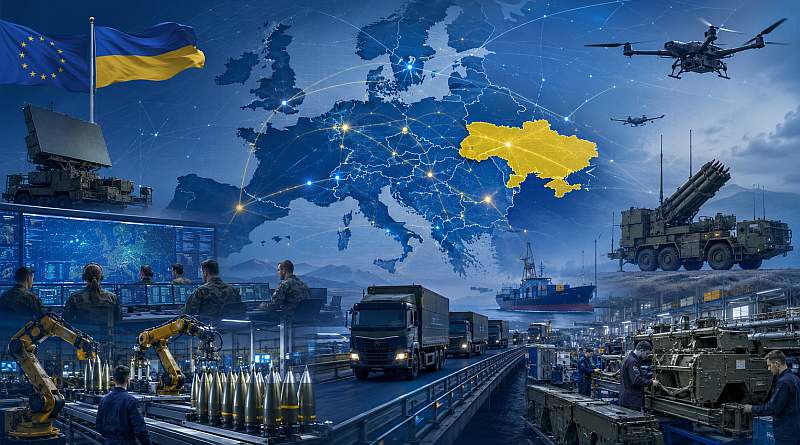
There’s much talk about the potential growth impetus for Europe overall and for the Emerging Europe defense-industrial complex due to increased defense spending in NATO and Europe to reduce reliance on the USA. The €500 billion SAFE financing program is seen as a key tool in this direction. The money is certainly beneficial and will help sharply increase Europe’s defense spending and develop the military-industrial complex on the continent. However, I have some reservations.
Firstly, while the former communist states of Emerging Europe had industrial complexes deeply oriented towards the needs of the Warsaw Pact back in 1989, nearly forty years later, much of these capacities have rusted, and institutional memory has long been lost. Reviving them is not easy. This was confirmed by the much-publicized 155-mm shell production program coordinated by the Czech Republic: according to my information, a significant portion of the supplies within its frame were produced in countries that formally do not meet the SAFE program criteria – primarily in Turkey. It remains a real scandal that the two countries with the strongest defense potential – the United Kingdom and Turkey – are still excluded from it. So, I am not sure the SAFE program by itself will drive defense-technological innovations in Emerging Europe – especially if a significant portion of the funds goes towards orders of old tank and shell models, rather than new technologies.
Secondly, and more importantly, I’m frustrated by the almost foolish assumption that the key to Europe’s defense lies solely in money and that any problem can be solved simply by throwing funds at it. I understand why defense agencies and especially major contractors are rubbing their hands at the prospect of raising NATO defense spending from 2% of GDP to 3.5%, and then to 5%—including broader support costs. But this logic ignores the colossal inefficiency of organizing European defense. If the main existential threat to Europe comes from Russia, then 2% of GDP should be more than sufficient to counter this threat. The same 2% of GDP from the combined GDP of allied European countries, close to $30 trillion, is almost $600 billion, which is three times what Russia currently spends on defense. This is without considering Turkey’s contribution, which could add about another $50 billion to the overall European defense balance. Europe’s inability to counter the threat from Russia within the existing defense expenditure is due to organizational inefficiencies, procurement issues, poor coordination, and lack of resource pooling to address threats and close gaps. Ukraine has shown what can be achieved with technology at significantly lower defense spending: probably about $100 billion in annual defense spending for Ukraine has proven sufficient to halt Russia in this confrontation.
The example of Ukraine, as well as Turkey, shows how the army and defense industry can be transformed through technology to get the most out of every dollar spent. This is exactly what Europe needs to emulate. Doubling defense spending is likely to only result in money going to the same major contractors who demonstrate little success in keeping up with the times and staying within budget on key defense projects. In an era of iterative warfare—such as the war in Ukraine—new drone units seem to be setting the tone for future wars and shaping the corresponding structure of the defense-industrial sector.
In the context of uncertain geopolitics, where further global defense spending and consequently the expansion of the defense technology market is likely, I would say the path to a higher position in the global value chain is through partnership with Ukraine in the field of defense technologies. Today, Ukraine is at the forefront of drone warfare: without any doubt, it is winning the iteration battle against Russia, but it needs cooperation with European partners to attract funding and scale operations. Victory over Russia in Ukraine means maintaining iteration superiority and then moving to industrial-scale: we are already seeing this with long-range drone strikes on Russian energy infrastructure. Europe must integrate Ukrainian defense technology companies and their capabilities into its own military-industrial supply chains. This mission is critically important for Europe—both for its defense and for the broader future of the European economy, as defense technologies have the potential to become the locomotive of broader innovations across the entire economy.
Reflecting on innovations in defense technologies, I paid attention to a recent article by former Ukrainian Prime Minister Oleksiy Honcharuk titled “Time Dimension: A New Aspect of the Battlefield Unveiled by the Experience of the Russo-Ukrainian War” (published by LSE, May 2026). Oleksiy Honcharuk, the youngest prime minister in Ukraine’s history, appointed by Zelensky in 2019, later became a marine drone pilot. Such things happen in Ukraine these days. Honcharuk explains how Ukraine achieves so much with significantly fewer resources by rethinking combat operations and the very domains of war.
Ukraine has introduced a separate drone domain alongside the traditional ones—air, sea, land, etc. Within this drone domain, there are 12 competing and mostly autonomous drone units responsible for their own R&D, procurement, and performance-based financing. This organizational structure is key to Ukraine’s current technological advantage in the drone sector: a deeply decentralized approach as opposed to the almost command-administrative approach from the Russian side. It’s easy to imagine these 12 Ukrainian drone units turning into new leading defense contractors after the war—I can almost hear investment bankers preparing for their IPOs. But Europe must build partnerships with these structures to learn from their combat experience and rapidly enhance its own defense capabilities in the reality this war has revealed.
The essence of all that is said is that the Russo-Ukrainian and Israeli-Iranian wars have revealed a complete transformation in the nature of armed conflict and highlighted the importance of defense-industrial complexes and defense technologies. It’s not just about how much is spent on defense, but how that money is spent. NATO still seems to think in terms of traditional domains (navy, air force, army, etc.) under pressure from old contractors and does not understand the need to rethink the entire defense structure. Simply doubling defense spending, which now seems the response to the threat from Russia, will only cement existing inefficiency and rigidity. Europe already gets a terrible return on its defense expenditures at 2% of GDP; doubling the spending will only double the inefficiency. Existing “cash cow” contractors won’t give up on this since they thrive on such inefficiency.
Instead, we need to rethink the entire ecosystem of defense technologies in Europe—just as the Ukrainians did to protect themselves and make a leap in the value-added production chains for their own economies. Ukrainians changed their approach to the structure of defense technologies because they were forced to do so—under the existential threat from Russia, with limited weapons supply and funding from the West. Europe needs to do the same. Necessity compels.
And Europe must not forget that higher defense spending comes at a cost. For government officials, there are trade-offs: in an era of large budget deficits and substantial debt obligations, higher defense spending likely means less funding for other sectors—particularly social welfare. In the context of populism, this carries risks of public discontent and fuels extremist forces. Or it means higher budget deficits, higher interest rates, and potentially lower real growth, further undermining the ability to service debt and fund defense and other expenses—again playing into the hands of populists.
In summary, we should strive for better tangible returns from defense spending rather than simply increasing it mindlessly. Considering that technology is changing the nature of warfare, a complete rethinking of defense is on the agenda.
And finally, returning to the need to give credit to the EU for transforming Emerging Europe. The collapse of communism, the expansion of the EU, and NATO were indeed accompanied by a reduction in defense spending—likely more than halved from 1989 to today. It is fair to say that the peace dividends were used. But a significant portion of the funds saved on defense was reallocated to various development programs for former communist economies—PHARE, TACIS, then pre-accession funds, and after accession, cohesion, and structural funds, of which the countries of Emerging Europe remain large beneficiaries. For Bulgaria and Romania, they account for over 3% of GDP or even more. These were investments by developed Europe in the successful development of the rest of the continent: it was envisaged that various expenditures from development funds would make the entire continent more developed, prosperous, and stable. And so it happened. Poland’s nominal GDP has more than tripled over the last thirty years and more, and its ability to finance higher defense spending for the collective security of Europe has increased accordingly. In 1991, 2% of GDP in defense spending for Poland would have been only $8 billion, but now it’s $24 billion, although Poland has actually raised its defense spending more than twice that level. But it is only thanks to the structural funds aimed at supporting Poland’s successful transition that it finds itself in a position to fund a substantial and serious contribution to Europe’s defense today.
The response to US criticism that Europe does not spend enough on its own defense is that this criticism is unfair. Europe’s priority after the fall of communism was undoubtedly to invest resources in assisting economies in restructuring—until they became stable and prosperous and capable of bearing a fair share in providing the continent’s defense. This has been achieved. Investing 1% of GDP annually in structural reforms and the development of former developing communist countries has proven to be a much more effective expenditure than simply buying tanks and fighter jets. The US did not write large checks for the economic development of Emerging Europe that emerged after the collapse of communism—this was mostly done by the German government. This investment has more than paid off by ensuring that Europe now has a bastion of economically strong and prosperous states on the front line against Russia, capable of financing their own defense and the defense of Europe.
