
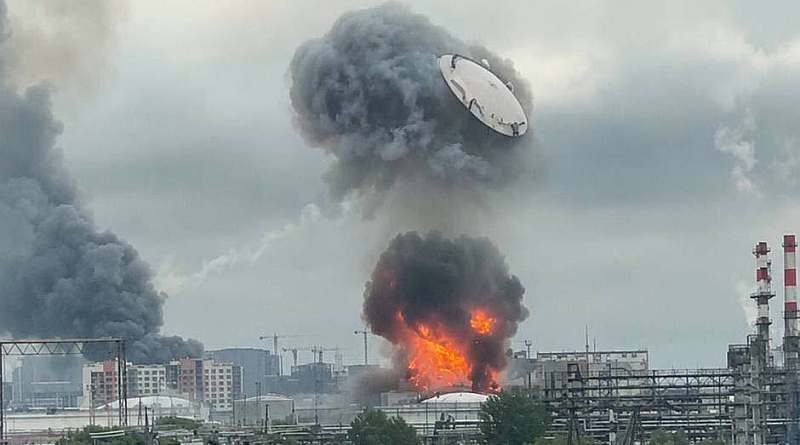
The fuel crisis in Russia is escalating, as expected. Media are already filled with headlines about the worst oil crisis in history.
From January to May 2026, drones and missiles attacked Russian refineries 38 times. May was record-breaking — Defense Forces struck 16 plants.
In the first half of June, we have already attacked six processing and storage facilities, including a recent strike on Kapotnya — Kuibyshev Refinery, Afipsky Refinery, Tolyatti, TANECO, Moscow Refinery, and the Kuban base.
What do we have? For the first time, all oil refineries in the European part of Russia are shut down or significantly reduced in capacity. But Russian media are hasty. What they now call the worst crisis is just a warm-up.
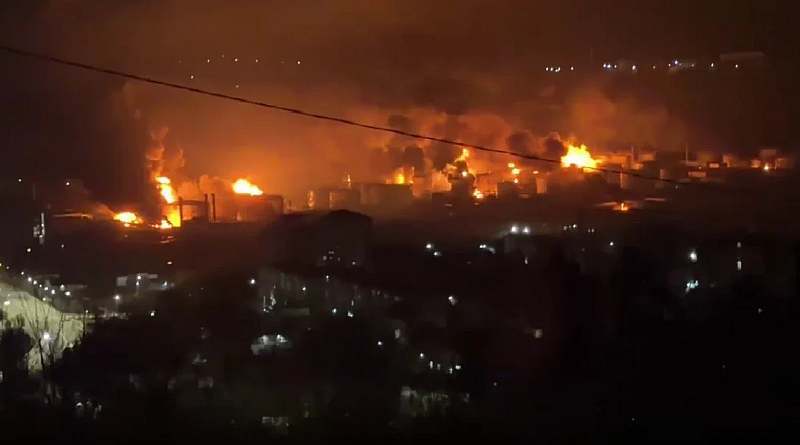
So far, this wave has only begun to spread from the outside inward, like a tsunami — the occupied territories in Ukraine, neighboring regions like Kuban where oil rains fell in Tuapse, and hundreds of thousands of Crimeans decided to refuel; then Ufa, Yekaterinburg — and it ignited.
Currently, in one form or another, rationing and restrictions are affecting only the military and agrarians in 25 regions of Russia, including Moscow and St. Petersburg, not counting the occupied territories.
And the crisis will deepen: 35% of processing capacities are knocked out, eight out of ten largest refineries, and a huge number of storage facilities — we lost count at 70 large tanks. Just to rebuild this scorched network would require enormous money, roughly 25,000 tons of corrosion-resistant sheet steel, shut-off valves with metering devices, and high-pressure welding crews, which have never been in sufficient supply.
But the main issue is that the lack of storage capacity does not allow maneuvering with the refineries still operational in Siberia, and maximizing the use of the export ban by stockpiling fuel there.
The capacities of oil pipelines and pumping stations are also targeted. The automation knocked out at pumping stations acts like a tourniquet on a pierced artery—only applied to their own economy. Without pressure, the mainline is dead, and the oil simply doesn’t reach the vital organs of their industry. This leaves both still functioning factories and export terminals without raw materials.
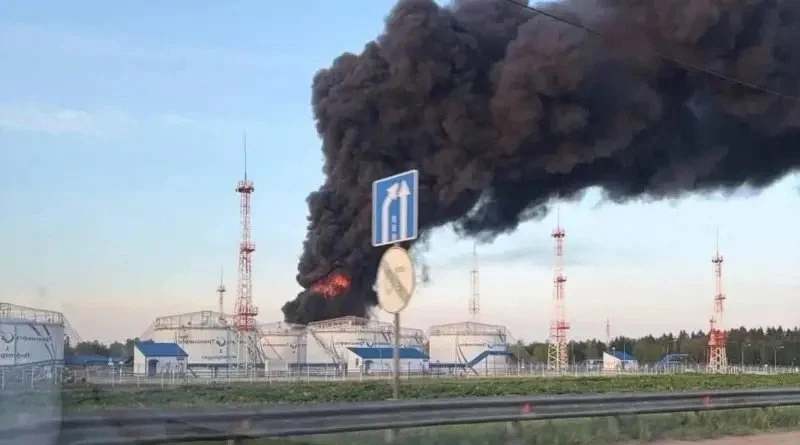
Since May, a systematic campaign has been launched to amputate these transport veins. In just the past few weeks, six strategic stations have been hit: Sonechnogorsk near Moscow, Yaroslavl-3, and Palkino (a key valve that drives Siberian oil for export), a pair of SBU visits to Vtorovo and Lobkovo in the Vladimir region, and the disabled Yefimovka near Volgograd.
Approximately, the strikes on refineries alone have cost the Russian budget $7-8 billion in direct damages. The use of additives (ethanol, monomethylaniline, lowering sulfur standards, etc.) is essentially the legalization of a temporary rollback to Euro-3 standards to use non-upgraded purification columns. This will mean reduced engine resource—a loss also worth billions in the long term, but spread between the budget and private pockets.
Logistical Friction
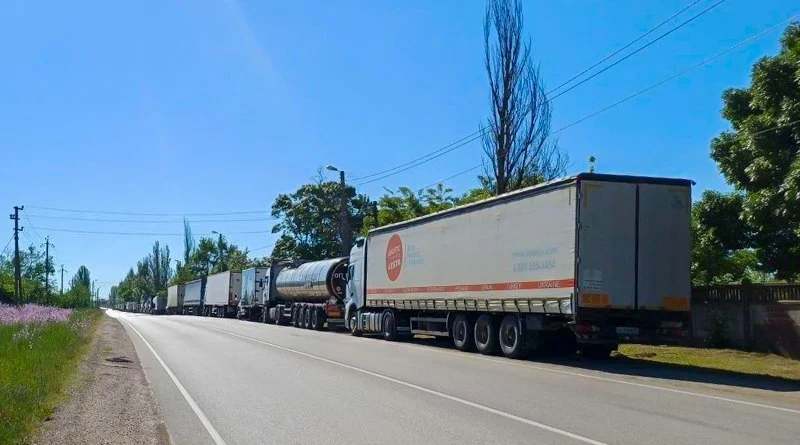
Logistics are strained: hundreds of tank trucks are knocked out on the highways, and hundreds more are under repair due to overload. They are trying to supply the front on wheels, but there’s an interesting twist: drivers are simply refusing to go on trips. There are fewer fools willing to be targets behind the wheel of a moving bomb.
Various contract disruptions because an enterprise was not included in critical lists, delivery deadline failures, goods spoiled in the heat, logistic issues, penalties, bans on refueling planes in regions, tourism losses—all of these are hard to account for, but they are the most significant.
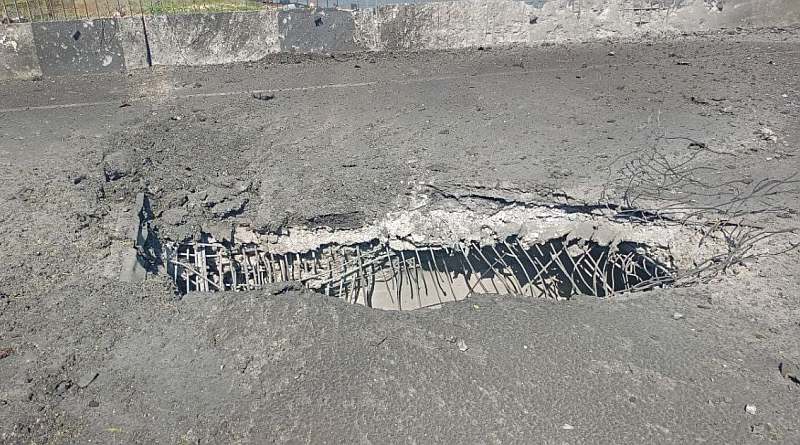
Damage to all bridges in Crimea, the halt of civilian truck transshipment along the “Novorossiya” route, and pontoons to supply positions near Stepnohirsk and Mala Tokmachka from Crimea – a telling marker that the main part of the logistics has shifted to the Crimean Bridge. And the fact that parts of the “Rubicon” equipped with interceptor drones are being deployed to the region indicates that the enemy is in severe pain after the rail ferries, bridges, and free hunting on fuel tankers were knocked out.
The main message we want to convey to Moscow is that things will never again be as one-sided as before. There are no more safe places in the European part of the Russian Federation. And no encirclement of Kostyantynivka or strikes on film studios in Kyiv will affect this.
The Mathematics of Losses
Each burned-out factory is a double blow to their treasury. First, there’s a loss of billions in missed foreign exchange earnings from exports. Second, billions of rubles that the budget is forced to pay the oilmen in subsidies (the same damper) to prevent them from raising gas station prices sky-high, so they can repair and protect the factories. This money will not go to purchasing shells or paying new contractors. Meanwhile, the nets, like in Kapotnya, didn’t work – funds were spent, and no results achieved.
By knocking out pumping stations and factories, we extend their logistical reach. Fuel trucks have to take huge detours, trains change routes, and the railway network is overloaded. All this results in delays. A few days of fuel convoy downtime means a disrupted assault or non-operational equipment on the front lines, a lack of irrigation or suitable weather for harvesting, the inability for heavy machinery and harvesters to refuel at regular stations, and wholesale networks supplying only security forces. All this, like ripples on water, disrupts the supply schedule of raw materials and equipment, chokes the economy, and horizontal connections.
Stretching Air Defense
They cannot protect a territory the size of a continent. Each of our strikes forces them to make painful decisions: remove air defense systems and electronic warfare from the front line to cover a chemical plant deep in the rear, or leave the Rosrezerv base to burn for weeks, or watch as we repeatedly hit tanks in Tuapse or Rybinsk. Billions of dollars into interceptor drones and scaling delivery means in air defense? That suits us – air defense systems don’t storm Kostyantynivka, and that requires many months.
Industrial Cannibalization
Due to sanctions, they cannot quickly purchase Western primary and secondary distillation units or quality automation for pumps. Repairs take months, require dismantling other facilities for spare parts, and exacerbate the situation regarding planned repairs – the load on the remaining supply chains increases.
Fuel production is at its lowest in 21 years, diesel prices have increased by 36% and aviation fuel by 40%, with bans on aircraft refueling in six regions. Tatarstan – the oil center of the empire, has imposed a limit of 20 liters per person. It’s like running out of sand in the Emirates.
Ahead is the seasonal increase in consumption, vacations, and the escalation of systematic strikes at medium distances on railway tanks, locomotives, and fuel trucks to 500-700 per month. And only then will the worst oil crisis in RF history occur – no need for a false start yet.
On the cover: Attack on Moscow Oil Refinery 06/18/2026. Photo from open sources
