
Francis Fukuyama / Translation by iPress
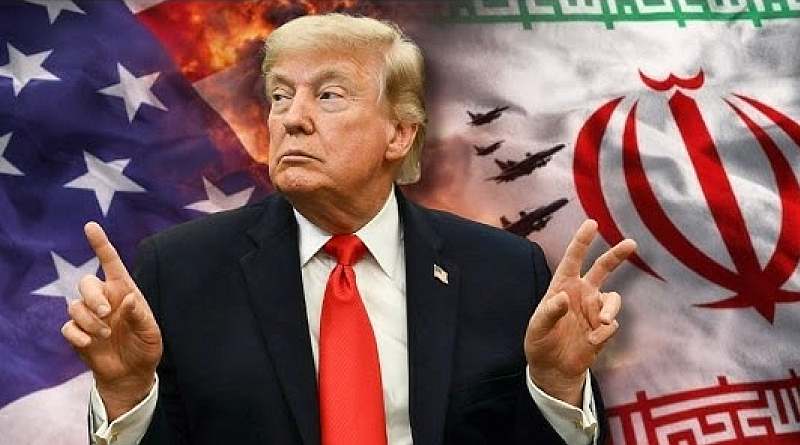
The well-known political thinker and Stanford University professor of international relations, Francis Fukuyama, criticizes the “peace treaty” announced by Donald Trump – a 60-day ceasefire between the US and Iran – calling it not an agreement but an actual capitulation of Washington. He emphasizes that none of the declared war goals – regime change, transfer of enriched uranium stocks, cessation of enrichment, Iran’s withdrawal from supporting allied groups, and cessation of violent suppression of protests – have been achieved: all these issues have simply been postponed for future negotiations. Fukuyama compares the outcome to Obama’s 2015 nuclear deal, which Trump once sharply criticized, and argues that the new arrangement is weaker than it. In his view, Trump’s retreat is explained by internal political pressure due to rising oil prices and inflation, and the situation itself demonstrates the president’s irresponsibility and inconsistency.
On his 80th birthday, Donald Trump announced a 60-day ceasefire, which he called an important victory for his own diplomacy. Official details of the agreement have not been released, but according to available information, it provides for cessation of strikes on Lebanon, the opening of the Strait of Hormuz without transit fees, and the lifting of the naval blockade of Iranian ports imposed by the United States. Announcing this, Trump also thanked Chinese leader Xi Jinping and Putin for facilitating the agreement.
Francis Fukuyama argues that this is not a real agreement: in his opinion, it is an actual capitulation of the United States to Iran. The agreement, in his assessment, merely returns the situation to the state that existed before February, when the strait was still functioning, and Washington and Israel had not yet started bombing the Islamic Republic. In other words, it eliminates a problem that Trump and Prime Minister Benjamin Netanyahu themselves created by starting the war.
All the goals the Trump administration justified military actions for three months remain unfulfilled and postponed for future negotiations:
- Neither a regime change nor an “unconditional surrender” occurred; the Islamic Revolutionary Guard Corps now controls the country more firmly than before;
- Iran has not committed to handing over its enriched uranium reserves;
- There is no commitment to stop uranium enrichment—neither immediately nor on a set future date;
- There are no commitments to cease Iran’s support of allied groups in the region, such as the Houthis or “Hezbollah”;
- Iran has also not agreed to stop the violent suppression of protesters.
According to the author, the so-called memorandum of understanding postpones all these contentious issues for a 60-day ceasefire period, while Trump speaks of them as if they have already been resolved. Fukuyama notes that if this were the case, why are these points not in the memorandum’s text? In his view, it is unlikely that Tehran will concede on these issues within two months, as they touch on the very essence of the regime.
Trump stated that if Iran does not meet the rest of the demands, he will resume the war and even consider turning the United States into the “guardian of the Middle East” in exchange for 20 percent of the region’s revenues. Fukuyama ironically remarks that it’s hard to say what seems more absurd—the reaction of Middle Eastern states, including American partners like Saudi Arabia or the UAE, who would now have to openly pay for American protection, or the reaction of American public opinion, which would rather see an end to interference in the region’s affairs as soon as possible.
Comparing the new agreement with the nuclear deal made under Obama’s presidency in 2015, the same one Trump consistently criticized before, Fukuyama argues that the current memorandum is significantly weaker. Obama’s agreement limited uranium enrichment to 3.67 percent for 15 years (well below the 90 percent needed to produce nuclear weapons), required the export of enriched material outside Iran, and placed all these conditions under the control of international inspectors; Iran adhered to these obligations until Trump withdrew the US from the agreement.
The main criticism of that agreement from American “hawks” was that it did not include provisions on Iran’s regional allied groups and provided for an easing of sanctions even at the initial stage. Instead, the new memorandum sets no restrictions on Iran’s nuclear capabilities, contains no commitments regarding Tehran’s regional allies, and does not define a sanctions mechanism in case Iran does not make concessions by the end of the 60-day period—while the Iranian side has already stated that final negotiations will not start until sanctions are eased in advance. Thus, according to the author, the result that Trump presents as a victory is actually weaker than the agreement made by his predecessor.
Fukuyama explains this concession by domestic political pressure: rising oil prices and inflation force Trump to seek the opening of the Strait of Hormuz almost at any cost. Unwilling to send ground troops to Iran, he had a limited arsenal of pressure means over the past six weeks to achieve additional concessions from Tehran—and ultimately chose to retreat, returning to the status quo that existed before the war began in February.
In summary, the author acknowledges: the world would indeed be in a better position if the strait reopens for navigation. Perhaps the most devoted supporters of Trump from the MAGA camp will convince themselves that he achieved a comprehensive deal and a great victory. But for the rest, Fukuyama writes, it will become clear that the most powerful country in the world is led by an irresponsible and uneducated president, willing to place a huge burden on both other countries and his own people if he believes it will benefit him personally.
