
Timothy Snyder / Translation by iPress
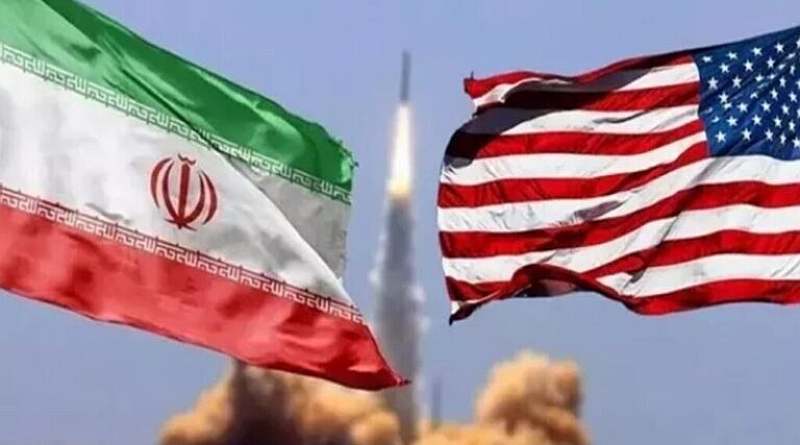
Renowned American historian Timothy Snyder analyzes the adventurous war of the Trump administration against Iran as a manifestation of what he calls the “utopia of violence” – an irrational belief in the omnipotence of force. Despite the fact that the US, according to Snyder, suffered defeat and essentially capitulated, Trump, Hegseth, and Vance are unlikely to draw the right conclusions from this: rather, they will apply the same logic of violence within the country – against their own citizens and democratic institutions. Snyder urges Americans to recognize this danger while there is still time to avert it.
This war with Iran began with a dream of violence. The question now is whether the nightmare that emerged from it will return to the United States.
The application of force does not magically lead to the desired outcome. One might imagine that a few missile salvos and air bombs will end the Iranian nuclear program, overthrow the government, and bring a victory that fills you with pride. Instead, you find that you no longer have any leverage over the nuclear program, you have strengthened the regime, and you are paying hundreds of billions of dollars in reparations while the whole world draws conclusions from your capitulation.
It must be acknowledged: the natural unpredictability of violence was further exacerbated by other factors generated by this senseless war. It grew out of human incompetence and strategic ignorance in the White House. Unfortunately, the commander in chief is a great failure leading the superpower to self-destruction. In the long term, the lesson for Americans is this: domestic policy will need to be restructured so that no potential tyrant can start wars on a whim.
But there is an even more urgent problem for Americans: will the same tyrannical emotional state that created this war now be applied within the United States itself? This state – the utopia of violence, weakly tied to reality, must be considered separately, in its own logic. It has causal power, as we have just seen in the case of Iran. The decision to go to war was not based on any thinking. Instead, there was a vision, a sense of how the world is arranged – the utopia of violence.
The war did not start with a plan, not with a strategy, and in fact, without any understanding of the national interest. The attack on Iran began with a craving – a subjective feeling that violence brings pleasure and can create a utopia in which desires become reality. In the statements of President Trump and Secretary of Defense Hegseth, such a utopia of violence is felt with all clarity.
Donald Trump is experiencing just such a moment. By sending the American armed forces on January 3 to support one Venezuelan faction over another, he decided that there are no limits to what violence can achieve in politics. Given the modest goals of the Venezuelan operation and the prior work of the Venezuelans themselves, it was a strange conclusion, but utopianism is such a state of mind that doesn’t require rational grounds. For those of us who listened as Trump called into Fox and Friends right after the operation, it was clear: he was thrilled and wanted more. “I watched it,” he said, “literally like watching a TV show.” He was indeed spellbound: “And it’s something that, gosh, I don’t know, it’s incredible.” And he wanted more of that incredible feeling: “We can do this again. No one can stop us.”
These words are very close to what his Secretary of Defense previously said: “No one can touch us. There are no equals even close.”
“No one can stop us. No one can touch us.”
Violence is incredible, war is divine. This is how it feels from inside the utopia of violence.
Defense Secretary Hegset’s views on war are also tied to primal instincts, which he expresses through images of God and the male body. In one of the strangest episodes in military history, Hegset gathered the highest command of the American army in one room last September, which from a national security perspective is pure madness, to deliver a tirade that mostly concerned the well-groomed and muscular bodies of white men. He laid out his utopia of violence: “We don’t fight by stupid rules of engagement. We unleash our fighters to intimidate, demoralize, hunt, and kill the enemies of our country. No more politically correct and burdensome rules of engagement—just common sense, maximum lethality, and empowerment for our fighters.”
The fantasy is that devastating violence will always bring you what you desire, and the only problem is someone trying to hold you back. “Lethality,” Hegset declared in Quantico, “is our calling card, and victory is the only acceptable end state.” After this, he immediately turned to God, as he is wont to do. Setting aside the purely theological question—whether Jesus was indeed a fascist—there are logical issues Hegset overlooks. Killing people is not at all the same as winning a war. This is utopian language. Behind it may lie a pathological craving for a sense of dominance and righteousness from those in power to start wars; but these emotional states are contrary to the ability to choose the right wars and win them.
When the attack on Iran began, Hegset’s zeal blinded him to what was actually happening: “America is winning decisively, devastatingly, and without remorse.” It was ridiculous but illogical—it was an act of faith. Even in sports, there’s no such notion as “winning right now”; much less in war. Hegset, as always, equated killing people with victory: “The only ones who should worry now are the Iranians who think they’ll stay alive.” Such descriptions undoubtedly matched his internal imaginary landscape, but bore no relation to the external arithmetic of power.
“We will continue to press,” he said, “to advance, without mercy, without pity for our enemies.” Saying such things in the position of defense minister is likely a war crime. “Without mercy,” as Ghegeset may or may not know, means executing those who have laid down their arms on the battlefield. However, no Iranian actually surrendered on the battlefield, because there was no battlefield; this war was carried out by American and Israeli missiles, bombs, and torpedoes. This can also lead to war crimes, such as when a school was destroyed and over a hundred girls were killed. The essence is that in the absence of any ground operation, any “advance” existed only in Ghegeset’s mind. The utopian glorification of the bodies of “fighters” contradicted the style of “conducting battle” in the Trump-Ghegeset tandem, which was about shooting from afar, boasting of victory, and then capitulating.
But will any conclusions be drawn from this? The correct lesson from history is that violence does not actually create a new, untarnished state of human relations where all your dreams come true. Instead, it simply shifts politics to another level where terrible and unpredictable things can happen. The outcome is more likely to be dirty rather than uplifting, and unlikely to lead where you think.
The war with Iran confirms this. The question for American political life over the next five months is whether this elementary lesson will be learned. Because the obvious next step for our utopians of violence will be not to accept this reality, but to preserve the utopia of violence and apply it not to the Iranians, but to their own fellow Americans.
Trump’s capitulation to Iran brings us back to what Trump really cares about: not losing power in this November’s congressional midterm elections.
He was forced to surrender for a fundamental reason known to all serious experts on war: the Iranians were able to influence his political position more than he could influence theirs. Now the “deal” is a mess, the “process” is also a mess, and the war, in some sense, may continue. But the conditions that Trump has already agreed to are capitulation; and over time, if he has to agree to anything, it will be something even worse. He may be irritated by this or that, distracted by the next Israeli attack in Lebanon or Gaza, or linger because of all the money his friends are making. But he will capitulate as quickly as he can (which he has already shown), because the clock is ticking toward the November elections.
As a contender for tyranny in a flawed democracy, he must care about the economy in general and gas prices in particular. The Iranians knew this and took advantage. But Trump’s capitulation to the Iranians does not mean he will abandon the utopia of violence as such. He never really had a problem with submission to foreign dictators; devoid of any sense of personal dignity and any understanding of American patriotism, he may shrug off a defeat by Iran, just as he follows Russia’s commands daily. What matters to him are the convenience and comfort that the presidency provides, and this logic directly points to yet another use for the American armed forces: intervention in this November’s midterm elections or in the presidential election in two years.
Such a move would be consistent with Hegseth’s entire career and ideas. Like Trump, Hegseth has no idea what constitutes the national interest of the United States. His ideological purging of the senior officer corps contradicts battlefield successes, yet it aligns with the goal of creating a Trumpist Praetorian Guard, whose sole mission is to intimidate Americans. Indeed, the natural trajectory of the Department of Defense under the leadership of an utter incompetent like Hegseth (whether he wants it or not) is to transform the armed forces into a tool likely suited only for civil war against fellow citizens.
Hegseth is only interested in the general idea of enemies, and the main enemies for him are Americans. He does not believe in the Constitution: for him, any rights originate from God, and he decides whom God protects. “Sometimes,” he writes, “the struggle must begin with a contest against internal enemies. Those who break the Covenant that unites us as a community of faith and grants us grace.” He tells us that the “left” plans the “complete destruction” of everyone else, which, of course, would justify the destruction of Americans defined as “left,” but first. Hegseth makes it quite clear that the violence he seeks is aimed at other Americans: “In more ways than you can imagine, the left has surrounded traditional American patriots on all sides, preparing to finish them off: to kill our founding fathers, kill our flag, and kill capitalism. The only option for survival in an ambush is to attack; get close to the enemy and destroy him.”
Rational people can draw a rational conclusion from the defeat in Iran: even setting aside ethical considerations, violence will not take you where you think. However, history shows quite clearly how the utopians of violence interpret defeat in a foreign war: they blame the “enemy” inside the country for their own miscalculations and failures, and then claim that this enemy must be defeated. The failures of the armed forces cannot be explained by their own ideological recklessness or obvious incompetence; it must be someone’s fault. For Trump and Hegseth (and Vance), it will be very easy to move from their current (and pathetic) claim that we won the war to the claim that we would have won if not for the stab in the back at home. And this way of thinking becomes a justification for deploying the military (and the Immigration and Customs Enforcement) on the streets during elections, or for declaring that a terrorist attack (most likely a setup) means that instead of elections, a state of emergency is needed, or for something else along those lines.
It is likely that Trump, Hegseth, and Vance (and Vance) will think along these lines. Vance is also a utopian of violence; he believed that using the Insurrection Act and deploying troops in Minnesota would quell protests and bring stability. This is unlikely: the use of violence, especially domestically, opens new pathways of unpredictability and almost never leads to the expected outcome. However, Trump, Hegseth, and Vance have yet to demonstrate the ability to acknowledge basic social realities; they question not their own utopias of violence, but only the motives of those who point out their mistakes. Just as they had a strong sense that violence would change Iran in the way they wanted, they likely have a strong sense that violence in America will change America in the way they desire. This is unlikely to prove true; utopianism, this belief in a feeling, threatens the republic. But Trump and Hegseth (and Vance) are unlikely to see things that way.
Therefore, the rest of us are left with a simple duty: to recognize utopias of violence and point out the risk to the republic. The fact that Trump and Hegseth (and Vance) think about using violence domestically does not mean it will necessarily happen. Recognizing a utopia of violence for what it is makes its realization significantly less likely. Indeed, the only way for soldiers to appear at polling places is to deliberately look away and pretend that this is not what Trump and Hegseth (and Vance) desire.
Utopian thinking can be a sign of weakness, not strength, and in this case, it is. Trump is extremely unpopular, as is his war, as is his policy overall. His charisma relies on a television projection of strength, but he has just lost his capricious war and looks miserable. The people behind him are even less popular. Their utopianism does not inspire sympathy, and their thirst for personal power is obvious. It is not difficult to acknowledge all this and agree on the basics: even if we may disagree on other issues, American soldiers have no place domestically, and elections should take place peacefully.
