
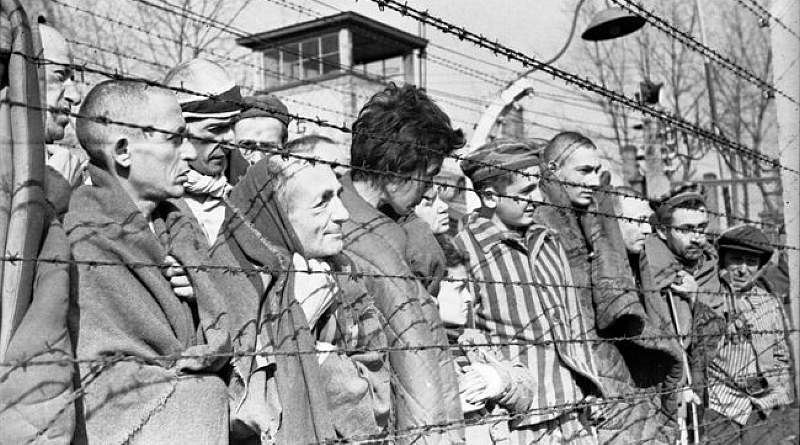
It’s true—everything is understood in comparison. And not just in comparison—many things look quite different up close than they do from a distance. I had to recall these banal truths repeatedly while working on the Auschwitz prisoner database. Simply put, by compiling a structured list, I was essentially materializing my own knowledge and observations about the presence of Ukrainians in these research databases.
However, for them to be materialized, several stages had to be completed. I should note immediately—these stages and, obviously, their results were made possible thanks to the Philip Orlyk Foundation, with whose assistance my scattered notes and unordered collection of names and other data, gathered from various sources, transformed into a coherent and organized database.
Initially, Ukrainians simply had to be found, and the search began with existing databases and electronic archives—primarily the Arolsen Archives. Since it concerned Auschwitz, the database located on the website of the Auschwitz-Birkenau State Museum was also crucial. To review all the materials housed in the Arolsen Archives would clearly exceed the time available, so I had to limit myself to various lists—not only in the section of the site dedicated to documents related to Auschwitz but also in branches devoted to other concentration camps. Mainly those to which, during the second half of 1944, anticipating the eventual arrival of the Red Army in Silesia, the prisoners were moved—such as Buchenwald, Flossenbürg, and for women, Ravensbrück.
It was more challenging with the search section of the Auschwitz-Birkenau State Museum site. The issue was that the search function on this resource operates by sequence of characters. This meant I needed to input the names and surnames of prisoners—but the paradox was that these were exactly what I was searching for. I resorted to a somewhat adventurous method, akin to a lottery, by entering common Ukrainian surnames and names, or even individual syllables. Sometimes this yielded dozens of names, at other times none at all.

And here I had to face a well-known paradox to researchers of various eras of Ukrainian history: a number of questions would not have been clarified without documents stored in Russian archives. In this particular situation, it meant that I would inevitably have to work with the OBM “Memorial” and “Memory of the People” databases, which contain documents from the Russian Ministry of Defense archives. Ultimately, some categories of Ukrainians imprisoned in Auschwitz can be properly and thoroughly learned only there. On the other hand, no one can guarantee that literally the next day these databases won’t be closed forever, taking away even the opportunities that exist for researchers. So, weighing all the “for” and “against,” the decision was made to equip with technical tools and think there as well.
Additionally, documents from certain GDA SBU funds, individual lists published in scientific publications, and memoirs and testimonies of those who survived imprisonment in Auschwitz were used. Eventually, I accumulated a rather solid collection of names, totaling more than 11,000 entries.

It had to be processed accordingly, which meant checking for duplicates and errors, and also ensuring that every prisoner on the list was indeed Ukrainian. The latter was not a trivial task for two reasons. Firstly, Ukrainians were registered according to the principle of prisoner registration based on citizenship—as Poles, Russians (if the person came from within the USSR), Czechs, or stateless individuals. Additionally, there are virtually no characteristics by which a Ukrainian can be unmistakably distinguished from other communities.
In such a situation, there was no choice but to rely on the rather unpredictable amalgamation of characteristic deformations in the recording of names and surnames, which arose from the specificity of how Ukrainian was perceived by Auschwitz clerks, mostly Germans or Poles, the geography of a person’s origin, and—in the case of Western Ukraine with its intertwining of national and religious identities—religion.
After confirming that the person in question was indeed a Ukrainian, it was necessary to clarify whether they had been recorded in my register twice or even three times. The standard was to check through all three databases—the Arolsen Archives, the base on the Auschwitz-Birkenau Museum website, and the OBD “Memorial.” This helped not only to identify inadvertent duplicates but also to gather all available information about a person in one record.

Through all the described manipulations, not only did an organized register of almost ten thousand people gradually form, but a number of paradoxes and strange coincidences also emerged. Some of them, however, are not strange at all, considering the similarity in the nature of the two totalitarian regimes. Some well-known truths acquired new colors and shades, manifesting themselves in this material as well, and certain features surfaced as if from the ground. What united them was that they all were about erasure. Whether it was the erasure of Ukrainians as such, or “merely” their active part. Considering that these practices surfaced from the pages of documents and data of electronic search systems (compiled, after all, based on those same documents), it is hard not to recall the phrase describing the bureaucratic cogs of the destruction system—”killer at the desk,” as well as the ancient maxim—”I am alive as long as at least one person remembers me.”
If someone unfamiliar with the nuances were to access the documents in their current form, they would likely conclude that there were practically no Ukrainians in Auschwitz—this because notes indicating Ukrainian origin are extremely rare. Since prisoners in Nazi concentration camps were registered by formal citizenship (this rule applied to everyone except Jews), this immediately condemned representatives of stateless peoples to automatic dissolution in the general mass of unfortunate prisoners. Among them were also Ukrainians. This fate did not spare those Ukrainian prisoners who were certainly aware of their national identity—the imprisoned members of the OUN(b). Paradoxically, when asked about “state affiliation,” they formally responded with their citizenship, stating Polish, Czechoslovak, or another, and thus became, in documents, Poles or Czechs, although they were actually Ukrainians.

Additionally, in the case of Ukrainians, there is no distinct ethnocultural feature that would unambiguously distinguish a Ukrainian from Russians, Belarusians, Poles, or other Eastern European inhabitants and would be recorded in writing. “Characteristic” or rather stereotypical surnames are a relative factor, as after waves of escapes, relocations, and expulsions, a person with the surname “Petrenko” could live in Siberia. The same goes for first names—considering that often the camp clerk, Polish or German by origin and likely unaware of the differences between Ukrainian and Russian phonetics, might have had a vague picture of “the East,” or worse, a homogeneous image of “Russia” that blurred the non-Russian nations of the European part of the USSR, recorded Ukrainian (or one of the local Ukrainian dialects, or even “Surzhyk”) first names and surnames using their own understanding of “Russian” sounds and their native language’s spelling and pronunciation rules, it becomes clear that relying solely on names and surnames is a bad idea. Geography of birth could be a clear indicator (if a person was born in Ukraine, they can indeed be considered Ukrainian), but here arises the issue with Ukrainian enclaves outside Ukraine—such as natives of the territory known as Zakerzonia, or those from the Ukrainian-Belarusian or Ukrainian-Russian borderlands. In the case of Zakerzonia, the religious marker (Greek Catholics in this region could only be Ukrainians, with very few exceptions) helps, but in the case of, for example, Kuban, nuances in the recording of names and surnames matter alongside the factor of fairly recent curtailment of Ukrainization—1934 was less than ten years ago, and testimonies from the same imprisoned Bandera followers that captured Red Army soldiers spoke Ukrainian among themselves—and among those prisoners who ended up in Auschwitz, there were indeed many from Kuban.
Moreover, as the end of World War II approached, the Nazis tried more actively to erase traces. Therefore, prisoners’ documents burned in the crematorium ovens. Sometimes the situation was saved by the fact that prisoners themselves were ordered to burn documents, and understanding that Nazi collapse was imminent, they delayed and sabotaged the burning orders as much as they could.
Those who survived moved deeper into the Third Reich—either following the “evacuated” (that is, at best, transported to concentration camps within Germany itself) prisoners, or simply as part of the luggage with those prisoners driven in the “death march” during the winter of 1945. Thus, after World War II, what had survived—and not only survived but made it to the West—was scattered among various archival collections.
Some remained in the concentration camp itself and fell into the hands of the Red Army soldiers who liberated Auschwitz. Later, these documents ended up in Moscow archives. Partially—though it’s unclear in what quantity relative to the total available in the archives—they can be accessed in the databases of the OBD “Memorial” and “Memory of the People.”
In any case, these materials in the context of finding data about Ukrainians have the same problems as the concentration camp documents that ended up in the West, since the source is common—the Nazi killing machine, embodied in particular in the network of concentration camps. But at this point, new obstacles were added—most of them were the consequence of the fact that after the Second World War, its myth became part of the general ideology. This meant that Ukrainians (and not only Ukrainians) from Auschwitz (and not only from there) dissolved into the faceless mass of “Soviet citizens” and “victims of fascism.” Between the two millstones, the myth of the “Great Victory” and efforts to “create a new historical community—the Soviet people,” it was impossible to discern individual Ukrainians. This, of course, only contributed to gradual forgetfulness.

Moreover, reaching the archives was an additional challenge. After cross-reference experience, it can be said with certainty—the percentage of matches at the level of personal registration documents of prisoners in those databases formed on the basis of Moscow military archives and those compiled in the West is relatively low, probably no higher than 20 percent. Of course, considering all the vicissitudes, complete congruence was not expected, but even 20 percent, albeit approximate, is too little. Among these documents, one can find many letters from relatives of those who died in Auschwitz, and responses stating that documents were not found, although the relevant surnames are quite easy to locate in the same “Memory of the People” database. Whether this was a lack of professionalism and diligence by the archivists, or a conscious decision to keep the deceased’s relatives in the dark, who knows? Moreover, residents of the USSR were not insured from such collisions—in several cases, a person was listed as missing for years after the war ended, although in fact they had long been deceased… Only by accessing the trophy documents from Auschwitz was this revealed.
Some personal stories reveal the true attitude of the Soviet empire towards Ukrainians, including those who went through the hell of Auschwitz, more than bulky volumes. The fact that a particular person went through Auschwitz only underscores the depth of the horror. In the first case, it is about Oleksa Vintoniak, a member of the OUN(b), who was imprisoned in Auschwitz from July 1942 to January 1945. His documents are in the “Memory of the People” database, and from them, it can be learned that Vintoniak, for the Soviet regime, was a “deserter,” since, according to the document, he escaped either from the recruitment point or on the way to it. Generally speaking, in the summer of 1941, one did not need to be a member of the OUN(b) to avoid conscription into the Red Army, especially in Western Ukraine, or to surrender to the Wehrmacht – in the case of other regions. And a significant part of the decision to surrender was influenced, besides the induction of despair in the situation of the rapid advance of the Wehrmacht and the situation at the front, by the memory of the Holodomor, mass arrests, and executions during the Great Terror, and personal family histories they witnessed.
Another story tells of a Ukrainian from the opposite region of Ukraine, Donetsk. Experts and interested parties know him as Andrey Pogozev, a Soviet prisoner of war and participant in a mass escape in the fall of 1942. One of the few who survived the transport of prisoners of war to Auschwitz, he left behind memoirs. In these memoirs, he wrote about himself as being from the territory of Russia. And everything would be fine, were it not for the fact that during verification it turned out that under the number “Pogozev,” there was registered Andriy Pogozhiy. The man who called himself by this name was undoubtedly a Ukrainian speaker in daily life, so most likely, he was indeed Ukrainian. Accordingly, before us is perhaps a person who for some reason confused the tracks so much that he even changed his identity. Essentially, considering how the Stalin-era USSR treated former prisoners, it is understandable.

All these mentioned circumstances, tendencies, and histories have one thing in common – they all, in one way or another, lead to the depersonalization and, ultimately, the complete dissolution of Ukrainians in the general mass. But this is only the first approximation. For example, if you look closely at the lists of Red Army prisoners of war and imprisoned members of the OUN(b), two popular beliefs will turn to ashes. The first is that only officers, commissars, and Jews were sent to Auschwitz among the Red Army soldiers. The second is that among the members of the OUN(b) in Auschwitz, regional leaders were sent. The lists clearly show both the absence of officers and commissars among the almost entirely ordinary prisoners and that among the imprisoned Bandera followers in Auschwitz, there were almost no high-ranking leaders – Mykola Klymyshyn and Lev Rebet appear more as exceptions.
Such a “collapse” of familiar notions demands an answer to the question – by what criteria were individuals selected to be sent to Auschwitz, and not elsewhere? For example, in the case of Bandera followers, 48 out of one and a half thousand arrested were sent to Auschwitz, and in the case of prisoners, the comparison is even more striking – fifteen thousand out of tens of thousands detained in stalags 308 and 318. By what criteria did the Nazis determine the fate of their captives?
The answer was found quite unexpectedly. Initially, a fragment from the memoirs of the aforementioned Pogozhev-Pogozhiy (or Pohozho) came to mind, recalling that the dispatch to Auschwitz began after several attempts to tunnel out and escape were discovered. Those sent to Auschwitz were primarily those caught in such attempts or suspected of them. It would seem the answer is simple – the oppressors removed the disobedient. However, not just the disobedient were removed, and not in a simple way. Not everyone would dare to escape – it would more likely be an energetic, active person, courageous, inventive, and with a clear understanding of what they were doing and why they were risking their life in case of failure. Since escapes were usually planned in groups, it also involved the ability to negotiate and trust. These people were not just removed, but their connections with others were severed, depriving them (or at best, severely limiting) the potential for resistance.
After this, it seemed appropriate to check what those members of the OUN(b) who ended up in Auschwitz were doing and perhaps distinguish them from the rest of their comrades. Upon checking, it became clear that those who ended up in Auschwitz were either those who had shown activity in forming the structures and institutions of the Ukrainian statehood restored on June 30, 1941, or those responsible for military affairs and intelligence.

It became clear: the Nazis were interested not only in OUN(b) members or prisoners as such, but primarily in people of a certain nature – energetic, motivated, courageous, capable of rallying like-minded individuals, negotiating, and trusting. In other words – potential leaders. It did not matter much whether these leaders were underground members of OUN or soldiers of the Red Army. The goal was, to put it bluntly, to de-head the Ukrainians as a community, depriving them of the ability to form and maintain their own social structure and horizontal connections. If this is not an act of genocide, then what is it?

The “Soviets” did not lag behind. Here, attention is drawn to another fact – it is in “Memory of the People” and the OBD “Memorial” that documents related to escapes or, conversely, collaboration are most frequently encountered. If we rely on purely subjective impressions, it seems as if they are preserved only there. And if the impression does not deceive, then it can be assumed not only that such documents were left in Auschwitz among what could not be taken or destroyed, but also that they were of particular interest to the “Soviets,” or rather communist special services. In the case of collaborators, everything is more or less clear (however, one should not overly trust justice, as such information is an excellent basis for blackmail), but in the case of escapees and, in general, all those whose activities fall under the definition of “resistance organization,” it is difficult to find an explanation other than what is outlined in the previous few paragraphs.
And this explanation immediately leads to two classic features of totalitarianism – the desire to reshape human nature and the attempt to control all aspects of human life. In practice, this is possible only by destroying the normal way of life and identity and creating conditions under which the natural restoration and maintenance of both identity and the method of self-organization of society are either impossible or deadly dangerous. And to be sure, completely erase the true history and its meanings.
All this, upon reflection, emerges from the lines of the database and the experience of its preparation. And although from a purely rational point of view, such an organized list of Ukrainians – prisoners of Auschwitz is an obvious basis both for further research and for presenting the Ukrainian experience of World War II externally, the very fact of such a list leads, at first glance, purely scientific research into a space of symbolic confrontation between Ukraine and two totalitarianisms. Simply because, in the absence of graves for most of their victims and the ongoing efforts of both totalitarianisms and the successor of one of them to erase even the informational trace of their victims, the extracted names from the archives may be the only monument to them. Because “I am alive as long as at least one person remembers me…”
Photo in the text – Olesya Isayuk
The author expresses gratitude to the Pylyp Orlyk Foundation for supporting the research.
On the cover: On January 27, 1945, the gate of the Auschwitz camp was opened by soldiers of the 100th Lviv Division from the battalion of the future Hero of Ukraine, Anatoliy Shapiro from Poltava. This moment was captured by another Ukrainian native—Volodymyr Yudin from Kyiv, a photojournalist for the newspaper “For the Honor of the Motherland” of the First Ukrainian Front / Historical Truth
