
Fabian Hoffmann and Anastasiia Lapatina / Translation by iPress
Senior Researcher at the Norwegian Institute for Defence Studies Fabian Hoffmann believes that the fifth winter of the full-scale war could be the hardest for Ukraine’s energy system: Russia has increased the production of ballistic and cruise missiles and is capable of launching massive strikes during the coldest months. Ukraine enters the season with larger gas reserves, some progress in decentralizing generation and physical protection of facilities, but critically depends on scarce missile defense means, primarily Patriot interceptors. Even equipment reserves and electricity imports from the EU are unlikely to fully compensate for the effects of large-scale attacks. He emphasizes: Russia’s goal is to make the everyday life of civilians unbearable, so alongside military aid, it is important to support local initiatives that provide families and social institutions with autonomous power supplies.
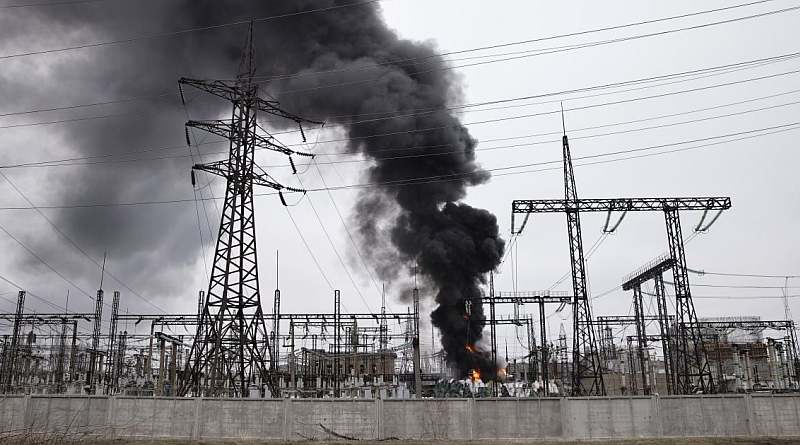
Ukraine has already endured four winters of Russian attacks on its energy system. The fifth is likely to be the hardest. Russia is now launching more missiles and using more types of them than ever before. We don’t know exactly how difficult the coming months will be for Ukraine, but the forecasts are grim. It seems that Russia is determined to make life as complicated as possible for Ukraine’s civilian population.
This publication, based on open-source information, assesses how many missiles Russia is likely to launch, how prepared Ukrainian air defense and the energy system are, as well as what you (Western readers – iPress) can do to help Ukraine prepare for the winter.
Russia’s offensive capabilities
The biggest problem for Ukraine remains Russian ballistic missiles. The latest assessment from the Main Intelligence Directorate of Ukraine’s Ministry of Defense (HUR) indicates that Russia is currently producing about 65 short-range ballistic missiles 9M723 per month, used by the Iskander-M systems. According to estimates, the stockpile of missiles for the Iskander-M is about 115 units. It is likely that this number has decreased in recent weeks following the October surge, when Russia launched more than 100 ballistic missiles toward Kyiv in just two weeks. The production of Kh-47M2 Kinzhal airborne ballistic missiles has reportedly been suspended since April, although it is believed that Russia still has a stockpile of about 50 of these missiles.
Depending on the accuracy of assessment by the Main Intelligence Directorate regarding production and stocks, and depending on whether Russia will be ready to significantly deplete its stocks of “Iskander-M” and “Kinjal” missiles throughout the winter, it may well launch between 360 and 440 ballistic missiles at Ukraine over the next four months. An additional 60 to 200 ballistic trajectory munitions will likely be provided by S-400 anti-aircraft missiles launched in ground target strike mode. Though they are less accurate and powerful, these means still pose a threat to human life and Ukrainian infrastructure. Russian aeroballistic 3M22 “Zircon” missiles, which continue to be produced in small but stable batches, could add another five to 15 missiles per month.
A significant additional risk is associated with possible deliveries from North Korea of short-range ballistic missiles KN-23 and KN-24. Russia has been receiving these missiles since the end of 2023 and has helped North Korea modernize them, increasing their efficiency. In August, reports emerged that a North Korean unit equipped with up to 120 missiles and six launchers was being transferred to Russia. If involved in the winter campaign, it could add another 20-30 missiles per month.
Overall, in the next four months, an average of 130-190 ballistic missiles could be used against Ukraine each month. Of course, Russia may not distribute ballistic attacks evenly, but concentrate them, for example, in January, when temperatures are usually lowest.
In addition to the ballistic threat, Russia is likely to launch hundreds of heavy cruise missiles to strike ground targets, including 3M14 “Kalibr” and X-101, as well as thousands, potentially tens of thousands of cheap cruise missiles. Although each of the latter is less deadly on its own, the vast quantity that Russia is likely to employ poses a serious threat—especially because it now seems to be producing localized versions of cheap Chinese turbojet engines. Moreover, even relatively small warheads of cheap cruise missiles can be effective against less protected above-ground critical infrastructure targets.
Ukraine’s Preparation
It can be assumed that Ukraine enters the winter of 2026/27 somewhat better prepared than the previous one, yet it remains extremely vulnerable to Russian missile strikes.
Ukraine has accumulated gas reserves of 16 billion cubic meters, the highest level since 2020, despite intensive Russian strikes on Ukrainian gas infrastructure. Progress has also been made in decentralizing electricity production using small gas installations, which are more difficult for Russia to target than large power plants, though the process is moving too slowly.
The Ministry of Energy reports about approximately 1.8 GW of distributed gas generation. The energy system operator “Ukrenergo” estimates decentralized capacities at only 0.7 GW. However, even the higher estimate from the ministry compensates for only about a quarter of last year’s peak electricity deficit of 7 GW.
Over the past year, the physical protection of infrastructure has also improved, although its ultimate effect may be limited. In September 2024, then-Prime Minister Denys Shmyhal announced that construction of third-level shelters designed to withstand direct hits from heavy missiles had begun at 22 substations of “Ukrenergo.” However, there have been few signs of substantial progress since then. In October of the previous year, “Ukrenergo” reported that none of its facilities had third-level protection. By July 2026, media reported that no new contracts for third-level shelters were signed in either 2025 or 2026. As a result, a significant portion of Ukraine’s power grid remains vulnerable to Russian missile strikes.
The situation with second-level protective structures, designed to defend against long-range drones like Shahed (specifically “Geran-2”), looks better. Around Kyiv, by the summer of this year, such a level of protection reportedly covered 49% of energy infrastructure objects. However, as Russia shifts its focus from long-range drones to faster and heavier “Geran-4,” “Geran-5,” and other inexpensive cruise missiles, it remains highly uncertain whether these shelters will provide sufficient protection.
Ultimately, Ukraine will continue to rely on intercept systems deliveries, especially for missile defense. However, according to official Ukrainian statements, US supplies of interceptors for Patriot averaged only 12 missiles per month. This is less than 5% of the amount needed to effectively defend against the current scale of the Russian ballistic threat. Even though European partners are literally depleting their own reserves to find additional interceptors to transfer to Ukraine, this was almost certainly insufficient to build up enough reserves for the winter campaign.
Accumulating spare parts along with increasing the import of electricity from EU countries may help mitigate the consequences of infrastructure destruction. However, this will likely be insufficient to prevent serious disruptions in Ukraine’s energy system.
What can be done to help Ukraine
Given this forecast, it’s hard to remain optimistic. Part of my faith was recently restored by a story from my podcast co-host Anastasia Lapatina about her initiative “Operation Battery” in Mildly Alarmed.
“Operation Battery” began last year as an improvised initiative by Anastasia and Benjamin Wittes to provide electricity to places where it was desperately needed. They raised $130,000 and without bureaucratic hassle and administrative costs, delivered dozens of powerful battery stations and generators, each worth up to $3,000.
According to Anastasia herself:
Last year, we purchased large portable battery stations and generators for more than 30 families with children in Kyiv. The batteries can power all essentials: lighting, electronic devices, a refrigerator, a kettle, a microwave, and even a washing machine in cold wash mode. They can also keep a small heater running for several hours, which was very helpful when temperatures dropped to extremely low levels. However, my favorite project was the large generator for Mamacita – a center on the left bank of Kyiv that combines a kindergarten with a space where mothers can spend some time on themselves while their children attend classes in the same building. Last fall, the center closed after the generator broke, and the owner – a single mother – could no longer afford to pay for electricity. We bought a new generator and helped her resume operations. Mothers still write to me about how glad they are that we can provide their children with some sense of normality thanks to indoor classes with electricity. This year, we hope to achieve a similar effect by focusing on families with children and children’s institutions, including kindergartens.
Russia is betting that striking Ukraine’s critical infrastructure and worsening daily living conditions will force Ukraine to surrender. History shows that such strategic bombing campaigns rarely achieve their goals, and this one is likely to be no exception. But in the meantime, Russia is still capable of causing immense suffering.
