

Information on Russia’s current losses due to sanctions as of 11/05/2026.
1. Ukrainian defense forces attacked the Ryazan Oil Refinery and the Wildberries logistics warehouse in Russia.
– On the night of November 5, Ukrainian drones attacked Ryazan. The main target was the Ryazan Oil Refinery, where a fire broke out after the strikes. According to OSINT resources, at least six hits were recorded on the enterprise.
– Preliminary information suggests that the marketplace Wildberries’ logistics warehouse might have also been hit. There are reports of a fire on its territory.
– The Ryazan Oil Refinery belongs to Rosneft and is one of Russia’s largest refining enterprises. Its capacity is 17-18 million tons of oil per year, or about 340,000 barrels per day, which corresponds to approximately 5% of Russia’s total refining capacity. The plant produces gasoline, diesel and aviation fuel, fuel oil, and bitumen, providing fuel to, among others, the central regions of the country.
– Previous attacks on the Ryazan Oil Refinery occurred on October 15-16. After one of the attacks, the enterprise suspended the operation of a key installation.
2. Russia becomes the world leader in gold reserves sales for the second consecutive quarter.
– In the third quarter of 2026, the Bank of Russia sold 18.66 tons of gold from international reserves. This is the largest reduction of gold reserves among all central banks worldwide for this period, according to the World Gold Council (WGC) data.
– Overall, central banks globally purchased 321.2 tons of gold over the quarter — 42% more than the same period last year. Other sellers included Kyrgyzstan (0.95 tons), Germany (0.19 tons), Singapore (0.08 tons), and Mexico (0.02 tons). Meanwhile, the largest buyer was the People’s Bank of China, which increased its gold reserves by 63.14 tons.
– The Russian central bank has been selling gold for ten consecutive months, conducting operations to compensate for the sale of precious metal by the Ministry of Finance from the National Welfare Fund. These funds are directed to cover the federal budget deficit, which this year reached 7.3 trillion rubles, and since the start of the full-scale war exceeded 22 trillion rubles. In the second quarter, the Bank of Russia reduced gold reserves by another 21.77 tons.
– According to the regulator’s own statistics, from December to September, the volume of gold in international reserves decreased by 2 million troy ounces, or approximately 62 tons. This is the largest sale of Russian gold since 1998 when the country experienced a default on government debt.
3. 84% of Russian companies are cutting costs due to falling demand and lack of funds.
– 84% of Russian companies are forced to cut costs. The main business problems in the third quarter were a drop in demand, noted by 38% of surveyed companies, and a shortage of working capital (36%).
– These findings are from the monitoring by the Russian Union of Industrialists and Entrepreneurs (RSPP). Another 36% of companies reported payment delays from contractors. Compared to the second quarter, the share of such responses decreased from 40%.
– Businesses increasingly respond to the worsening situation with price increases, and reductions in investment and production. The share of companies planning to raise prices increased by 3 percentage points over the quarter to 29%.
– 18% of enterprises intend to cut investment programs, 6 points more than a year ago. Another 15% plan to reduce production volumes compared to 11% in the second quarter.
– The combination of weak demand, rising prices, and reduced investment indicates strengthening stagnation trends in the Russian economy. Enterprises are postponing modernization and production development, which may limit their ability to increase output even if demand recovers in the future.
4. Nearly 34,000 flights were delayed or canceled in Russian airports in October due to drone attacks.
– In October, due to restrictions on Russian airport operations imposed due to the threat of drone attacks, 30.7 thousand flights were delayed, and about 3 thousand more were canceled. This is almost half — 49% — of all flights.
– Throughout the month, operational restrictions were imposed 495 times in 49 Russian airports — 27% more often than in September. The total duration of restrictions reached 2092 hours, increasing by 16%.
– The four airports of the Moscow aviation hub accounted for 82 cases of restrictions with a total duration of 262 hours. This is a record figure since the beginning of 2025.
– In October, Moscow airports operated with restrictions for 13 out of 31 days. According to Rosaviatsia, Russian airports were closed 2860 times due to the threat of drone attacks from January to August alone.
5. Russia failed to reduce its dependence on Western medicines: more than half of drug expenses are for imports.
– In the first eight months of 2026, imported drugs accounted for about 56% of nearly 700 billion rubles ($8.6 billion) spent on medicines in Russia. This is almost in line with the 2022 figure when the import share was 57%. A significant portion of imported drugs are complex medicines that Russian producers are not yet able to replicate.
– Moreover, the main suppliers are companies from countries that Moscow considers unfriendly. Despite sanctions, pharmaceutical products and medical devices are mostly exempt from Western restrictions for humanitarian reasons.
– According to Eurostat, in the seven months to July 2026, EU exports of pharmaceutical products to Russia increased by almost a third compared to the same period in 2022 — to 6.7 billion euros. Meanwhile, the EU’s total exports to Russia during this time almost halved.
– Western manufacturers continue to dominate the Russian pharmaceutical market. In the first three quarters of 2026, the top ten suppliers included Swiss Roche and Novartis, British AstraZeneca, French Sanofi, and American AbbVie and Johnson & Johnson. There were only three Russian companies in the ranking.
6. Russia has intensified support for Iran, signing an agreement on missile systems.
– Russia has signed a deal to supply Iran with 90 APU-L launchers for advanced guided missiles. This is evidenced by the production schedule of the Russian defense company “Vympel” for 2024–2025. The customer is marked with the code “K-10,” which “Rosoboronexport” uses for Iran. The document, provided to FT by the Ukrainian private intelligence company Dallas Analytics, lists orders for seven Russian and two foreign buyers.
– In addition to Iran, China is also listed as a foreign customer, having ordered 192 APU-305 launchers. If the deal is executed, it will be evidence of deepening military cooperation between Moscow and Tehran after the full-scale war against Ukraine began. The document does not specify whether actual deliveries to the Iranian side have occurred.
– The supply shows Russia’s willingness to support Iran’s military capabilities despite its own needs for weapons for the war against Ukraine. According to Western intelligence estimates, military partnership between the two countries has deepened during the Middle East war.
– Meanwhile, Moscow is trying to prevent its support for Tehran from harming its relations with regional states and the USA.
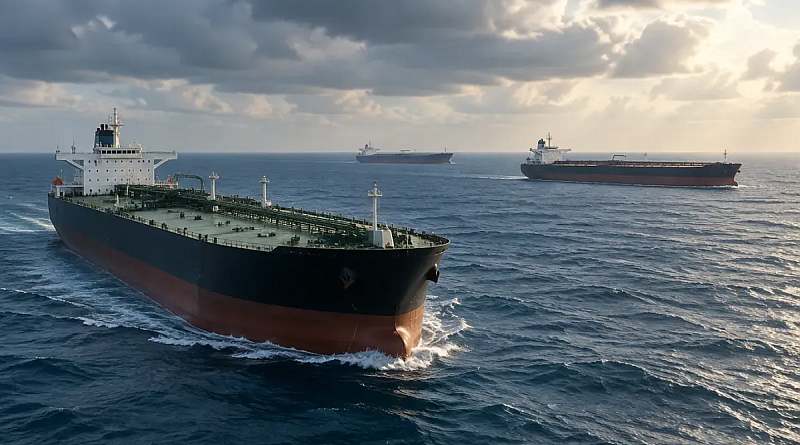
7. Trump’s deal with Putin for the supply of Russian diesel to the USA is under threat: two tankers have changed course due to a lack of buyers.
– Two tankers with Russian diesel fuel, which were heading to the USA as part of agreements between Donald Trump and Putin, have changed course and are no longer heading to American ports.
– The Leruo tanker, flying the Sierra Leone flag, has headed for Brazil. The Russian tanker Talisman has left the Atlantic Ocean and moved to the Mediterranean, currently off the coast of Algeria. Its status is “awaiting orders,” meaning the buyer or destination port of the cargo is not yet confirmed. Both vessels are under Western sanctions.
– Two other sanctioned tankers — Agioi Fanendes and Beast — still maintain their course to the US Atlantic coast. However, the first ship’s unloading port is yet to be determined, and Kpler analysts do not rule out a change in its route. Beast loaded fuel in Primorsk on October 27. American companies are hesitant to buy Russian diesel due to legal risks and sanctions restrictions, said Kpler analyst Matt Smith.
– New Jersey Governor Mikie Sherrill also warned businesses that importing Russian energy resources violates the 2022 law, passed after Russia’s full-scale invasion of Ukraine.
– Washington and Moscow’s agreements have not yet granted Russian fuel access to the American market: even tankers heading to the USA do not have guaranteed buyers.
8. Switzerland, following the EU, lifted sanctions from Russian billionaires Fridman and Usmanov.
– Switzerland has removed the co-founder of “Alfa Group,” Mikhail Fridman, and the owner of USM, Alisher Usmanov, from the sanctions list related to Russia’s war against Ukraine. The decision came into effect on November 4, as reported by the Swiss State Secretariat for Economic Affairs (SECO). A similar decision was previously made by the European Union.
– At the same time, Switzerland expanded the sanctions list by adding 254 individuals and entities linked to the Kremlin. The assets of sanctioned organizations in the country are subject to freezing, and those on the list are prohibited from entering Switzerland and transiting through its territory.
– Following this decision, sanctions against Fridman and Usmanov in Europe remain in effect only in the United Kingdom.
