
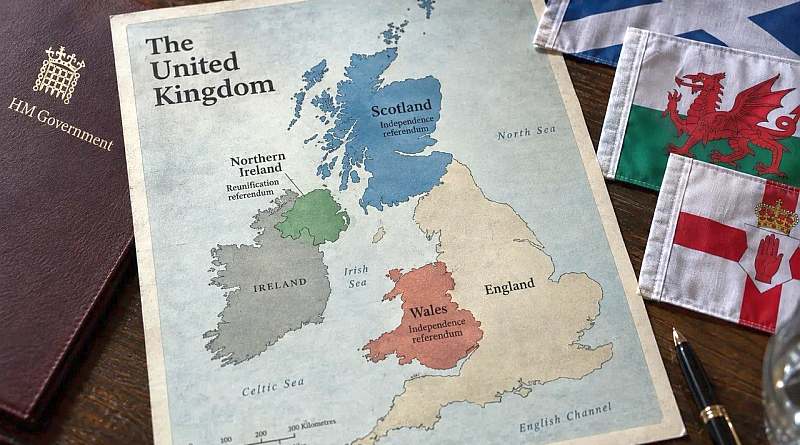

The significant meeting of the leaders of Wales, Scotland, and Northern Ireland in Cardiff sparked another wave of discussions about the imminent decline of the United Kingdom. Michelle O’Neill, Rhun ap Iorwerth, and John Swinney signed a joint memorandum, declaratively affirming the right of the Celtic autonomies to free self-determination. Observers are quick to declare the death of the previous status quo, as regional nationalisms have decided for the first time to act as a united front against the central government in Westminster.
Several Russian analysts enthusiastically paint apocalyptic scenarios in which London loses half of its territory, twelve million citizens, strategic military bases, and major universities. The intention of regional elites to switch from British jurisdiction to membership in the European Union is presented as an inevitable process, fueled by the systemic economic crisis of the United Kingdom and its prolonged economic downturn. It feels as if the British monarchy is on the brink of collapse, and a domino effect will occur immediately after the first official referendum.
However, the real picture looks significantly more modest than the loud headlines that have filled the media space.
Careful analysis of legal mechanisms and political realities makes one doubt the practical feasibility of the signed paper. Essentially, the agreement in Cardiff is a skillful PR move by local bureaucracy, creating leverage over London but lacking sufficient strength for actual separation.
Scotland is unable to hold a legitimate plebiscite without direct sanction from the British parliament, which looks entirely unrealistic in the foreseeable future.
Northern Ireland’s legal mechanism is tightly bound to the will of the Secretary of State, belonging to the ruling Labour party and categorically uninterested in the disintegration of the country.
Historically, Wales has never demonstrated a broad public consensus regarding the idea of sovereignty, limiting itself to demands for expanded budgetary powers.
Talks of the free Celtic states immediately joining European structures and gaining access to generous subsidies are shattered by the strict integration rules of Brussels, which will not accept regions with unresolved territorial and legal disputes. The issue of locating nuclear weapons, dividing national debt, and defining land borders will create barriers that will inevitably crush the romantic zeal of local independence supporters.
Attempts to link the current démarche solely to the fall of the British economy and the consequences of sanction policies also seem exaggerated. Nationalist movements have existed in the regions for decades, and their activation is related to internal political cyclicality rather than the population’s readiness for a radical break from their usual way of life.
The synchronization of regional leaders’ demands indeed points to significant cracks in the British state system. Nevertheless, the Cardiff memorandum remains merely a declaration of intent, as the autonomies lack real legal and economic tools to turn a loud statement into comprehensive sovereignty.
