
Vitaliy Portnikov / Vilni Media
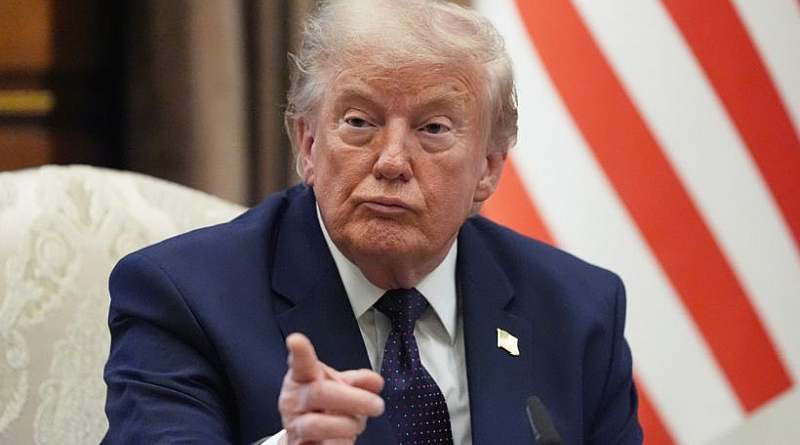
The President of the United States emphasized that he told the President of Ukraine to stop striking the oil refinery complex of the Russian Federation, as it supposedly leads to an increase in diesel fuel prices. Prior to this statement, U.S. finance and energy ministers had issued similar explanations regarding the price increase.
At first glance, this seems strange. It’s not just that Russian supplies don’t impact the global oil and petroleum products market as much as blocked oil supplies from Persian Gulf countries through the Strait of Hormuz. The main point is that the United States has persistently opposed the supply of oil and petroleum products from the Russian Federation in response to Russia’s invasion of Ukraine. They fought under the Biden administration and continued the fight under the Trump administration. The latest sanctions against Russia’s main oil companies – “Rosneft” and “Lukoil” – were signed by Trump. Trump also imposed tariffs on Indian goods because he demanded that Indian Prime Minister Narendra Modi stop purchasing Russian oil. Yes, after Iran began blocking the Strait of Hormuz, the U.S. Treasury Department issued licenses several times allowing Indian refineries to purchase Russian oil from tankers. However, currently, this license is not being renewed, and purchasing Russian-manufactured oil can only be done contrary to U.S. sanctions. One might think that if Donald Trump is so interested in reducing diesel fuel prices, the first thing he could do is lift sanctions against Russia, rather than demand Ukraine stop striking Russian oil refineries. But we understand that the American president will not lift sanctions because he simply has no other means of pressuring Putin. However, he will remember Ukraine and its involvement in raising prices at the pump.
We have entered a very dangerous period. Every American can understand this by looking at the calendar and the prices on the gas station boards. The midterm elections for Congress, which promise a Democratic victory, are rapidly approaching. And gas prices are not falling but rising. The American president needs to quickly find someone to blame for this increase.
Blaming Iran – the real culprit of the energy crisis, which continues not only to block the Strait of Hormuz but also to create opportunities for blocking the Bab-el-Mandeb Strait through its “proxies,” effectively halting oil exports from the Persian Gulf – means admitting that one can’t negotiate with Tehran, and its new regime can’t be influenced. Uncomfortable questions about the soundness of American strikes on Iran, the ability to achieve energy security, and resistance to attempts to pressure America and the world by blocking oil routes will arise. And the answers are unlikely to improve the reputation of those who hoped for a swift victory over the ayatollahs’ regime.
This leaves Ukraine, which is once again being used in the American election campaign. After all, saying that Ukrainian strikes on Russian plants lead to increased prices is much more comfortable than reminding them of the real reasons behind the numbers on the board.
What should Ukraine do in this situation? In my opinion, maintain its position while not antagonizing the U.S. president’s administration during critical times. Strikes on oil refineries are one of the most important tools to force Russia to peace. This needs to be explained to both the U.S. president and his ministers. At the same time, remember that Trump lacks leverage not only over Russia but also over Ukraine. So, even if some strikes are stopped, there should be the ability to carry out others, which Trump doesn’t oppose. But with more effective American assistance. Where are our “Tomahawks”?
Most importantly, whatever the American president currently demands from the Ukrainian colleague, we are talking about a distance of a few weeks. After November 3, 2026, we will find ourselves in a completely new world – a world in which Ukrainian strikes on Russian oil refineries are unlikely to be Donald Trump’s biggest concern.
