
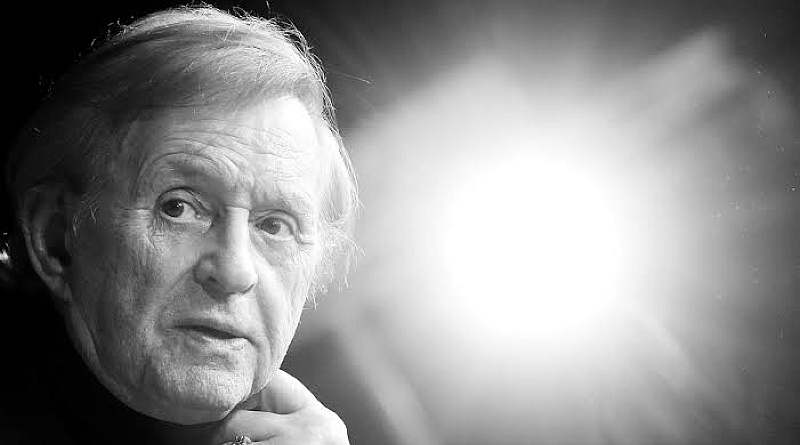
In November 2020, theatrical Moscow bid farewell with applause to one of Russia’s most prominent and controversial directors, and the coffin with the body of Roman Hryhorovych Viktyuk headed to Lviv, to the family burial at Lychakiv. This route reflected the paradox of Viktyuk’s fate: a person who dedicated almost his entire life to the development of Russian theater found his final rest in his homeland, and incidentally, he never renounced this land and always emphasized this kinship. Why then did this person take root in another theater, the art of another country, especially since many emigrants from Ukraine simply did not understand that this country was different, while Roman Viktyuk did?
Answering this question is quite simple not from the perspective of today’s confrontation with a fragment of the empire, but by understanding the logic of the existence of this empire in the recent past. In the Soviet Union, the only center where more was allowed than in any other city was Moscow. Moreover, a Moscow director could experiment on provincial stages. Some freedom of creativity was allowed on the outskirts of the empire, in the “Republics of the Soviet Baltic,” where artistic risk was possible, or in Georgia or Armenia, where national culture was cultivated. The Ukrainian tragedy is connected with the fact that the Ukrainian SSR was neither a center nor an outskirts; it was a fortress of struggle against the main enemy of Bolshevism and Russian chauvinism at the same time—Ukrainianism. Therefore, everything lively was literally stifled here. Roman, with his passion for live provocative theater, could have become an artistic symbol of modern Ukraine. But in the Ukrainian SSR, he could only be a marginal and would never have staged anything. In Moscow, where the nomenclature aspired to originality and readiness to see something new, he could at least try to fight. Additionally, as a director, he actually began to form not in Moscow, but in Lviv and primarily in Vilnius. Because in Vilnius, one could afford to be different even then—I remember well my own impressions of Lithuanian theater and Lithuanian art exhibitions during my first trips to Vilnius and Kaunas, how unusual it was, how unlike anything I had seen before these visits, how it seemed “non-Soviet,” and therefore alive.
So we saw the formula of Roman Viktyuk’s dream—he wanted to be not a Russian, but a non-Soviet director. At the same time, he always remained a Ukrainian artist, he just couldn’t be one in Ukraine, because he couldn’t be a Ukrainian Soviet director, and all Ukrainian non-Soviet directors, actors, artists, composers were simply destroyed here. The fate of those who today make up the Ukrainian artistic pantheon—Parajanov, Ivasyuk, Horska, Stus, Mykolaichuk, and many others—is a wonderful illustration of what Soviet Ukraine truly was for Ukrainians.
Thus, Viktiuk emerged as a genius of modern directing, but in a country where he was not needed. It was his triumph and tragedy simultaneously. Yes, the intellectual audience of this country applauded his “Maids.” Yes, he was a bright star not only on television during the perestroika years but also on the streets of Moscow. But to Russia, he was merely an absolute embodiment of sin. Everything about him was irritating—his very appearance, the shocking nature of his performances, the loving gaze with which he beheld his young actors. And ultimately, the fact that he did not hide his Ukrainian identity and was proud of it, although “we don’t do that here.”
In reality, the destruction of Viktuk began even during his lifetime. The building for his authorial theater was under renovation for a long time, and when it was finally completed, a new director appeared—Iryna Apeximova, who could be considered Viktuk’s antithesis, one of those Ukrainians who proves their loyalty to Moscow every moment. And thus, the theater, whose great founder was proud of his Ukrainian roots, ended up in the hands of a mediocre actress who later declared her native Odesa a “Russian city” and called for its occupation.
Then, after Viktuk’s death, the dismantling of everything associated with him began—the authorial theater was renamed and disappeared, recordings of his performances were destroyed along with the theater’s page. Someone might argue that this is the fate of every auteur project, but that’s not the case. The “Satirikon” Theater, which today has nothing to do with the creative method of the famous Soviet satirist Arkady Raikin, fought for years to keep his name in its title. The Lenkom Theater is now named after its longtime chief director Mark Zakharov. The theater created by Oleg Tabakov remains the Oleg Tabakov Theater, although the director died eight years ago and the theater has long had a different artistic director. No, it was Roman Viktuk who was deliberately and harshly expelled from the theatrical map of Moscow. And here is the extraordinary paradox of his 90th anniversary. In his lifetime, he feared becoming a marginal director in Ukraine and devoted his talent to Russian theater. And today, we, his compatriots, can appreciate the level of his talent and personality, while for Russia, where he served, he has turned into a marginal figure remembered only on holidays, and mostly in the circles of “foreign agents.”
On the other hand, Roman Hryhorovych, maybe it’s for the better that your people, not strangers, can appreciate the level of your art and your inner freedom. That your people have managed to rid themselves of those who stifled growth and smothered everything alive and honest. That today in the theaters of Kyiv, Lviv, or Ivano-Frankivsk, free people create performances, not art bureaucrats whom you so despised. Your tragedy was not really in creating for strangers, but in living in a foreign era—how can that be remedied? It’s a joke by God, as you like—the great talent of times persecuting great talents in your homeland.
Yet, God was fair to you—and you were born Ukrainian. And you received the chance for thankful remembrance that compensates for attempts to erase you from the history of art. And our gratitude will be greater than the ingratitude of those lacking the courage and decency to remember you.
Photo: Roman Viktuk Theater
