

Information on the current losses of the Russian Federation due to sanctions as of 07/08/2026.
1. Ukraine has launched a new series of strikes on Russia’s oil refining and military infrastructure.
– On the night of July 8, Ukrainian long-range drones attacked several strategic targets deep within Russia. The targets included the Saratov Refinery, Nizhnekamskneftekhim, and the Borisoglebsk military airfield in the Voronezh region.
– Explosions and fire were reported in the area of the Saratov refinery. This facility has repeatedly been targeted by Ukrainian strikes and is one of the key fuel producers for the central part of Russia.
– In Nizhnekamsk, drones attacked “Nizhnekamskneftekhim,” one of Russia’s largest petrochemical enterprises, part of the “SIBUR” group. The plant produces synthetic rubbers, plastics, polymers, and other products used not only in civilian industry but also in the production of tires, special materials, and components for the defense sector.
– The Borisoglebsk military airfield, where the aerospace forces of Russia’s training and combat aviation are based, was also hit. Monitoring resources reported explosions and the operation of air defense systems in the airfield area.
2. Russia’s largest refinery halted operations after an attack by Ukrainian drones.
– Russia’s largest Omsk Refinery, owned by “Gazprom Neft,” completely halted oil processing after an attack by Ukrainian drones on July 6.
– The strike damaged and set fire to the primary oil processing unit AVT-10, responsible for about 38% of the enterprise’s production capacity (24,500 tons of oil per day). Additionally, the AVT-11 unit, which provided another 37% of the refinery’s capacity — 24,000 tons of oil and 3,400 tons of gas condensate per day, was shut down urgently. Although the unit itself was not damaged, the attack disabled inter-workshop communications necessary for its operation.
– As a result of the attack, the enterprise’s work was effectively paralyzed, accounting for about 8% of Russia’s total oil refining.
– As of July 8, the Omsk Refinery also ceased the sale of wholesale batches of gasoline and diesel fuel on the St. Petersburg International Commodity Exchange.
3. Despite record maritime export volumes, Russia is beginning to feel the effects of falling oil prices and strikes on oil refining infrastructure more acutely.
– Four weeks before July 5, maritime crude oil exports increased to 4.22 million barrels per day, the highest figure since the start of the full-scale war.
– However, the increase in exports did not bring additional income to the Kremlin. Due to a sharp drop in the price of Russian oil, export revenue is rapidly decreasing.
– The average gross cost of oil exports over the past four weeks fell to $1.88 billion per week, dropping below $2 billion for the first time since April. In the week before July 5, revenues fell even further to approximately $1.4 billion, the lowest since March.
– One of the main reasons for record exports was Ukrainian strikes on Russian refineries. Due to reduced domestic processing capacity, Moscow is forced to divert more crude oil to foreign markets.
– Meanwhile, this leads to an accumulation of unsold inventory: tankers with Russian oil are increasingly idling off the coast of Egypt and near Singapore awaiting buyers.
– An additional hit to oil revenues is the weakening demand. Chinese refineries are purchasing much less Russian oil than before the conflict around Iran: in June, supplies were about 825,000 barrels per day less than in February.
– After the resumption of exports through the Hormuz Strait, global oil prices fell rapidly. The price of Russian Urals returned to levels seen before the escalation in the Middle East.
– According to Argus Media, the average price of Urals in Baltic ports over four weeks fell by $8.6 to $59.83 per barrel, in Black Sea ports to $59.35. The price of Far Eastern ESPO decreased to $72.82, and the price for Russian oil for India fell for the tenth consecutive week to $79.12 per barrel.
4. Discounts on Russian oil for India again exceeded $10 per barrel due to falling demand.
– Russia is forced to significantly increase discounts on Urals oil again to retain buyers in Asia. When concluding contracts for August deliveries, the discount for Indian refineries exceeded $10 per barrel, approaching the maximum levels observed before the escalation of the conflict around Iran.
– The reason was a sharp weakening of demand for Russian oil and the resumption of supplies from Middle Eastern countries and Iran. From March to June, Russian Urals was temporarily sold in India and China almost without a discount to the benchmark Brent due to supply disruptions in the global market.
– However, after the situation stabilized, this advantage for Russia quickly disappeared. The growth of discounts indicates a loss of price advantage for Russia in key Asian markets. This means that even with high export volumes, the Kremlin will receive less and less foreign exchange revenue from oil sales.
5. The Russian stock market continues to decline for the 17th consecutive week.
– At the auctions, the MOEX index fell to 2117.5 points — the lowest level since December 23, 2022. Since the beginning of the week, the index, which includes the shares of 46 Russian companies, has lost 3.4%, since the start of the summer — 16%, and from the peak values of May 2024 — already 40%. The market increasingly anticipates a scenario of a deep macroeconomic crisis.
– Investor sentiment is pressured by the escalation of war, inflationary risks, potential tightening of monetary policy, as well as regular strikes by Ukrainian drones on oil refining infrastructure.
– Gazprom shares lost another 3% on Tuesday, down 21% since the start of the summer, dropping to 91.45 rubles per share — the lowest level since October 2008. VTB shares fell 7.2% since the beginning of the week and hit a historic low amid fears of a potential banking crisis. Gazprom Neft shares decreased by 8.3% since the beginning of the week following strikes on two of the company’s largest refineries — in Omsk and Moscow. Meanwhile, M.Video shares fell to a minimum since 2009. The company previously reported a sales decline of 28% and a net loss of 63 billion rubles for the past year.
– Investors expressed particular concern over the attack on the Omsk Refinery. Ukrainian drones are now capable of hitting targets beyond the Urals, significantly expanding the list of strategic objects under threat. This increases the risk of a full-scale energy crisis, which could affect not only oil refining but also Russia’s broader industrial sector.
6. Belarusian petrol has almost disappeared from trading in Russia.
– Sales of Belarusian petrol on the St. Petersburg Exchange in Russia have sharply fallen. If at the beginning of July more than 7,000 tons of fuel were sold daily, by July 6, the volume had decreased to 420 tons. According to market participants, Belarusian refineries have almost completed the sale of July batches, and part of the supplies might have been moved to the over-the-counter segment due to restrictions on price increases.
– Demand for Belarusian fuel increased after production cuts in Russia due to damage and repairs at oil refineries. In June, Belarusian petrol accounted for about 15% of the exchange offering in Russia.
– The situation demonstrates increasing reliance of the Russian fuel market on supplies from Belarus. A reduction in these volumes could put additional pressure on suppliers and gas station networks.
7. Russia is increasing oil transportation with its own tankers amid the strengthening of sanctions pressure.
– Russia is increasing the use of tankers under its own flag for oil exports, attempting to compensate for reduced access to foreign fleets due to sanctions and issues with “flag of convenience.”
– According to S&P Global Commodities at Sea (CAS) and Maritime Intelligence Risk Suite (MIRS), in June, tankers under the Russian flag transported 18.7 million barrels of oil from Russian ports. This is 16% more than in May and the highest figure since October 2023. Growth has continued for the third consecutive month.
– Overall, Russian oil maritime exports in June are estimated at 132.3 million barrels, or 4.41 million barrels per day. Thus, the share of tankers under the Russian flag reached about 14% of total maritime exports. Compared to June last year, shipments by Russian vessels increased almost 3.8 times.
– The cause of this growth was the reduction in the number of ships under foreign flags. After increased international control over ship registration manipulations, dozens of tankers were removed from the registries of Botswana, Madagascar, and other countries, after which some were transferred under the Russian flag.
– Meanwhile, transportations of Russian oil by companies from China and the UAE are decreasing, forcing Moscow to rely increasingly on its own fleet.
– This indicates the growing isolation of Russian oil exports and the gradual narrowing of opportunities to attract international carriers, despite the Kremlin’s attempts to adapt to sanction limitations.
8. A bipartisan group of American lawmakers plans to persuade U.S. Treasury Secretary Scott Bessent at the NATO summit to support a bill for new sanctions against Russia, which has long been stalled in Congress.
– The document, prepared by Senators Lindsey Graham and Richard Blumenthal, allows the U.S. President to impose sanctions and duties on countries trading with Russia, including those purchasing its oil and uranium.
– Despite broad support in Congress, the bill is hampered by the White House position, which aims to soften certain provisions to maintain negotiation space with Moscow.
– Lawmakers will also urge the Treasury not to extend exemptions on Russian oil sanctions. Supporters of the document believe that only increased economic pressure will compel Russia to take peace negotiations seriously.
9. The IOC has temporarily lifted the suspension of the Russian Olympic Committee, but most restrictions on Russian sports remain.
– The International Olympic Committee (IOC) has temporarily lifted the suspension of the Russian Olympic Committee, which was imposed in 2023 after the inclusion of sports organizations from occupied territories of Ukraine.
– The decision opens the possibility for Russian athletes to participate in the qualification for the 2028 Olympics in Los Angeles, but does not signify a full return of Russia to the global sports arena.
– The IOC also revoked the recommendations adopted after the start of the full-scale invasion, which concerned the participation of Russian athletes in international competitions.
– At the same time, the committee emphasized that the decision is temporary and will depend on Russia’s further actions. Despite this, key restrictions remain in place.
– The issue of using the Russian flag, anthem, and national symbols has not been resolved. Additionally, the final admission of athletes will be determined by international federations, some of which have already stated they will not change their position. Notably, the International Biathlon Union and World Athletics have confirmed that Russian athletes will continue not to participate in their tournaments. The IOC also maintained the ban on hosting Olympic events in Russia and will not invite representatives of the Russian government to its official events.
– The committee also emphasized that they continue to strongly condemn Russia’s war against Ukraine.
10. Slovakia has temporarily suspended the issuance of most Schengen visas to Russian citizens.
– Slovakia has suspended the processing of almost all types of Schengen visas for Russian citizens. In July and August, it will only be possible to apply for Schengen visas for participation in sports events, as well as national visas regardless of the purpose of travel.
– All appointments for submitting documents for tourist, business, or guest Schengen visas will be canceled. Applicants are promised a refund of the paid service fee within 7–15 days.
– In 2025, Slovakia issued only 1,149 Schengen visas to Russian citizens, 46% of which were multiple-entry. For comparison, Italy issued over 161,000 Schengen visas, France over 156,000, and Greece about 59,000.
– The restrictions imposed by Slovakia further narrow the opportunities for Russians to travel to European Union countries.
Information about current losses of the Russian Federation due to sanctions as of 09.07.2026.
1. Ukrainian drones attacked two Russian oil depots in Tver and Stavropol Krai.
– On the night of July 8, Ukrainian drones struck two fuel infrastructure facilities in Russia. In Tver, the “Tvernefteprodukt” oil depot was attacked. Videos released by local residents show a fire in the area of one of the tanks.
– Drones also attacked the “Lukoil-Yugnefteprodukt” oil depot in the city of Mikhaylovsk, Stavropol Krai. Both oil depots are elements of the fuel infrastructure that ensure the storage and distribution of petroleum products.
– Their damage continues to exert systematic pressure on Russia’s logistics and fuel supply amid ongoing attacks on energy facilities.
2. Ukraine has scaled up attacks on Russia’s “shadow fleet” tankers.
– Ukraine has sharply intensified its campaign to destroy Russia’s fuel logistics in the Azov and Black Seas. According to the General Staff of the Armed Forces of Ukraine, on the night of July 9, Ukrainian drones hit 12 more ships used for supplying fuel to Russian troops and transporting oil and oil products circumventing international sanctions. A tugboat and a bulk carrier were also hit.
– Thus, over the past four days, the number of affected vessels has increased to 36, including 32 tankers of the “shadow fleet,” two bulk carriers, and other support vessels. All of them were involved in supplying fuel to occupied Crimea.
– Simultaneously, Ukraine continues systematic strikes on Russia’s fuel infrastructure. Attacks on refineries, oil depots, and maritime logistics have already led to the shutdown of several major refineries, a nationwide gasoline shortage, and forced the Kremlin to ban the export of gasoline, aviation fuel, and diesel to preserve resource remnants for the domestic market.
– According to Robert Brovdy, Commander of the Ukrainian Drone Force, this week alone Ukrainian forces hit 25 tankers, with two being attacked twice. The large-scale campaign aims to isolate occupied Crimea, disrupt fuel supplies to Russian troops, and further exacerbate the fuel crisis, which is already negatively impacting Russia’s economy.
3. Fuel prices in Russia are rapidly rising for the fifth consecutive week.
– The fuel crisis in Russia continues to worsen. According to Rosstat, from June 30 to July 6, gasoline rose by an average of 2.1%, and diesel by 3.4%.
– Over the past five weeks, gasoline prices have risen by 8.9%, almost double the increase over the previous five months combined (4.58%). On an annual basis, gasoline prices at gas stations have increased by 21.9%, the highest rate since May 2010.
– Since the beginning of 2026, gasoline in Russia has already increased by 13.9%, surpassing the growth rate for the entire 2025 year (10.58%). Diesel fuel has added 10.5% in the last five weeks and 14.7% since the beginning of the year.
– The most acute situation is observed in occupied Crimea, where the average price for AI-92 gasoline reached 123.53 rubles per liter, and AI-95 reached 170.59 rubles per liter.
4. Russia has banned diesel fuel exports due to the fuel crisis after refinery strikes.
– Russia has introduced a temporary ban on diesel fuel exports following already imposed restrictions on the export of gasoline and aviation kerosene. The situation in the fuel market remains difficult due to damage to refineries from Ukrainian strikes, which has reduced gasoline production, while demand for fuel has increased by about a third.
– The ban on diesel fuel exports until July 31 indicates a deepening deficit in the domestic market. After Ukrainian drone attacks on the largest refineries, diesel production fell almost to the level of domestic consumption.
5. Refining problems increasingly hinder Russia’s economy.
– The deterioration in the oil refining sector is beginning to affect not only individual sectors but also the overall growth rate of the Russian economy. Against this backdrop, the GDP growth forecast for Russia in 2026 has been reduced from 1.5% to 1.1%. The revised forecast is linked to a sharp decline in industrial output.
– While industrial production grew by 1.9% year-on-year in April, a decline of 0.7% was recorded in May. The construction sector also continues to contract, with the volume of work completed in May down by 4.4% compared to the same period last year.
– Meanwhile, the decline in the mining sector is accelerating. In May, mineral extraction decreased by 2.7% after a 0.4% decline the previous month.
– The growth of the manufacturing industry has also slowed significantly. In May, output increased by only 0.5% year-on-year, compared to roughly 3% in March and April. The largest decline continues in the production of coke and petroleum products, where output fell by 13.5% after a 9% decline the previous month. Metallurgical production also dropped by almost 13%.
– The pace of economic growth is rapidly weakening. While March saw a seasonally adjusted GDP growth of 1.9%, it slowed to 0.7% in April and only 0.1% in May, indicating an actual exhaustion of economic recovery.
– A decrease in the production of petroleum products due to damage to refineries creates several risks: it exacerbates inflation through rising fuel prices, increases the likelihood of maintaining tight monetary policy, and provokes local fuel shortages, which could lead to reduced transportation and further industrial production decline.
– The negative impact of the fuel crisis in June is expected to have only intensified. The pace of economic recovery now largely depends on how quickly Russia can restore damaged refineries and stabilize the fuel infrastructure.
– Even the forecast of 1.1% GDP growth remains optimistic. Specifically, Russia’s Ministry of Economic Development expects economic growth of only 0.4%, indicating growing pessimism about the prospects for the Russian economy.
6. Auto parts for foreign cars continue to rise in price in Russia.
– Since the beginning of 2026, prices have risen on average by 15-20%, although the rate of increase varies depending on the brand.
– Prices have increased the most for Peugeot (up to 20%), Porsche (up to 15%), and Subaru (up to 12%). For Volkswagen, BMW, Ford, and Renault, prices have increased by 7-10%, while for mass models of Toyota, Kia, Hyundai, and Mercedes-Benz, the increase is about 2-5% thanks to relatively stable supplies.
– Body parts, electronics, and original engine and transmission components are rising in price the fastest. The main reasons cited are the weakening ruble, increased logistics costs of parallel imports, and an increase in VAT to 22%.
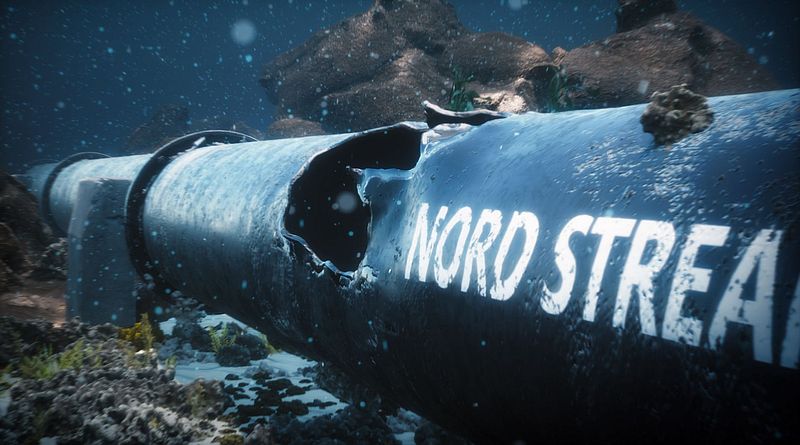
7. The High Court of England and Wales has dismissed a claim by Nord Stream AG, owned by Gazprom, against a consortium of insurers, Lloyd’s Insurance Company and Arch Insurance, for about 580 million euros in compensation for damage to the Nord Stream and Nord Stream 2 pipelines in 2022.
– The court concluded that the destruction of the gas pipelines was directly or indirectly related to Russia’s war against Ukraine, and such risks are excluded from insurance coverage according to the war exclusion clause.
– The court also emphasized that it is not necessary to establish who exactly committed the sabotage for this exception to apply. As a result, Gazprom’s subsidiary completely lost the case, and insurers avoided one of the largest potential payouts in the history of energy infrastructure insurance.
– The decision allowed insurance companies not to pay out hundreds of millions of euros in compensation. Previously, Nord Stream AG estimated the total damages from the pipeline sabotage at more than 1.2 billion euros.
– The decision of the UK court means that Russia will not be able to compensate a significant part of these losses through insurance mechanisms, and the financial consequences of the destruction of the “Nord Streams” will remain on Gazprom’s side.
8. Russia and China have deepened hidden military cooperation to counter the West.
– An investigative report by Der Spiegel indicates that the military cooperation between Russia and China is much deeper than officially acknowledged in Beijing. Journalists obtained internal documents, presentations, and materials from a closed Russia-China military technology forum that had remained unnoticed by the public and even Western intelligence services for years.
– According to the investigation, Moscow and Beijing are implementing joint projects in the arms sector and discussing scenarios for attacks on critical infrastructure in Western countries.
– The main goal of this cooperation is said to be undermining the military superiority of the United States, and the partnership is based on a shared anti-American strategy.
– Particular attention is given by the parties to countering the Starlink satellite system, which has become a key element in Ukraine’s defense. According to the documents, in 2023 the Chinese delegation proposed creating a joint Russian-Chinese “anti-Starlink alliance.”
– Presentations discussed the need to develop jamming capabilities, slow down the system’s operation, or even destroy satellites in orbit.
– The investigation also indicates that China is actively studying Russian combat experience gained during the war against Ukraine, particularly in view of a possible conflict over Taiwan.
– At the same time, Beijing is supplying Russia with electronics, semiconductors, and technological components that help maintain the Russian military-industrial complex amid sanctions.
– German Foreign Minister Johann Wadefuhl stated that the findings of the investigation raise serious concerns, and China’s support for the Russian army undermines the fundamental security interests of Europe.
– The publication also questions Beijing’s claims of “neutrality” regarding the war against Ukraine and points to the further deepening of the military-technical alliance between the two countries.
