

Information on current Russian losses due to sanctions as of 03.11.2026.
1. Ukraine’s defense forces attacked one of Russia’s largest refineries: “Slavneft-YANOS” in Yaroslavl is on fire.
– On the night of November 3, Ukrainian drones attacked the “Slavneft-YANOS” oil refinery in Yaroslavl. After the strike, at least three fires broke out on the premises of the enterprise. “Slavneft-YANOS” is among the top five largest refineries in Russia and has a processing capacity of about 15 million tons of oil per year.
– In 2024, the plant processed 14.9 million tons of raw materials, producing 2.6 million tons of gasoline, 4 million tons of diesel fuel, and 4.7 million tons of fuel oil. The enterprise also produces aviation fuel and supplies oil products, including to the Moscow region.
– This is not the first attack on the plant. After attacks on August 28 and September 17, two primary oil processing units were damaged. In September, the enterprise halted processing: the unit damaged in September provided about 40% of the refinery’s capacity, and the unit hit in August was still under repair.
2. The Russian army suffers record losses in Ukraine in addition to the reduction of territorial gains.
– In October, the Russian army lost about 54.4 thousand military personnel killed and wounded in Ukraine, according to European intelligence estimates close to this figure. The share of dead among the losses also reached a record level. On average, Russian forces lost over 12 thousand military personnel per week, 1.7 thousand per day, or more than 70 per hour.
– Despite such losses, according to the American Institute for the Study of War (ISW), in October, Russia lost more territories than it captured for the second month in a row: about minus 160 sq. km. In September, the area of territories under its control decreased by 80.8 sq. km.
– Since the beginning of 2026, Russian troops have captured less than 1,000 sq. km of Ukrainian territory — almost 3.5 times less than in the same period of 2025, according to the Ukrainian project DeepState.
3. Russia is selling part of “Sovcomflot” to raise funds to cover the budget deficit.
– The Russian state property management agency has begun selecting organizers for the sale of 7.8% of shares in the shipping company “Sovcomflot.” The competition conditions involve preparing transaction options that will ensure maximum revenue for the federal budget.
– Currently, the state owns 82.8% of the company’s shares. After the sale of the stake, it will retain 75% plus one share. At the current market price, the package could bring the budget about 15 billion rubles (approximately $184 million).
– The sale of the state stake occurs against the backdrop of a budget deficit that Russia is trying to cover with additional sources of income in the fifth year of the war against Ukraine.
– “Sovcomflot” holds strategic importance for the export of Russian oil and gas, particularly for the transportation of LNG from Arctic projects. In fact, the government hopes to receive a one-time budgetary resource from the sale of part of the state asset while retaining control over the company.
4. Investments in the Russian economy have fallen by almost 10%, businesses are increasingly shifting into survival mode.
– The business confidence index in Russia in October 2026 decreased to −9.9%. The worst sentiments were recorded in the production of building materials (−20%), metallurgy (−16%), woodworking (−12%), automotive (−8%), and chemical industries (−7%). About 5,800 large and medium-sized enterprises participated in the survey.
– At the same time, real investments are decreasing: in the first half of 2026, investments in fixed capital amounted to 16.2 trillion rubles — almost 10% less than in the same period last year. Businesses are postponing investment projects due to high loan costs and uncertainty associated with the protracted war.
– The reduction in capital investments is already affecting the demand for cement and metal. Fewer investments also mean fewer new productions, technologies, and jobs in the coming years. This primarily affects building material manufacturers and metallurgical enterprises.
– Economic activity is increasingly concentrating around defense orders and companies with state contracts and administrative support. The rest of the businesses face increasing risks and reduce development plans.
5. Russia has increased LNG exports to a record level, with China providing the bulk of the supply growth.
– In October 2026, Russian factories exported 3.42 million tons of liquefied natural gas (LNG) — 11.9% more than in the same month last year. From January to October, shipments increased by 13.5%, reaching 28.65 million tons, according to preliminary data from Kpler.
– The main growth factor was China: in ten months, its purchases of Russian LNG increased by 47%, to 8.8 million tons. The Chinese market accounted for about 84% of the total export growth. In total, Asian countries imported 15.16 million tons of Russian gas — 15.8% more than last year.
– The European Union, preparing to gradually abandon Russian LNG, also increased its purchases by 6.5%, to 12.87 million tons. Notably, Spain increased its imports by 39% to 2.84 million tons. At the same time, the EU’s share in Russian exports decreased from 47.8% to 44.9%. Deliveries from the sanctioned “Arctic LNG-2” project in ten months more than quadrupled — from 0.93 million to 3.98 million tons.
– The main buyer remains China, which allows the project to increase exports despite American sanctions. However, the growth in supplies does not mean the disappearance of restrictions: the key issue remains the resilience of logistics and the ability to sell gas in a limited range of markets.
6. The EU continues to import Russian ammonia under a special quota, despite its use in the production of explosives.
– The European Union continues to purchase Russian ammonia thanks to a special quota that allows imports despite sanctions. An investigation by the German TV channel SWR found that the deliveries are linked to the company “EuroChem,” founded by sanctioned Russian oligarch Andrey Melnichenko.
– On October 5, the tanker Eco Sorcerer delivered over 20,000 tons of Russian ammonia to Antwerp, Belgium. The raw material is made from natural gas and is mainly used for fertilizer production. Russia has invested billions of dollars in expanding ammonia production, port infrastructure, and transport routes, enabling it to earn income from exporting energy-intensive products even with restrictions on direct gas supplies.
– According to SWR, ammonia is supplied to the EU by EuroChem, which has subsidiaries in Antwerp and Germany. The investigation also uncovered the military dimension of EuroChem’s activities: the company supplies nitric acid to the Russian military-industrial complex for the production of explosives.
– According to industry sources cited by SWR, ammonia and nitrates are produced at the same facilities. An Estonian intelligence report for 2026 named EuroChem as a key player in Russian explosives production, with disruptions at its plants potentially affecting ammunition supplies to the Russian army.
– The European quota allows the Russian conglomerate to continue earning from supplying chemical raw materials to the EU, while its associated production provides components to the Russian military-industrial complex.
7. American oil companies earned over $130 billion in half a year thanks to the war with Iran and interruptions in fuel supply.
– The combined profit of more than 50 American oil production and refining companies for April–September 2026 amounted to approximately $132 billion. This is almost three times more than the same period last year, when they earned less than $47 billion.
– Refining particularly benefited: due to hits on refineries in the Middle East and Russia, supplies of oil products decreased, pushing prices for gasoline, diesel, and jet fuel up. In the third quarter, ExxonMobil’s refining division earned $7.2 billion in profit, for the first time in many years surpassing the oil production business in this indicator.
– ExxonMobil’s total net profit amounted to $15.4 billion — the company’s highest quarterly result since the full-scale war of Russia against Ukraine began.
– At the same time, the diesel fuel shortage remains acute: wholesale prices in Europe and the USA reached $220 per barrel — more than twice the pre-war level of February 2026. ExxonMobil’s financial director noted that Middle Eastern refining capacities are operating at less than a quarter of the pre-war level. Additional impact comes from Ukrainian attacks on Russian energy infrastructure and refineries.
– The return of Russian diesel fuel to the global market is unlikely to significantly change the situation. A representative of the American company Phillips 66 called the possible additional volumes from Russia “a drop in the ocean” compared to the production volumes halted due to disruptions.
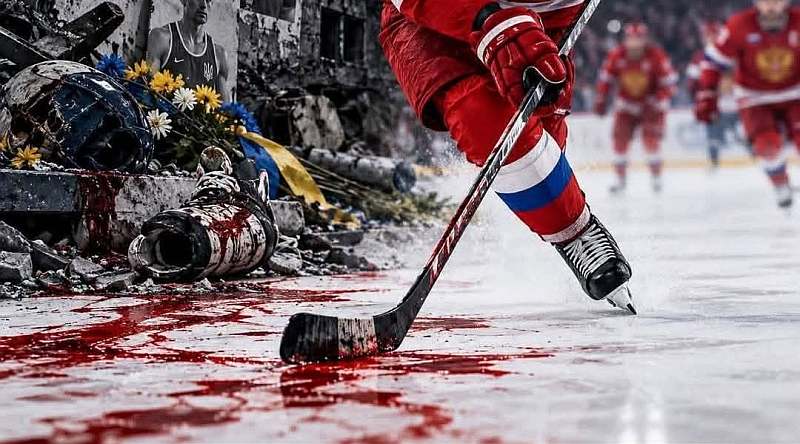
8. Finland mobilizes hockey federations against the return of Russia to world championships, sponsors withdraw from tournaments.
– The Finnish Ice Hockey Federation has led a campaign to block Russian teams from competitions under the aegis of the International Ice Hockey Federation (IIHF), despite a Court of Arbitration for Sport (CAS) decision in favor of their return.
– The Finnish federation is coordinating with other national associations for a united stance and is urging them to refuse to play against Russia as long as its war against Ukraine continues. Federation President Heikki Hietanen stated that Finland is gathering as many countries as possible willing to inform the IIHF of their boycott of matches with Russian teams.
– The city of Turku also warned it would refuse to host the 2028 World Junior Championship if Russia is allowed to participate. The CAS decision has already led some sponsors to withdraw from supporting hockey tournaments.
– Swedish company AJ Products, which has supported world championships since 1989, will not sponsor the men’s 2027 World Championship due to possible Russian participation. Czech betting company Tipsport announced it would not advertise during matches involving the Russian team. On November 2, the board of
– the Finnish Ice Hockey Association officially decided to use all possible measures against Russia’s return to world championships. Finland stated that its national teams would not play against Russian teams while the war continues.
9. Following Finland, Norway refused to play against Russia in the 2027 Ice Hockey World Championship.
– The Norwegian team will not play against Russia in the Men’s World Ice Hockey Championship, which will take place in May 2027 in Germany. This was announced by the Norwegian Ice Hockey Association (NIHF) on November 3, citing safety concerns and geopolitical tensions.
– The association emphasized that the rest of the group stage matches will proceed as scheduled. Norway also called for Russian teams to be banned from international competitions while the war against Ukraine continues.
– The decision of the Court of Arbitration for Sport (CAS), which overturned the suspension of Russian teams from International Ice Hockey Federation (IIHF) competitions, has sparked opposition from European federations, host cities, and sponsors.
– The Finnish Ice Hockey Association stated that it will use all available means to prevent Russia’s return, and the city of Turku has threatened to withdraw from hosting the junior world championship if the Russian team is allowed to participate in the tournament.
– Furthermore, the Swedish company AJ Products, which has sponsored the men’s world championship since 1989, has withdrawn its support for the 2027 tournament due to the possible participation of Russia.
