

Information on current Russian losses due to sanctions as of 16.09.2026.
1. Two Rosneft oil refineries — the Syzran and Saratov refineries — have suspended operations following attacks by Ukrainian drones.
– The Syzran refinery stopped on Tuesday after damage to several facilities, including the main primary processing unit CDU-6 with a capacity of 17.1 thousand tons per day. It accounts for about 71% of the plant’s capacity. Repairs are estimated to take at least a month.
– The second unit, CDU-5, with a capacity of 7.1 thousand tons per day, or 29% of the refinery’s capacity, was already shut down earlier due to damage from a Ukrainian drone attack in July. Thus, after the new strike, the Syzran refinery effectively lost the ability to process oil.
– The Saratov refinery ceased processing on September 11 following another drone attack. The plant had already halted operations on September 8 due to equipment damage and fires following a previous strike and planned to resume processing on September 10-11.
– Both enterprises belong to Rosneft and are important for supplying oil products to Russia’s domestic market.
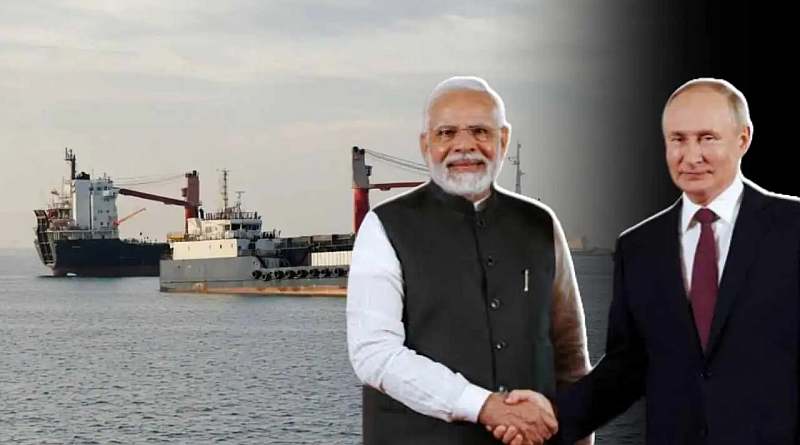
2. In August, Russia imported by sea a wartime record volume of oil products — 172 thousand tons worth €114 million.
– This is more than seven times the previous monthly maximum since 2022 and about three times more than Russia imported in all of 2025. Almost three-quarters of August’s supplies — 74% — were gasoline. In comparison, in 2023-2025, gasoline accounted for only 6% of Russia’s oil product imports.
– The main supplier was India, accounting for 70% of all Russian oil product imports and 94% of gasoline imports. In August, 120 thousand tons of gasoline worth €78 million were delivered from the Indian Vadinar refinery to Russia. The enterprise belongs to Nayara Energy, 49.13% of which is controlled by Rosneft.
– Meanwhile, from January to August 2026, the Vadinar refinery received 100% of crude oil from Russia, whereas in all of 2025, the share of Russian oil was 81%.
– As a result, Russia is effectively re-importing fuel produced from its own oil: the crude goes to India, is processed at a refinery partially controlled by Rosneft, after which the finished gasoline is purchased and returned to Russia.
3. Russia increased its maritime oil exports precisely at the time of a spike in world prices due to supply disruptions in the Middle East.
– Four weeks before September 13, shipments from Russian ports increased to 3.54 million barrels per day — the largest weekly increase since mid-May. In the last week, Russia loaded 27.06 million barrels on 38 tankers. The four-week estimate of export revenue has risen to approximately $1.9 billion per week, reaching $2.42 billion in the last week — the highest since the end of May.
– The export increase coincided with a sharp rise in oil prices after drone strikes on Saudi Arabia’s East-West pipeline. Brent rose to its highest level since May, boosting revenues from Russian oil sales. Shipments to Asia increased to 3.41 million barrels per day. Main buyers remain China and India.
– Meanwhile, exports to Turkey dropped to approximately 50,000 barrels per day, to Egypt were about 80,000, and to Syria stopped.
– Russia also increased shipments from the Baltic port of Ust-Luga by approximately a third, or 160,000 barrels per day compared to August.
– Some Kazakh volumes were redirected to Novorossiysk, freeing up additional capacity for Russian oil in Ust-Luga.
– Russia’s own production in August fell to 8.72 million barrels per day — marking the ninth consecutive month of decline and more than 1 million barrels per day below the OPEC+ limit.
4. Russia’s “shadow fleet” is increasingly using the waters near Ireland, where transatlantic submarine cables run, while the country’s ability to control this area remains limited.
– According to the Irish Naval Service, from January to September 2026, 388 passages of ships connected with Russia’s “shadow fleet” were recorded in the Irish Sea, compared to 132 for the same period last year. This corresponds to an increase of approximately 194%.
– Routes changed after increased control of Russian tankers in the English Channel. In particular, after the British military detained the tanker Smyrtos in June, some ships began bypassing the British Isles from the west.
– The Irish military fears that such a concentration of ships poses additional risks to underwater infrastructure.
– The problem extends beyond the control of oil tankers. About 75% of transatlantic submarine cables pass through or near the waters around Ireland. They provide a significant portion of transatlantic internet traffic, and Ireland itself is a major technology infrastructure hub. The country hosts over 80 data centers and houses operational structures for Apple, Google, Microsoft, and Meta.
– Ireland has only eight patrol ships and lacks long-range military radar, combat aviation, air defense systems, and submarine detection capabilities. The country remains militarily neutral and is not a NATO member.
– In 2026, Ireland increased its defense budget to approximately $1.7 billion but spends only about 0.2% of GDP on defense. Russian submarines, reconnaissance ships, and aircraft have already been observed near the Irish coast and in the country’s airspace.
5. The liquidity deficit in Russia’s banking sector reached a record 3 trillion rubles on September 15.
– Banks owe the Central Bank 6.8 trillion rubles, while the Central Bank has attracted 3.9 trillion rubles from the banks. This means that Russian banks are increasingly dependent on Central Bank funding.
– However, it is not about a mass withdrawal of money by depositors, but a deliberate restriction on bank access to funds by the regulator. The Central Bank is trying to curb inflation by reducing the amount of money available for lending.
– As a result, loans for businesses and the population remain expensive, and the economy receives less money for operation and development. The problem is that the deficit has already exceeded the Central Bank’s forecast. By the end of 2026, the regulator expected 2.4–3.6 trillion rubles, but the upper limit was exceeded already in September.
– The record deficit means that Russian businesses and the population will not have access to cheap loans for a long time.
6. In July, France sharply increased its purchases of Russian liquefied natural gas, spending €365 million on it.
– This was the highest figure in the last two months and brought France to the top among buyers of Russian gas in the EU. According to Eurostat, in total, EU countries purchased Russian LNG worth approximately €607 million in July.
– Despite a 12% reduction compared to July 2025, Russia remained the second largest supplier of LNG to the EU with a share of 18.6%. The US accounted for 53.9% of the supplies worth €1.8 billion. Following France, the largest buyers of Russian LNG in July were Belgium — €92 million and Spain — €78 million. Hungary purchased Russian gas for €171 million, Greece — for €132 million, Bulgaria — for €119 million.
– From January to July 2026, the European Union purchased Russian LNG worth €5.15 billion and pipeline gas for another €3.4 billion. In July alone, imports of pipeline gas cost €512 million.
– The total value of Russian gas purchases over seven months decreased by only 2.6% — to €8.6 billion. Despite sanctions pressure and the EU’s plans to completely abandon Russian gas, European countries continue to provide Russia with billion-dollar gas revenues.
7. The US Department of Justice has charged five people linked by the American prosecutor’s office to a network of Russian intelligence services that planned murders and terrorist attacks in the US and Europe.
– The indictment was published in the Southern District of New York. According to the prosecution, the network had been engaged in surveillance of Russian dissidents, recruiting people for their murder, and organizing attacks on civil and military infrastructure in European countries that support Ukraine since 2024.
– One of the recent episodes concerns a Russian dissident whom network members considered to be in the US. This summer, they allegedly recruited a person in the US to monitor him, paying $1,000–1,500 for information gathering. Later, they offered $40,000 for the dissident’s murder.
– According to the US Department of Justice, last year the network also attempted to recruit a US citizen to kill a person in Lithuania. They offered him about $25,000, and after refusal, money for arson of a warehouse or attacking a power substation. The accused are charged with conspiracy to finance terrorism. Three are also charged with conspiracy to commit murder for hire.
8. Finnish customs are investigating the supply of equipment to Russia worth about €5.9 million in circumvention of EU sanctions.
– According to the documents, the cargo was supposed to be sent to Kazakhstan and Turkey, but the investigation believes that the actual destination was Russia. This involves hydraulic pumps, engines, and various valves, which, according to customs data, were exported in 2022–2023.
– The export of these products to Russia was prohibited by EU sanctions after July 10, 2022. The case involves two companies from Eastern Finland: one handled export organization, the other managed goods storage. Two people are suspected.
– The preliminary investigation is nearing completion. Finnish customs plan to hand over the materials to the Eastern Finland prosecutor’s office by the end of the year. One of the suspects is also involved in four other cases of sanctions violations.
