

Information on current losses of the Russian Federation due to sanctions as of 09/17/2026.
1. Ukrainian Defense Forces hit a military airfield in Rostov-on-Don and a refinery in Yaroslavl.
– After our drones attacked, explosions were heard near the “Rostov-on-Don — Central” military airfield in Rostov. A fire broke out, followed by a secondary detonation. Local residents reported multiple explosions.
– In Yaroslavl, after a drone attack, a fire broke out at the site of the “Slavneft-YANOS” refinery. Explosions and subsequent fires were also reported.
– YANOS is one of Russia’s largest refineries, with a capacity of about 15 million tons of oil per year.
2. Russia has engaged up to 25,000 workers from the DPRK in the production of military drones for the war against Ukraine using fake visa schemes, according to a report by the International Sanctions Monitoring Group (MSMT).
– According to researchers, North Koreans, among others, work in the special economic zone “Alabuga” in Tatarstan, assembling drones based on Iranian Shaheds. Workers from the DPRK are registered as students, which allows bypassing UN bans on the employment of North Korean citizens abroad.
– The average annual income of such a worker is about $7,500, but a significant portion of the earnings is taken by the Kim Jong Un regime. According to MSMT estimates, North Korean workers abroad have brought the regime up to $800 million in 2025. These funds are used to finance the DPRK’s nuclear and ballistic missile programs, contrary to UN Security Council resolutions.
– By the end of 2025, there were between 15,000 to 30,000 North Korean workers in Russia. Meanwhile, Moscow is becoming an increasingly attractive destination for Pyongyang: salaries can be five times higher than in China.
– The involvement of labor from the DPRK expands the military-industrial cooperation between Russia and North Korea, which already includes arms supplies and the participation of North Korean military personnel in the war against Ukraine.
3. Despite the EU ban on the import of petroleum products made from Russian oil, in August, European ports received 20 shipments of fuel from refineries using Russian raw materials.
– In July, there were 18 such deliveries. Nine August batches arrived from Turkey, seven from India, and four from Georgia. Italy and Cyprus received the most deliveries, with five batches each.
– Overall, in August, refineries in India, Turkey, Brunei, and Georgia, which use Russian oil, exported petroleum products worth €510 million to countries supporting sanctions. The EU accounted for €333 million, the US for €143 million, and Australia for €34 million.
– According to CREA, about €189 million of this export may have been from petroleum products made specifically from Russian oil. Meanwhile, total exports from such refineries to sanction countries fell by 29% over the month.
– The scheme allows Russian oil to reach Western markets after processing in third countries. If a refinery simultaneously uses raw materials from several countries, it becomes much more difficult to determine the origin of a specific batch of gasoline or diesel.
– As a result, Russian oil can first be exported to a third country, processed there, and then return to the European market as a petroleum product without an obvious Russian origin.
4. Russian refineries receive record profits despite losing significant capacities due to Ukrainian drone strikes.
– In the first half of 2026, refineries earned 938 billion rubles — 16.2% more than the same period last year. In the III quarter, profits may increase even more.
– Superprofits are formed due to a combination of high wholesale fuel prices and a significant increase in budget payouts to oil companies through the fuel damper mechanism.
– Since the end of February, the price index for light petroleum products on the stock exchange has risen by 37%, including 10% since the end of June. AI-92 gasoline has increased by 18%, AI-95 by 16%, and diesel fuel by about a third. In July, prices reached a record 82.6 thousand rubles per ton of AI-95 and 77.6 thousand rubles per ton of diesel.
– In September, the new record was set by the price of AI-92 — 73.1 thousand rubles per ton. Simultaneously, the Russian budget increased payouts to oil companies to restrain fuel prices.
– In the II quarter, they amounted to almost 350 billion rubles monthly, and for July-August — about 500 billion rubles. According to estimates, in the III quarter, the net margin of refiners may increase by 45% — to 35 thousand rubles per ton of gasoline and 48 thousand rubles per ton of diesel fuel.
– The rise in prices and budget payouts compensate Russian oil companies for reduced processing due to strikes on infrastructure and unscheduled repairs.
– The cost of the fuel crisis is effectively paid by Russian consumers. Since the beginning of the year, retail prices for gasoline in Russia have risen by 21.2%, and for diesel fuel by 18.4%.
5. The US House of Representatives approved a bill to strengthen sanctions against Russia.
– The document was voted for by 262 congressmen, while 159 were against it. The bill is now sent to Donald Trump for signing. Named after the late Senator Lindsey Graham, the document gives the US president the right to impose tariffs of up to 100% on goods from countries that are among the top five purchasers of Russian oil and gas.
– The same tariff can be applied to the five countries that most help circumvent oil sanctions. Among the potential targets are China and India.
– Separately, the bill provides for tariffs of up to 500% on Russian goods, as well as sanctions against Russian officials, banks, oligarchs, and ships of the “shadow fleet.”
– The White House previously expressed support for the current version of the document, and American media report that Trump intends to sign it. After this, the new powers of the US president regarding secondary tariffs will come into effect.
– For Russia, the key threat is the possibility of applying tariffs not directly to its exports, but to the goods of countries that continue to purchase Russian energy resources.
– This creates additional risk for China and India, the two largest buyers of Russian oil, on which the preservation of its export revenues largely depends.
6. India warned the US about possible negative consequences of introducing new tariffs for purchasing Russian oil, stating that such measures could affect not only trade but also bilateral relations and the global energy market.
– This was reported by India’s Ministry of Foreign Affairs following the approval by the US House of Representatives of a bill that allows Donald Trump to impose tariffs of up to 100% against countries that buy Russian energy. New Delhi stated that the Indian side had repeatedly discussed this issue with American partners in recent months and “very clearly” pointed out the possible consequences.
– India also stated its intention to continue purchasing energy from various suppliers depending on market conditions and to take necessary measures to protect its trade and economic interests.
– Indian refineries have already purchased oil for September and October, including Russian oil. Refiners are urging the government to seek concessions from the US: to allow the completion of already concluded deals and to set a separate quota for India for purchasing Russian oil instead of immediately imposing a 100% tariff.
– For Indian refiners, a reduction in Russian supplies could significantly hit profitability. The global oil supply has already decreased due to the war in the Middle East, and oil prices have risen. Meanwhile, Indian refineries sell fuel at prices lower than the market, which additionally pressures their margins.
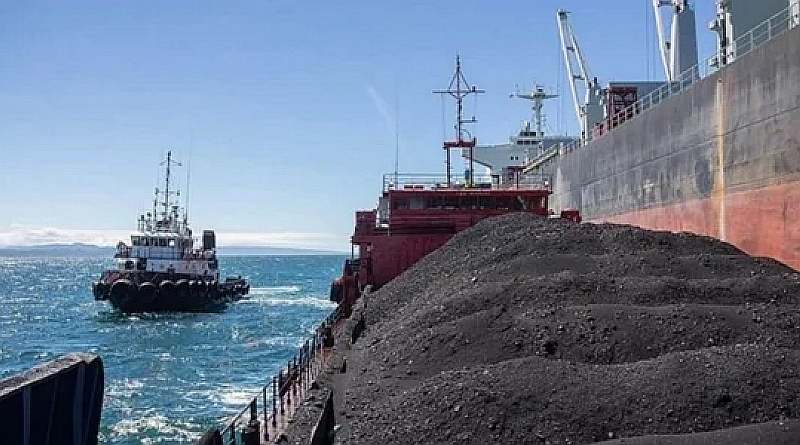
7. In July, Turkey completely stopped purchasing Russian coking coal.
– The reduction in supplies is linked to risks for shipping in the Black Sea due to Ukrainian strikes on vessels. By the end of January–June, the export of solid fuel from Russia to Turkey had already decreased by 29.9% year-on-year — to 224.5 thousand tons.
– At the same time, Turkey sharply increased its coal purchases from the USA. From January to July, American supplies rose by 70% — to 1.88 million tons, and in July alone tripled year-on-year — to 469 thousand tons.
– In July, Turkey also imported coking coal from the UK — 82.5 thousand tons — and Kazakhstan — 48.8 thousand tons, for the first time this year.
– Transportation issues in the Black Sea are already affecting Russian exports: Turkey is replacing Russian coal with supplies from other countries, reducing its dependence on Russian producers.
8. Raiffeisen shares plummeted after accusations of circumventing sanctions.
– Shares of Raiffeisen Bank International fell by 8.2% in Vienna after American research firm Grizzly Research accused it of involvement in operations with Russian goods worth $1.19 billion, which are subject to EU, US, and UK sanctions.
– Grizzly Research claims that Raiffeisen has become one of the channels for circumventing sanctions, despite the bank’s statements about reducing its business in Russia. The report uses customs data from 2022 to early 2025.
– Raiffeisen rejected the accusations, stating that its compliance system meets the requirements and that the report contains errors and statements that could be misleading. The customs statistics provided by Grizzly do not themselves prove the bank’s payments, financing of relevant operations, or violations of sanctions.
– According to Bloomberg Intelligence, the main risk for Raiffeisen remains potential regulatory pressure from OFAC and the ECB, which could further complicate the bank’s exit from Russia.
– Raiffeisen claims to have reduced operations and international payments in Russia, but the bank still remains an important channel for settlements in Russian gas.
– Attempts by Raiffeisen to sell its Russian business have not yet been concluded, maintaining regulatory and reputational risks for the bank due to its presence in Russia.
