

Information on current Russian losses due to sanctions as of 07/15/2026.
1. Russia accumulates oil surpluses due to refinery hits and market issues.
– Ukrainian strikes on Russian refineries have reduced oil processing to the lowest level in the past 21 years, forcing Russia to increase crude oil exports.
– Meanwhile, Moscow is finding it increasingly difficult to locate buyers for additional volumes. For the four weeks leading up to July 12, sea exports remained nearly unchanged at 4.21 million barrels per day, but about 135 million barrels of Russian oil have already accumulated at sea.
– An increasing number of tankers are idling near the Egyptian port of Mersa-El-Hamra and the Riau Archipelago in Indonesia near Singapore. Delays are also recorded with the shipment of Sokol, Sakhalin, and ESPO grades.
– In June, oil production in Russia fell to 8.93 million barrels per day — approximately 830,000 barrels below the OPEC+ target level. Falling prices for Russian oil are also reducing export revenues. Over the past month, the value of sea exports has decreased to $1.68 billion per week.
– The average price of Urals is about $52 per barrel, ESPO about $67, and supplies to India about $70.6 per barrel. Despite record shipments to Asia at about 4 million barrels per day, nearly 1.9 million barrels are transported daily without a designated final destination, indicating difficulties in selling Russian oil.
2. Ukraine has blocked key logistics in the Azov Sea, jeopardizing up to 20% of Russian grain exports.
– Ukrainian strikes on the Sea of Azov, which in the last nine days have hit over 100 Russian vessels, have effectively paralyzed the operation of the Azov and Taman ports — key hubs for Russian grain exports. These ports handle about 15% of Russian grain exports and 17–21% of vegetable oil exports.
– Through these shallow ports, Russia supplies grain to Middle Eastern countries, particularly Turkey, which buys nearly every fifth ton of Russian grain. Following the attacks, Russian authorities stopped accepting applications for ships to pass through the Kerch Strait.
– Forecasts suggest that due to logistical problems and the late start of the harvest, grain exports in July will be only 2 million tons instead of the planned 2.5 million tons — 20% less than expected. Some cargo can be redirected to deep-water ports, but their capacity will suffice only for July.
– Already in August, when exports traditionally rise to 5–6.5 million tons per month, the logistical system may face overload.
– Rebuilding export routes amid the harvest season, against the backdrop of a fuel crisis and a shortage of logistical resources, will become an extremely difficult task for Russia.
3. Ukraine expanded sea strikes to the Black Sea, threatening a key route for Russian oil exports.
– After a series of attacks on over 100 Russian vessels in the Sea of Azov, Ukraine launched a new phase of its maritime campaign, shifting strikes to the Black Sea. According to Robert Brovdi, the Commander of the Unmanned Systems Forces, Ukrainian forces attacked 17 oil tankers, two gas carriers, and one tugboat overnight.
– The Black Sea is an important route for the export of Russian crude oil. Any disruptions can significantly reduce supplies, which have recently reached the highest levels since the start of the full-scale war.
– In June, over 980 thousand barrels of oil were shipped daily through the port of Novorossiysk — Russia’s largest oil terminal on the Black Sea. This is over 20% of all Russian oil maritime exports. The Black Sea is also home to the Caspian Pipeline Consortium (CPC) terminal, through which Kazakh oil and some Russian oil are exported.
– Last week, a Ukrainian drone attacked an oil tanker heading to this terminal. After strikes on Russian vessels in the Sea of Azov, Moscow suspended shipping through the Azov-Don Canal and closed the Kerch Strait.
– The expansion of Ukrainian attacks in the Black Sea creates additional risks for the export of Russian energy resources and logistics, on which Russia increasingly depends for foreign currency revenue.
4. Economists close to the Kremlin warned of the threat of a debt spiral for Russia’s budget.
– The federal budget of Russia, following the start of the full-scale war, has shifted to a “consistently deficit model,” and its financing increasingly relies on state borrowing. This is stated in the report of the Kremlin-aligned analytical center CEMACP.
– Since the beginning of the war, Russia’s national debt has increased by 68% — from 20.9 trillion to 35.1 trillion rubles, or from 15.5% to 18.1% of GDP. According to the current budget, by the end of 2025 it will increase to 43.7 trillion rubles, and by 2028 — to 53.8 trillion rubles.
– The long-term forecast of the Ministry of Finance anticipates an increase in debt load to 32% of GDP under the baseline scenario and nearly 70% of GDP in the event of a prolonged period of low oil prices.
– Meanwhile, servicing the debt is becoming increasingly expensive: the Ministry of Finance is forced to issue 10-year bonds at over 16% per annum. As a result, expenditures on interest payments for the debt from 2022–2025 have almost tripled — from 1.1 trillion to 3.2 trillion rubles per year. Debt servicing has already become the fourth largest item in the federal budget, absorbing 9.1% of all expenditures.
– By 2028, these expenses will increase to almost 5 trillion rubles per year, or 10.2% of budget expenditures.
– The Russian budget is increasingly entering a debt spiral: the repayment of old bonds is financed by new borrowings, and new loans are also needed to pay interest.
5. The fuel crisis in Russia has caused a sharp increase in freight transportation costs.
– The fuel crisis, which worsened after strikes on Russian oil refineries, led to a sharp rise in the cost of truck freight transportation in Russia.
– Over the past month and a half, average tariffs for full truckload (FTL) transportation have increased by 17.5%, and over the year by 28.8%, reaching a record level. On some routes, tariffs have jumped more than one and a half times.
– The main reason was the sharp rise in price and shortage of diesel fuel. Fuel constitutes about 30% of the cost of long-haul transportation, and the shortage of diesel forces drivers to idle in long queues at gas stations, increasing the duration of trips and further raising carriers’ costs.
– The rising logistics costs are creating new inflationary pressure on the Russian economy. The increase in transportation costs is already beginning to be factored into the prices of foodstuffs, building materials, household appliances, and other goods.
6. China blocked the advancement of “Power of Siberia-2,” demanding that Russia sell gas at nearly domestic prices.
– Negotiations between Russia and China regarding the construction of the “Power of Siberia-2” pipeline, which the Kremlin considered as a replacement for the lost European market, have reached a stalemate.
– During Putin’s last visit to Beijing, the Chinese side asked the Russian delegation not to return to this issue until conditions change. China is ready to sign a deal only if Russian gas is supplied at approximately the domestic Russian price — about $50 per thousand cubic meters.
– For Gazprom, this would mean selling fuel significantly below export prices and effectively subsidizing the new pipeline.
– Even under current contracts, China already buys Russian gas at a significant discount: in 2026, its price is $258.8 per thousand cubic meters, 39% lower than for other buyers in distant markets. In 2027, the price is expected to decrease to $223.9, but Beijing is seeking even further reductions.
– Meanwhile, neither the Chinese authorities nor Gazprom have officially announced the cessation of negotiations. Therefore, it is not about a definitive refusal of the project but a prolonged negotiation process in which China uses Russia’s dependency to obtain the most favorable terms.
7. The US Congress is preparing to grant Trump the right to impose tariffs of up to 100% against buyers of Russian oil.
– The US Congress may introduce a bill this week that would grant President Donald Trump the right to impose tariffs of up to 100% on countries and companies that purchase Russian oil and gas or facilitate such purchases.
– China and India — the largest buyers of Russian energy resources — could primarily be affected. The document also envisages sanctions against enterprises in Russia’s defense, energy, and financial sectors, as well as against the “shadow fleet” that Moscow uses to circumvent Western restrictions.
– Initially, the bill contained much stricter measures — tariffs of 500% for all buyers of Russian oil, gas, uranium, and other resources. However, after consultations with the Trump administration, its provisions were softened.
– If the document is adopted, it will create new risks for Russia of losing key export markets. Even the threat of imposing high tariffs may force major importers to reduce their purchases of Russian energy resources or demand even greater price discounts, increasing pressure on Russia’s export revenues.
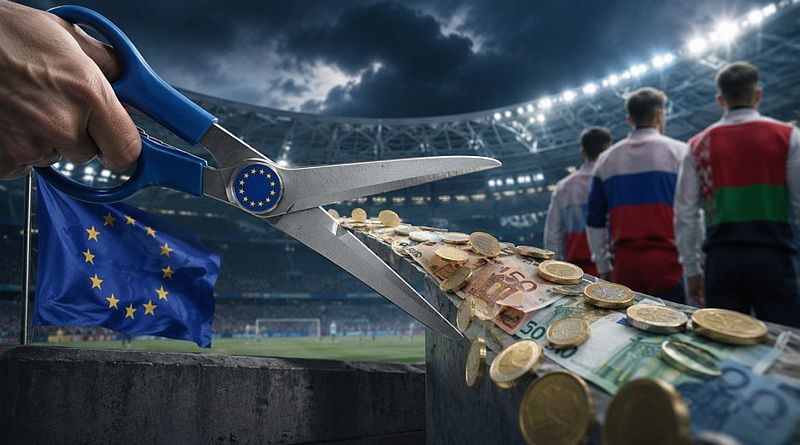
8. Nine EU countries have called for the IOC to be stripped of funding due to the return of Russian athletes.
– Nine countries of the European Union have called on the European Commission to stop funding international sports organizations that allow Russian and Belarusian athletes to return to international competitions. The initiative specifically concerns the International Olympic Committee (IOC), World Aquatics, and the International Fencing Federation (FIE).
– The reason was the decision of the IOC Executive Committee on July 7 to temporarily restore the membership of the Russian Olympic Committee and to announce that previous restrictions on Russian athletes no longer apply.
– Estonia, Denmark, Finland, Latvia, Lithuania, the Netherlands, Poland, Romania, and Sweden propose excluding these sports organizations from EU funding programs, particularly Erasmus+, and limiting their participation in European sports forums.
– In a joint letter, the countries emphasized that allowing Russian and Belarusian athletes ignores the consequences of the war for Ukrainian sports. They noted that thousands of Ukrainian athletes have lost the opportunity to train fully due to the destruction of sports infrastructure, forced relocation, or service in the Ukrainian Defense Forces, while Russia continues to use sports as a tool of state propaganda.
– According to the authors of the appeal, international sports organizations that reinstate Russia in competitions should not receive financial support from the European Union.
