
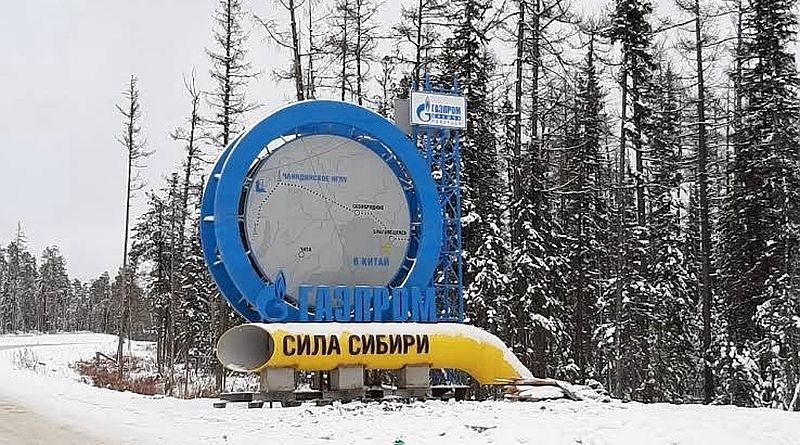

The Kremlin’s highly publicized large-scale project of the “Power of Siberia-2” gas pipeline has suffered a crushing fiasco, as China’s extremely pragmatic leadership has completely dispelled the Russian authorities’ illusions of an equal strategic partnership.
During a recent visit by the Russian delegation to Beijing, the Chinese side demonstrated a notably tough position when they directly recommended that Moscow not raise the issue of constructing the mentioned gas pipeline until the Russian side agrees to all the economic demands put forward by Beijing.
China persistently demands that the cost of the supplied natural gas be reduced to the level of Russia’s domestic prices, which today is approximately fifty dollars per thousand cubic meters. Such a price appears to be an outright mockery of the exporter, as it is several times lower than the current tariffs for supplying raw materials to China via the first pipeline and completely eliminates any commercial viability for Gazprom, which is in crisis.
The situation is exacerbated by the fact that the Chinese leadership flatly refuses to share financial risks, insisting that all expenses related to laying the pipes, creating accompanying infrastructure, and further technical maintenance be borne exclusively by the Russian side.
Even in the most optimistic calculations, the payback of such colossal investments will stretch over many decades, turning the project into an obvious financial shackles for the Russian budget and depriving it of any commercial sense.
The Russian leadership naively hoped that the new large-scale gas pipeline would quickly compensate for the loss of the once-premium European market and vividly demonstrate to the global community the unbreakable energy alliance of two great powers.
However, Beijing instantly recognized Moscow’s desperate situation, having lost key buyers, and as a result, the Chinese partners moved from declarations of cooperation to outright dictation and extracting long-term discounts at the expense of Russian taxpayers.
Since Russia is completely devoid of alternative options for selling such gigantic volumes of raw materials, the Chinese side gained absolute advantage in the negotiation process, which it now uses with maximum pragmatism.
In the Russian government, officials have already begun discussing the freezing of “Power of Siberia-2,” although official representatives will continue to broadcast positive news for the domestic audience.
Representatives of the Ministry of Foreign Affairs will routinely assure citizens of the successful agreement on technical details and another alignment of schedules, trying to hide the large-scale failure behind a facade of diplomatic optimism. At the same time, Beijing can afford to wait as long as it wants, as China’s economy can easily do without supplies from the new pipeline, while Russia will be left with untapped deposits and gas that, after rupturing relations with Europe, now has no buyers other than the stubborn Asian neighbor.
