

Information on current Russian losses due to sanctions as of 02.11.2026.
1. On the night of November 2, Ukrainian drones once again attacked the Samara LTC near the village of Prosvet in the Samara region of Russia.
– After the strike, a fire broke out on the station premises, with thick smoke rising above the facility. The Samara LTC is part of the Transneft system and serves as a major hub for the reception, storage, blending, and pumping of oil. It converges oil flows from Tatarstan, Western Siberia, and other oil-producing regions, and also forms the Urals export grade.
– According to the Ukrainian General Staff, the station is also used to supply the Russian army’s needs. Previous strikes on the station occurred on October 2, 7, and 10. After the October 7 attack, the General Staff reported the destruction of four tanks with a capacity of 50,000 cubic meters each and a massive fire.
2. In three days, Ukraine attacked three Russian oil refineries, accounting for about 10% of the country’s oil refining.
– On the night of November 1, Ukrainian Defense Forces attacked the Lukoil-Nizhegorodnefteorgsintez oil refinery in Kstovo, Nizhny Novgorod region. This marked the third strike on Russian refineries in three days. The combined capacity of the three attacked facilities amounts to about 24 million tons of oil refining and 9 million tons of diesel fuel production per year.
– Kstovo Refinery is one of Russia’s six largest oil refining plants. Its capacity is around 15 million tons of oil per year, with diesel fuel production exceeding 5 million tons. The enterprise belongs to refineries whose operational disruptions could affect Russian oil product exports.
– On Friday, Ukrainian drones attacked the Novokuybyshevsky refinery of Rosneft in the Samara region, and on Saturday, the Bashneft-Novoil plant in Ufa. The first processed 5.74 million tons of oil and produced 1.64 million tons of diesel fuel in 2024, and the second processed 3.8 million tons of oil and 2.6 million tons of diesel.
– In total, the three attacked plants processed about 24 million tons of oil and produced approximately 9 million tons of diesel fuel in 2024. This accounts for about 9% of Russian oil refining and over 11% of diesel production annually. The Novokuybyshevsky refinery supplies oil products to 60 regions of Russia and neighboring countries.
– Ukraine resumed strikes on Russian refineries on Friday after about a two-week pause, which was linked to pressure from US President Donald Trump and his administration.
3. Russia restricted the export of petrochemical raw materials to supply its industry following Ukraine’s strikes.
– The Russian government has banned the export of oil and coal-derived benzene, toluene, orthoxylene, paraxylene, and phenol outside the Eurasian Economic Union for three months. These substances are used in the production of paint and varnish materials, packaging, construction materials, cable insulation, and medical products.
– The decision follows months of Ukrainian attacks on Russian oil refining infrastructure. Strikes on refineries have already forced Moscow to limit the export of gasoline and diesel fuel, as well as to seek additional supply sources.
– Now, restrictions have also extended to petrochemical raw materials necessary for the operation of other sectors of Russian industry. For example, the Omsk Refinery, which has been repeatedly hit by Ukrainian drones, produces benzene, orthoxylene, paraxylene, and toluene concentrate. This is one specific example of an affected enterprise whose products fall under the new ban categories.
– The impact of strikes on Russian energy infrastructure goes beyond the fuel market. Moscow is increasingly forced to carefully distribute available raw materials between domestic consumers and exports, limiting its ability to sell abroad.
4. Russian oil tankers are being protected from drones with metal nets and car tires.
– Russian oil tankers, including vessels of the so-called shadow fleet, have begun installing metal nets, protective structures, and car tires for protection against drone attacks.
– Since August, at least 60 tankers with such devices have passed through the Bosphorus, most of which are under sanctions by the US and other Western countries. Protective structures are installed around the most vulnerable parts of the ships — including engines and steering equipment. Metal nets and frames are meant to prevent drones from approaching critical nodes, while tires hung from the deck serve as an additional barrier.
– These improvised means of protection resemble structures that Russian and Ukrainian military use to protect armored vehicles from FPV drones. Such methods are now being transferred to commercial shipping, indicating increasing risks for the transportation of Russian oil across the Black Sea.
– There is also noted financial vulnerability of the shadow fleet. Its old tankers operate outside the usual system of international insurance and shipping regulation, so insurance and financial risks are often secured by Russian state banks.
– Additional equipment and protection costs increase the operating costs of vessels and oil transportation. The emergence of such structures is evidence of Russia’s loss of control over shipping security in the Black Sea.
5. The Trump administration proposes to resume the transit of Russian gas to Europe through an American intermediary.
– The administration of U.S. President Donald Trump is seeking a swift resumption of Russian gas supplies to Europe through Ukraine. This idea was discussed during September negotiations as part of a potential “energy truce” ahead of winter.
– The plan, presented by American negotiators Steve Witkoff and Jared Kushner during trips to Moscow and Kyiv, involves the sale of Russian gas through an American intermediary. Such a scheme could bypass European sanctions and open opportunities for American investors.
– Meanwhile, the proceeds from gas sales are proposed to be directed to an escrow account in a third country, so Russia cannot use these funds to finance the war.
– However, this scheme does not change the main issue: Russian gas would once again gain access to the European market, and American companies would play the role of intermediaries in its supply.
– As part of a broader deal to end the war, the Trump administration is also considering the resumption of the Nord Stream pipeline. Negotiations on these proposals are ongoing, and their final terms have not been determined.
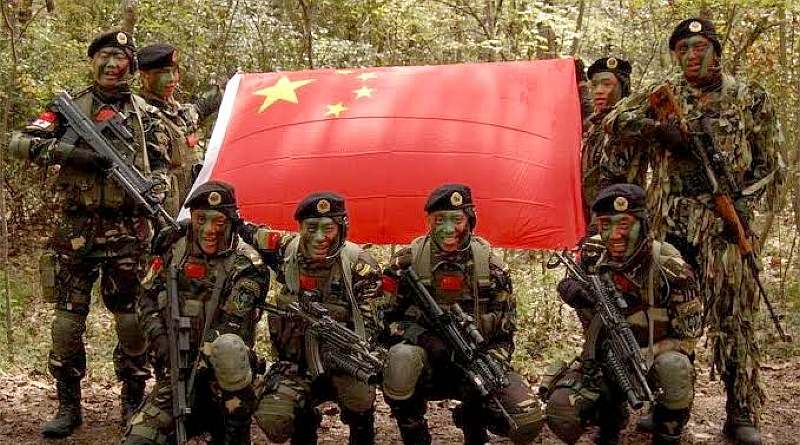
6. China is displacing Russia from the African arms market by offering more advanced systems.
– China is expanding arms trade with African countries, shifting from supplying small arms and ground equipment to more complex systems—air defense, attack drones, and electronic warfare. These segments were previously largely controlled by Russian and Western manufacturers.
– The emergence of Chinese air defense systems, armed drones, and electronic warfare equipment in various African countries indicates Beijing’s entry into high-tech arms markets, where Russian and Western suppliers previously dominated.
– Beijing is ready to sell arms to countries with whom many Western states have refused to cooperate. China limits such supplies mainly to cases where the purchaser is under UN sanctions.
– According to the Stockholm International Peace Research Institute (SIPRI), Russia has historically been the leading supplier of heavy weaponry to Africa. However, China has already surpassed it in terms of arms supply volumes to Sub-Saharan African countries.
– One reason for the reduced Russian presence in this market is the Kremlin’s need to redirect military equipment to the war against Ukraine.
7. A bank in Serbia that served Russians and helped transfer their funds abroad has been closed.
– On October 30, the National Bank of Serbia revoked the license of Alta Banka, a financial institution actively used by Russians who moved to the country after the start of the full-scale war. The regulator explained the decision by citing a significant deterioration in the bank’s financial condition and the risk of further liquidity decline.
– Alta Bank played a notable role in transferring funds of Russian citizens and companies to and from Serbia after 2022. It was one of the few Serbian banks willing to serve Russian clients. It had previously been scrutinized by the European Central Bank due to suspicions of money laundering.
– After the elections, clients began massively withdrawing money and transferring significant sums abroad. The organized crime prosecutor’s office has called for an investigation into the possible outflow of funds from the bank’s accounts and the actions of responsible officials at the National Bank.
