
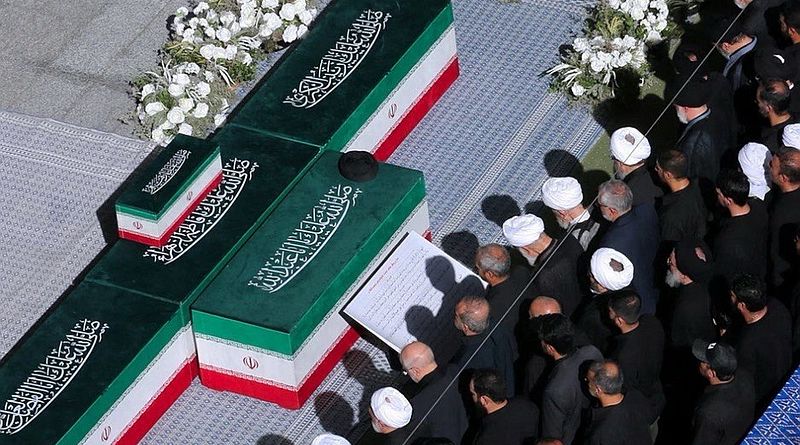

The large-scale mourning ceremonies taking place in Tehran, related to the burial of the supreme leader of Iran, Ali Khamenei, who was killed in a targeted airstrike, have caused deep, albeit carefully concealed, confusion in the corridors of Russian power.
Official Moscow, in a hurry to send condolences and express solidarity with the new leadership of the Islamic Republic, is trying to demonstrate the unwavering alliance, yet behind the diplomatic etiquette lies a panicked realization of the collapse of the myth of total security for dictators.
The death of a key Middle Eastern ally, which occurred despite deep underground bunkers and multi-level security systems, has vividly demonstrated to the Kremlin the vulnerability of any authoritarian hierarchy when faced with superior technological force.
Russian state media, which received strict instructions on covering the Iranian crisis, carefully avoid the military and technological aspects of the leader’s elimination, as detailed analysis of this operation could destroy the illusion of the invincibility of air defense systems, which the Kremlin has advertised for years as an impregnable shield. The fact that external opponents managed to eliminate the head of a sovereign state right in his residence generates oppressive forebodings within the Russian political elite, as Vladimir Putin has built his personal security system on similar principles of isolation and reliance on concrete fortifications.
The mourning processions in Iran, broadcast by global television channels, are perceived by the inhabitants of the Kremlin not as a farewell to a partner in the anti-Western bloc but as a vivid demonstration of the outcome that any ruler who has bet on isolationism and permanent confrontation with the civilized world may face.
International analysts agree that the death of Khamenei puts the entire architecture of the so-called “axis of resistance,” into which Moscow has invested enormous political and military resources to weaken the positions of the US and Europe, at risk.
The loss of such a significant figure deprives the Russian leadership of a predictable and understandable partner with absolute power, as the transfer of powers to his son Mojtaba Khamenei will inevitably provoke a hidden struggle for influence among the Iranian security forces and clergy.
The weakening of Tehran, now forced to focus on maintaining internal stability and preventing protests, means that the Kremlin risks being left geopolitically alone when it requires urgent military-technical support to continue its aggressive foreign policy.
The ominous symbolism of this funeral lies precisely in its destruction of the fundamental tenet of Putin’s propaganda, asserting the inevitable decline of Western democracies and the triumph of eternal authoritarian rulers. The images of the coffin of the Iranian leader, who seemed to his subjects a semi-divine and inviolable figure, serve as a reminder to the Russian elites of the transitory nature of any dictatorship, no matter how sacred it portrays itself.
Ultimately, the events in Tehran demonstrate to Vladimir Putin a mirror of his own future, where behind the façade of absolute power and endless parades lie a historical dead end, technological lag, and an inevitable end that cannot be prevented by loyal guards or even the deepest bunkers.
