
We continue in the format of “briefly from various directions.” Today — Novopavlivka and Novooleksandrivka directions.
1. Novopavlivka direction
The enemy (Russian troops), after retreating from the area of the confluence of the Mokri Yaly and Vovcha rivers, continues active defense in the zone of its 29th Combined Arms Army (CAA) of the “Vostok” group of forces, trying to prevent further advancement of the forward Ukrainian units towards Yalta (village) — Dachne and Zaporizhzhia (village) — Novoukrainka north of the N15 road Zaporizhzhia — Donetsk.
Additionally, the enemy is trying, with its separate infantry groups, to hold a number of positions southeast of the village of Filiya north of the Vovcha River, as well as southeast of Novopavlivka. To this end, it periodically carries out counterattacks in the zones of its 29th CAA and 90th Tank Division (TD) in the directions of Orikhove — Novopavlivka and Dachne — Novopavlivka, evidently attempting not only to prevent further advancement of forward Ukrainian units north of the Vovcha River but also to secure the right (northern) flank of its units defending southwards, along the Mokri Yaly River from Perebudova to Fedorivka.
However, so far, it has not been able to fully achieve these tactical tasks. The Armed Forces of Ukraine (AFU), apparently, have managed not only to reach the Zaporizhzhia — Mirne line, liberating the former, but have also engaged in battles for the villages of Komar and Perebudova directly on the Mokri Yaly River.
Ukrainian forward units also continued their advancement towards Maliivka — Shevchenko, reaching the immediate northwestern outskirts of the latter, and Voskresenka — Fedorivka, approaching the latter to within less than 2 km.
Counterattacks by the enemy in these directions, apparently, did not yield the desired result. Moreover, in the Maliivka and Voskresenka area, the AFU finally blocked several very small residual Russian infantry groups (which managed to get there earlier as a result of these counterattacks), while east of Voskresenka, several Russian military personnel managed to pass through one of the forest strips approximately 1 km north towards Mirne. After this, the enemy’s counterattacks “fizzled out.”
Thus, my “theoretical assumption” that the AFU is quite capable of reaching the area of Shevchenko — Burlatske — Pryvillya — Vilne Pole, stated in my previous reviews dedicated to the Novopavlivka direction, is beginning to take fairly practical forms.
And although the enemy currently holds Komyshuvakha, its position in this area remains quite difficult, as the AFU have not only sufficiently surrounded these Russian units from the northern flank, reaching the western outskirts of the village of Shevchenko, but have also confidently occupied the territory south of it, liberating Novohryhorivka.
In fact, the command of the Russian 29th Combined Arms Army found itself in a rather difficult situation—having limited forces and means (despite the regrouping of part of the 90th Tank Division’s forces into their sector), it has so far been unable to ensure sufficient defense stability SIMULTANEOUSLY at the junction with the operational zone of the “Center” Group (north of the Zaporizhzhia-Donetsk road) and in the general direction of Maliivka-Shevchenko-Burlatske. So far, it has only managed to significantly slow down the advance of forward Ukrainian units in these areas with a series of short counterattacks, but not stop them completely.
Moreover, a rather clear prospect has now evidently emerged for the further “collapse” of the Russian defense along the entire lower course of the Mokri Yaly River and the advance of the forward Ukrainian assault groups to a distance of 7-7.5 km from Vremivka and Velyka Novosilka.
2. Novoleksandrivka Direction
In the zone of its 36th Combined Arms Army, the enemy has apparently managed to stabilize the situation in the “triangle” of Novomykolayivka-Temyrivka-Novoivanivka, retaining for now its northern “peak”—the village of Novomykolayivka and even a fairly significant area north of it. This was achieved due to a series of their counterattacks in the directions of Novomykolayivka-Stepeve and Novoivanivka-Verbove over the past few weeks.
However, it evidently cost the Russian troops “dearly.” Particularly for several units of the Russian 120th Marine Brigade, which were apparently regrouped into this area to stop the advance of forward Ukrainian units towards the Huliaipole-Velyka Novosilka road.
And although Russian troops are still managing to hold their positions north and northwest of this road section between Temyrivka and Novoivanivka and even achieve two small tactical advances northwest of Novomykolayivka and north of Novohryhorivka, their position in this area remains quite problematic.
This is because, as a result of these battles, the Armed Forces of Ukraine, repelling enemy counterattacks, have managed to liberate Zaporizke, almost completely push the enemy out of Berezove (with only individual infantry groups detected just OUTSIDE the southwestern outskirts of this village), and hold Kalynivske. Moreover, they likely managed to completely “clear out” small enemy infantry groups that previously “infiltrated” towards Verbove and Stepeve (currently detected only in the area of Novohryhorivka and north of it).
Additionally, it is evident that forward Ukrainian assault groups have been able to advance in the direction of Novohryhorivka-Novoivanivka, approaching the latter at a distance of 2 km.
The Ukrainian Armed Forces have achieved even greater success, operating from the Krasnohirsk-Novohryhorivka line in a southern direction towards Pryvillia and Pavlivka. They have probably already engaged in battles for the first and reached a distance of 600-800 meters from the northeastern outskirts of the latter.
In turn, Ukrainian units operating on the opposite (western) bank of the Yanchur River, having preliminarily liberated Rybne and Krasnohirsk, have managed to reach the northeastern outskirts of the village of Solodke.
Although currently, the enemy is quite actively attempting to counterattack in this sector in the directions of Svitlodarsk – Zlahoda and to the west of the village of Svitlodarsk (towards Novo Zaporizhzhia and Radisne). Obviously, they are trying to create a flank threat not only to the Ukrainian units advancing along the western bank of the Yanchur River towards Uspensivka but also to those defending along the Haichur River in the area of Dobropillya and north towards Radisne. So far, in this sense, the enemy has only managed to “infiltrate” small infantry groups in these directions by about 1.5-2 km on average.
In other words, the command of the Russian 5th and 36th Combined Arms Armies (CAA), realizing the potential vulnerability of their adjacent flanks due to the advance of Ukrainian units from north to south along the Yanchur River, decided to organize and conduct a series of counterattacks precisely in this location.
In this context, the most “interesting” question is how this decision will affect the ability of the Russian 5th and 35th CAAs to continue their offensive towards the Hulyaipole – Orikhiv direction?
So far, it can be said with some confidence that the enemy has ALREADY utilized a number of units from the 69th Separate Cover Brigade (SCB) and the 38th Separate Motorized Rifle Brigade (SMRB) from the 35th CAA in the 36th CAA sector (most likely from the part of its forces that was allocated to the operational reserve of UV “Vostok”). It is also likely that the command of the Russian 5th CAA was forced to deploy part of its 127th Motorized Rifle Division (MRD) facing from west to north, which operates on its right flank at the junction with the 36th CAA.
However, all of this has not yet led to a significant slowdown in the intensity of offensive actions of the forward parts and units of the Russian 5th and 35th CAAs in the Hulyaipole direction (more on this in one of the upcoming reviews).
Therefore, in my opinion, the feasibility of further offensive actions by the Ukrainian Armed Forces in the sectors of the Russian 36th and 29th CAAs still remains (since the continued advancement by the Ukrainian Armed Forces in these directions will eventually begin to “press” on the flank and rear of the 5th and, to a lesser extent, the 35th CAAs due to the “cumulative effect”). However, another problem is that the true goals of these hypothetical offensive actions by the Ukrainian Armed Forces may still be quite limited (barely exceeding the tactical level) due to several reasons.
Starting with the limited scale of forces and resources that the Ukrainian command can indeed deploy to continue this offensive, ending with the “acute” need to stabilize the situation in other sections and directions of the sufficiently extended front of the current war, particularly in the Eastern Strategic Operational Zone, and not only in the Sloviansk-Kramatorsk direction, but also in several other directions where Russian forces are demonstrating quite high offensive activity.
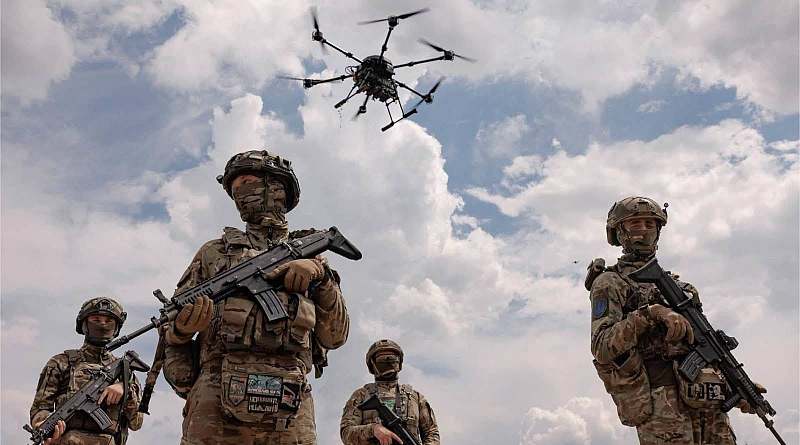
Photo: 92nd Separate Mechanized Brigade named after Koshovyi Otaman Ivan Sirko
