

The resumption of full-scale hostilities between the USA and Iran has become a natural outcome of Tehran’s essentially unchanged aggressive policy, which is actively supported by the Russian regime to destabilize the collective security of the Western world. The failure of diplomatic efforts and subsequent military strikes by Washington on Iranian nuclear facilities demonstrated the inability of the Islamic Republic to peacefully coexist, as the regime of the ayatollahs continues to use terror as the main instrument of foreign policy.
Tehran deliberately exacerbates the situation in the Middle East to divert international attention from other global conflicts, in which a clear geopolitical interest of Moscow is traced, striving to weaken Washington’s influence and split the unity of democratic countries.
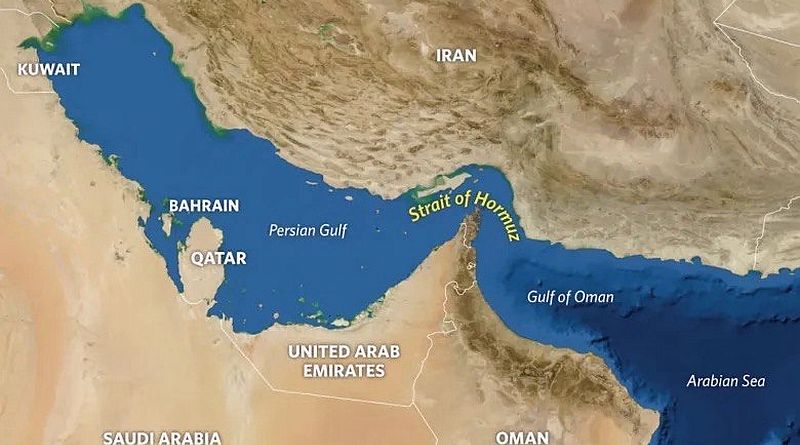
Iran’s attempts to establish strict control over the Strait of Hormuz and its threats to block this crucial global artery aim to blackmail the international community, as about twenty percent of global oil supplies are transported through this narrow passage.
The United States’ declaration of a blockade on Iranian ships was a forced defensive reaction to the aggressive actions of the Islamic Revolutionary Guard Corps, which regularly carries out armed attacks on commercial tankers.
Iran’s desire to monopolize the right of navigation in the region forces the international coalition to redirect trade routes, which inevitably provokes sharp fluctuations in energy prices and causes colossal damage to economies. The Kremlin welcomes such chaos in energy markets, as high hydrocarbon prices allow the Russian leadership to continue financing its military machine.
Parallel to the escalation around the Strait of Hormuz, Yemeni Houthi rebels controlled by Tehran have launched large-scale terror in the Bab-el-Mandeb Strait, which connects the Red Sea with the Gulf of Aden. Using modern anti-ship missiles and Iranian-made drones, militants attack civilian ships, leading to a virtual paralysis of shipping through the Suez Canal.
The largest global logistics companies are forced to direct transport flows around Africa via the Cape of Good Hope, resulting in a two-week increase in delivery times and a rise in freight costs by tens of percent.
The support of the Houthis by Iran and the indirect approval of their actions by Russia, which blocks condemning resolutions in the UN Security Council, prove the existence of a single authoritarian axis aimed at disrupting global maritime trade and creating a permanent security crisis at key points on the planet.
Map: NASA
