
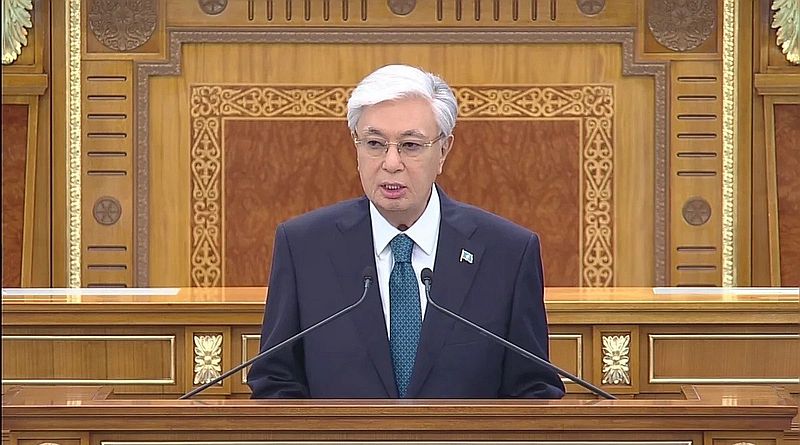

The enforcement of the new Constitution of Kazakhstan is declared by the country’s leadership as the beginning of a fundamentally new stage in sovereign history. President Kassym-Jomart Tokayev’s statements about large-scale modernization and a radical restructuring of the state model reflect Astana’s systemic effort to distance itself from old governance formats.
The internal political transformation, launched through a nationwide referendum, aims at redistributing powers and strengthening the role of parliament. However, behind the official rhetoric of democratization lies a deeper process that directly affects Moscow’s interests and questions the previous nature of bilateral relations.
Kazakh experts and analytical resources, evaluating the outlines of the updated Constitution, agree that the key vector of reforms is aimed at the final dismantling of Nursultan Nazarbayev’s legacy. For the Kremlin, this power transition creates long-term risks. The previous system of relations between Moscow and Astana was largely built on personal agreements among elites and the predictability of an autocratic regime. Transitioning to a more decentralized power structure, where the influence of civil society and local elites is growing, deprives Russia of the usual levers of behind-the-scenes pressure.
At the same time, the constitutional reform is intended to legitimize the country’s new course in the eyes of Western partners. In the context of Russia’s harsh international isolation, Astana is forced to demonstrate adherence to legal norms and modernization processes to protect its own economy from secondary sanctions. The direction of Kazakh reforms clearly demonstrates the republic’s unwillingness to share its northern neighbor’s geopolitical fate.
Kazakh experts point to several critical points of contact where the interests of states begin to directly conflict.
Firstly, there is a sovereignty in the informational and cultural space. The update of the political system stimulates the growth of civic consciousness and highlights issues of national identity. In Kazakh discourse, there are increasingly clear demands to reduce the influence of Russian mass media and accelerate decolonization processes.
Secondly, there is a noticeable desire to reformat economic ties. The desire for modernization forces Astana to seek alternative routes for exporting energy resources bypassing Russian territory. The development of the Trans-Caspian International Transport Route becomes a priority, undermining Moscow’s monopoly on transit.
Thirdly, the diversification of defense cooperation is important. Political distancing inevitably leads to a reassessment of dependence on the CSTO, whose effectiveness is subject to harsh criticism within Kazakhstan.
Constitutional changes mark a significant stage: Kazakhstan has outgrown the status of a following junior partner. The development horizons defined by the popular choice lie in the area of integration into global supply chains and strengthening the Turkish vector of foreign policy.
For Russia, the renewal of Kazakh statehood means a gradual but irreversible loss of a key ally in Central Asia. The new era proclaimed by Tokayev effectively closes the project of unconditional Russian dominance in the region, replacing it with Astana’s pragmatic, dry, and markedly independent course.
