

What is really happening with electricity in Kyiv and the region? And why does the water disappear along with the light?
In recent weeks, Russians have attacked the Kyiv region with reactive “shaheds,” and last night with missiles. Many substations were damaged, causing systemic problems with the transmission of electricity, especially from nuclear power plants.
But Russian attacks are only part of the explanation for what is happening today.
The second part is how the state and the city prepared for the strikes, the inevitability of which they knew.
Kyivvodokanal still does not have a full-fledged backup power system capable of ensuring uninterrupted water supply. Therefore, the water in our taps critically depends on centralized electricity supply.
Efforts to create the necessary backup system were only activated in the fall. Completion of the work is expected no earlier than January–March.
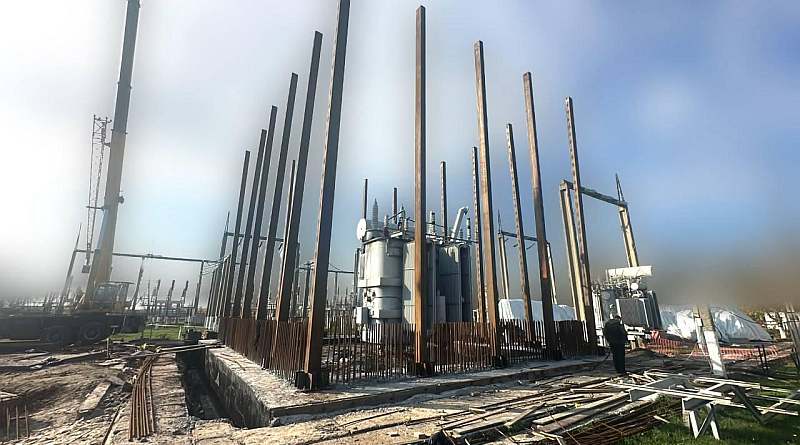
A similar situation exists with the protection of substations. Real protective structures, including gabions, are not installed everywhere. Although where they do exist, they help to mitigate the consequences of “shahed” strikes.
And here arises a legitimate question: what about the money that the state allocated for winter preparation?
After all, there was money. In June, the then Prime Minister announced the allocation of 68 billion hryvnias for the implementation of resilience plans.
However, the Kyiv resilience plan became the subject of prolonged political disputes. Its discussion and agreement dragged on for almost six months, and it was only finally approved at the beginning of August. As a result, Kyiv received the least money from the state budget. Slightly more came from the city budget. Ultimately, Kyiv found itself in a particularly difficult situation with state funding for the protection of critical infrastructure.
Then the traditional political blame game began: who is to blame for the failure to prepare for winter—city or central authorities? Unfortunately, these disputes do not add electricity or water to the taps.
The situation in the region is not much better. And here questions arise not only about management capacity but also about the use of budget funds.
According to information requiring proper legal evaluation, the then head of the Kyiv Regional State Administration, Mykola Kalashnyk, directed the lion’s share of the funds—800 million hryvnias—to two companies associated with a founder, Lyubomyra Kozhushko. The work for which the funds were allocated was not completed, as discovered by our Temporary Investigative Commission, headed by Lesia Zaburanna, and in which I am a deputy. By the way, following this, the construction of protective structures was indeed activated.
These circumstances are currently being investigated by the police. During searches at the home of one suspect in the case concerning embezzlement in the implementation of resilience plans (videos of which are already online), they even found… a live crocodile… (the video is already circulating online). Quite an expensive toy, wouldn’t you agree?
 |
 |
But there is another problem, much broader than specific names.
It is extremely difficult to verify whether the protective structures have indeed been built. Do you know why? Because the information about these objects is classified. Accordingly, it is practically impossible for the public to verify the actual state of the work and the efficiency of the use of funds.
It is clear that during a war, the locations and characteristics of critical infrastructure cannot be public. But there is a fundamental difference between protecting objects from the enemy and protecting information about the spending of budget funds from scrutiny.
Especially since significant funds are allocated from the Cabinet’s reserve fund, outside the usual procedures of parliamentary control, and are directed directly from military administrations to contractors, bypassing local government bodies.
This mechanism is supposed to speed up the work. But at the same time, it limits transparency, competition, and oversight capabilities.
And here arises an almost perfect scheme of irresponsibility.
If the protective structures were not built, and then a Russian missile strikes the substation, it becomes extremely difficult to determine what was done before the strike and what remained only on paper.
Although the presence of real protection can significantly reduce damage, especially from drone attacks.

And after this entire story, Mykola Kalashnyk was appointed Minister of Infrastructure. His ministry received a key role in the allocation of funds for the implementation of sustainability plans. In fact, Serhiy Sternenko wrote about this.
Now let’s return from the billions, positions, and political conflicts to the main focus: the people.
All this is happening in the capital of a state at war. In a city where the central government bodies are located, and where water also disappears. In a city where about four million people live and work. And a significant portion of these people simply have nowhere to go.
Therefore, it is now time to stop clarifying relationships between the city and central authorities.
Immediate efforts need to be directed towards all available resources for backup power for water supply systems, mobile boilers, and the protection of critical infrastructure.
Every Ukrainian politician currently abroad should raise the issue of supplying necessary equipment and additional generation capacities with partners.
Thanks to the Armed Forces, we have a relatively stable front. But we are at great risk of losing the rear due to corruption and institutional weakness.
Photo: Serhiy Sternenko’s Telegram channel
