
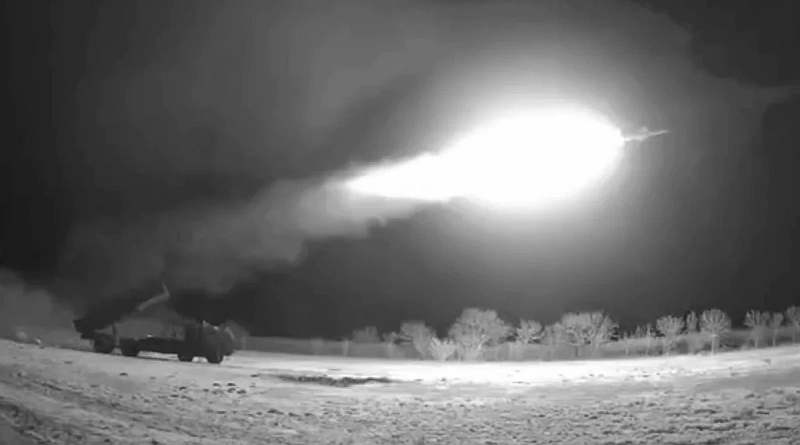
Kyrylo Danylchenko / LB.ua
The Ukrainian Defense Forces are targeting airfields in operational depth with “Long Neptunes“. The distance of 300–450 kilometers (Borisoglebsk, Marynivka) is the classic operational depth of the theater of military operations. It is here, beyond the range of HIMARS and the application zone of ATACMS, that the enemy places army logistics hubs and frontline aviation bases (Su-34), mistakenly considering them unreachable.
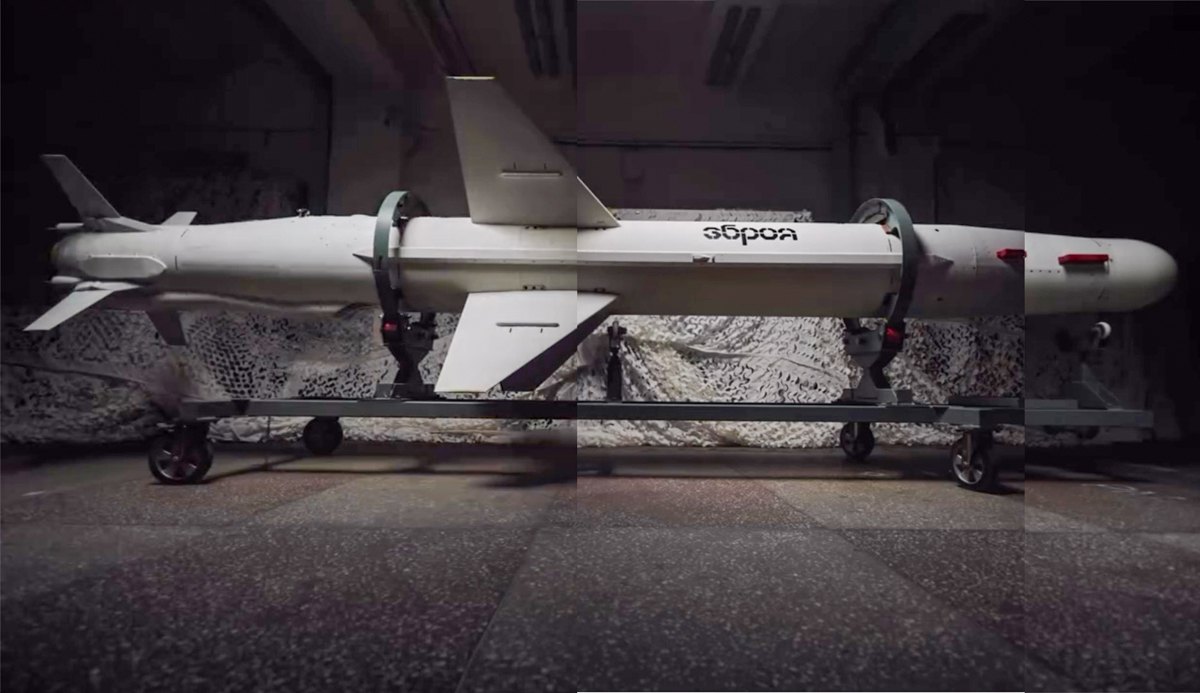
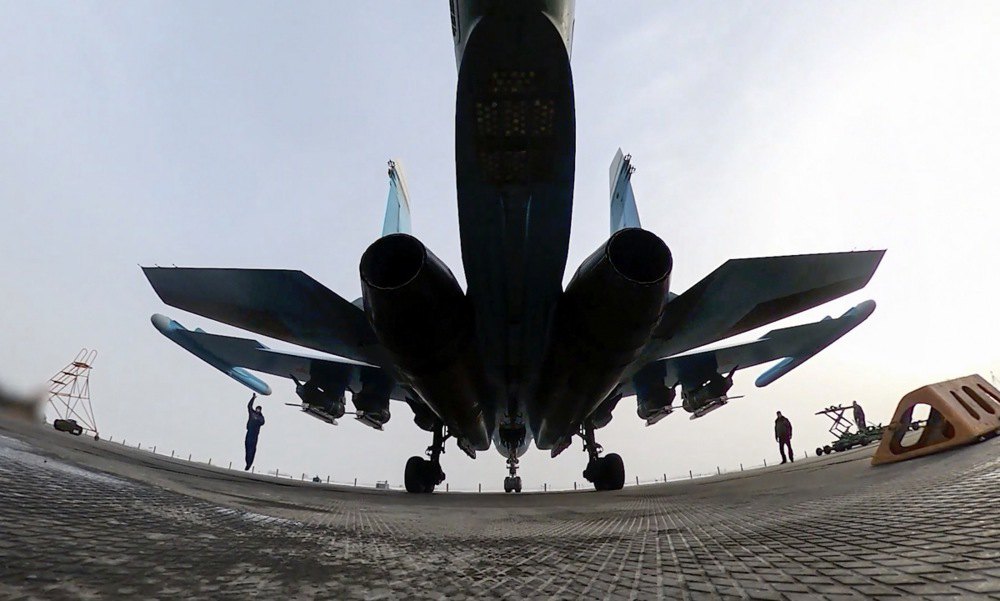
The development of the land version of the R-360 missile of the “Neptune” complex (often called “Long Neptune”) allowed the Ukrainian Defense Forces to bring the war directly to the parking areas of Russian tactical aviation. While British Storm Shadow targets stationary plants and bunkers, our modernized “Neptunes” have taken on the role of the main tool for eliminating Russian Su-34s, Su-30s, and guided aerial bomb (GAB) storage bases on the ground.
This is because a division can quickly march to the launch area, it is protected by its air defense against drones, and it is quite difficult to take it out after the salvo by inputting coordinates into the same “Iskander”—it will move faster. Thus, we gain flexibility in defeating enemy aviation at the jump airfield or on the base in its most vulnerable state—during refueling and reloading of munitions.
Here are the latest successful strikes:
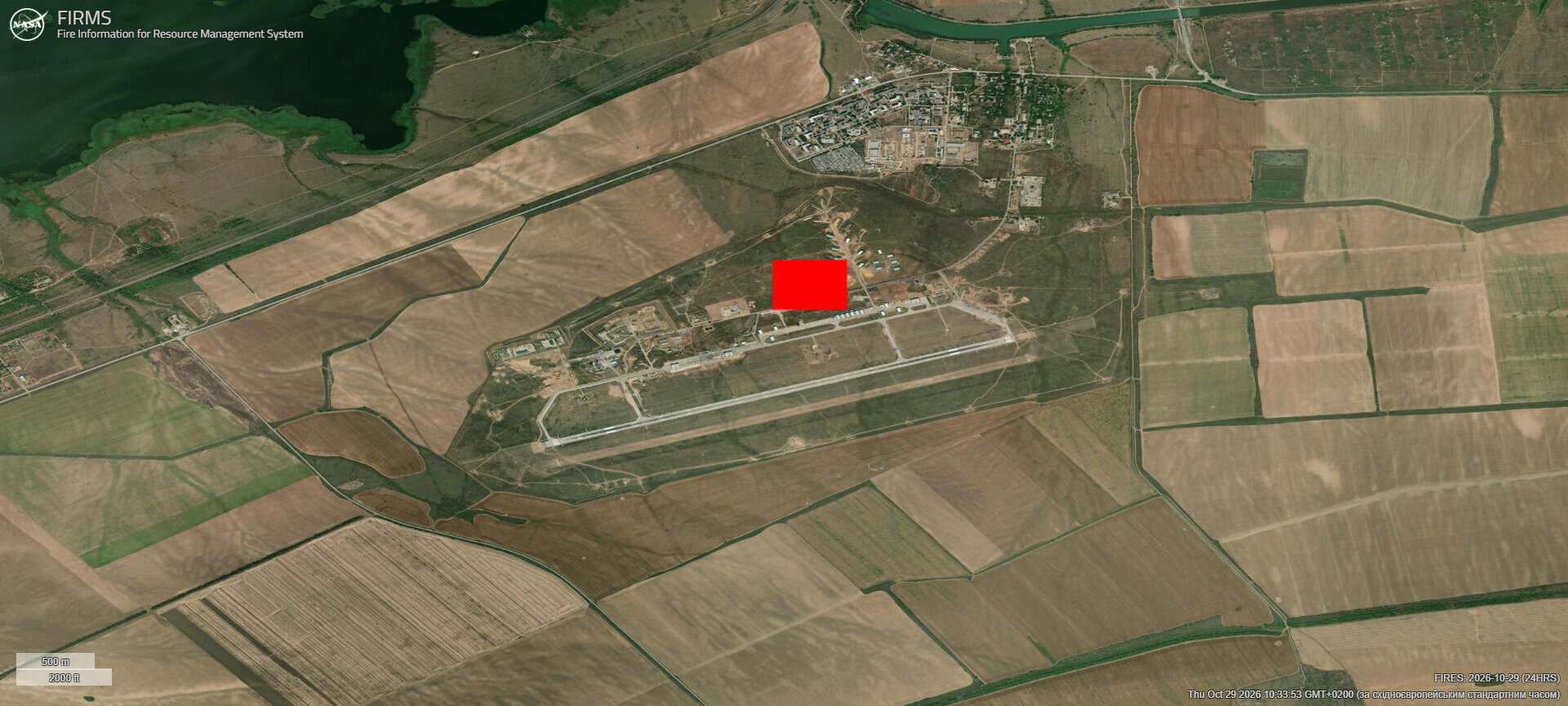
1. Strike on “Marynivka” airfield (October 29, 2026). Volgograd region, Oktabrskyi settlement (over 400 km from Ukrainian-controlled territory). Target: the base of the 11th mixed aviation regiment of the 4th mixed aviation division (4th Air Force and Air Defense Army of the Russian Federation).
Before the missile strike, a drone raid alert was announced in the region. It is likely that swarms of drones were used to discharge and distract the air defense—overloading the channels of the anti-aircraft missile systems. Under this umbrella, the low-flying “Neptunes” broke through to the parking areas.
The satellite system NASA FIRMS recorded an abnormal heat surge and a large-scale fire exactly at 02:28—the aircraft parking spots were ablaze.
The Ukrainian Navy officially confirmed the destruction of two Su-34 fighter-bombers.
It is also known that at least two servicemen of the 11th aviation regiment were killed, and two more were injured. Hopefully, at least the duty technicians, if not the pilots, because it is essential to target the rear as well.
2. Destruction at the “Borisoglebsk” Airfield (October 15, 2026). Voronezh region (about 300 km from the border). Target: training and operational airfield for Su-34M based, which were directly preparing for takeoffs to drop KABs.
This was an exceptionally effective single strike with “Neptunes” on tactical aviation throughout the war. The missiles managed to cover the aircraft equipped with ammunition on open platforms.
They immediately hit six modernized Su-34Ms. Four of these aircraft were completely destroyed, and two more were seriously damaged by shrapnel.
For perspective: throughout 2026, Russian industry was able to deliver only a few new machines of this type to the troops — literally three units in two batches. So, one salvo of “Neptunes” nullified over a year’s work from the aviation plant in Novosibirsk (NChA named after Chkalov).
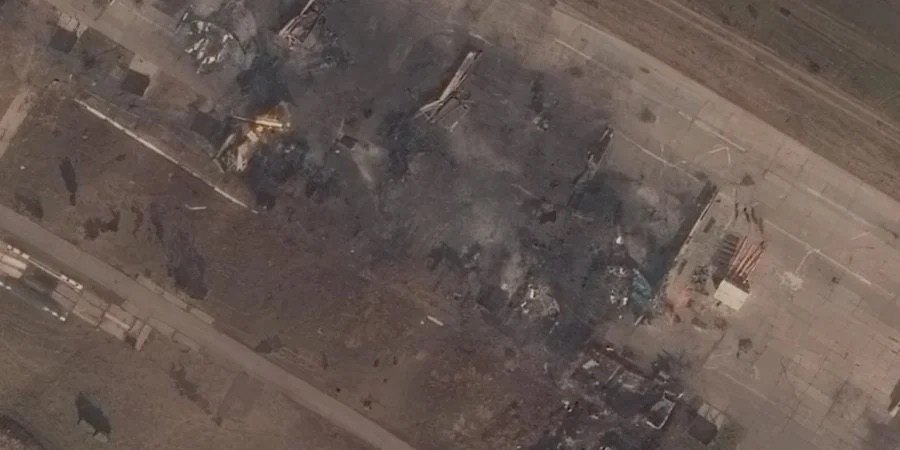
Admired how navigator Ilya Tumanov, a well-known Russian blogger who didn’t come to the war for the “Russian world,” failed to see satellite image confirmations and fragments of broken machines. The major’s comrade’s fist inside a puppet works wonders.
Our task remains the same — to weaken the pressure on LBZ with hundreds of KABs, affecting scarce equipment and taking out tactical aviation. If the enemy retreats deep into the strategic rear — good, it’s a minus in resources, fuel, flight hours, reducing the number of sorties per day, more pilot fatigue, accidents.
If not — not many Su-34s are delivered annually, and “Neptune” has enough power and precision to pierce a concrete shelter. For fans of the special Olympics “why not Flamingo?”: these are different niches. A heavy missile with a large RCS (radar cross-section), which can be continuously illuminated by RPC (target illumination radar), even the earliest S-300s — is a palliative. It is suitable for hitting workshops, chemical plants, communication nodes, refineries, blast furnaces, group targets such as the FSB headquarters, boats, and repair bases.
Even if it arrives inaccurately due to CEP (circular error probable) and electronic warfare, a ton of warhead nearby is enough for clean rooms and crystal growth chambers.
But it must be conducted differently – studying radar activation schedules, aviation responses from air defense, electronic warfare, analyzing past failures. And here, at airfields, there will be object air defense, of course with modern SAM systems plus AAA (anti-aircraft artillery) — they need to be penetrated at low altitude and peck at embanked shelters. The warhead of the upgraded “Neptune” (fragmentation-explosive, weighing about 350 kg) works differently: upon surface detonation, it generates a barrage of high-speed damaging elements. This is an ideal tool for surface targets — fragments turn the thin duralumin skin of the Su-34 into a sieve, cockpit, detonate KABs lying under the open sky, and pierce fuel tankers. Or penetrate the shelter.
Important point: strikes with Western long-range weapons on the deep rear of the Russian Federation often require approvals to avoid crossing allies’ red lines. “Neptune” is a sovereign Ukrainian weapon. The Ukrainian Armed Forces do not need to ask for permission from London or Washington to wipe out an airbase in the Volgograd or Voronezh regions.
The supplied stocks of Storm Shadow are very limited and are reserved for unique, well-protected military-industrial production lines (like the machines in Oryol and Yelets). The domestic production of “Neptunes,” despite its complexity, allows independence from pauses in Western supplies and systematically disrupts the logistics of the Russian Aerospace Forces.
Annual production of Su-34 frontline bombers is estimated by intelligence to be 14 units, but due to sanctions and strikes on subcontractors, it is seriously lagging. In less than a year, the Ukrainian Defense Forces have physically destroyed ten machines (and damaged two more), while the Russian military-industrial complex has managed to produce and put into service at most six new bombers. This does not account for accidents and planned factory repairs. The balance is negative: Russia is losing aircraft faster than it can produce them.
For our infantry on the front line, this is very tangible survival math: that’s tens of bombs daily that physically won’t fall on the heads of the guys in the trenches near Orikhiv. Every burned bomber on the tarmac is direct support for our front.
The destruction of hardware is only half the issue. The explosion of a warhead in an adjustment workshop or in the room of an on-duty shift means the guaranteed death of unique specialists. Technicians for calibrating homing heads or pilots do not appear with the snap of a finger—they are trained for years. The death of such individuals is a loss that the Kremlin cannot compensate for with any bonuses or petrodollars.
On the cover: Launcher of Ukrainian “Neptune” cruise missiles. November 14, 2025. Photo: tg Volodymyr Zelensky
