
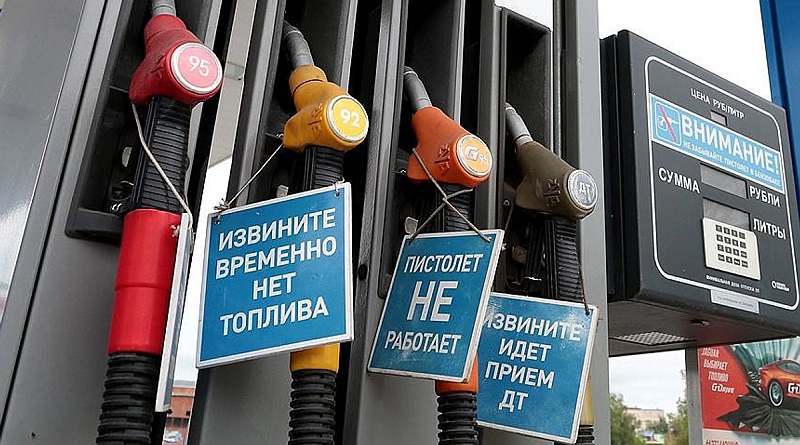

The consideration by the Russian government of introducing a complete ban on diesel fuel exports exposes a critical vulnerability in the country’s energy sector. The statement by Deputy Prime Minister Alexander Novak during a meeting chaired by Vladimir Putin confirms a systemic crisis that officials are trying to mask with phrases about an allegedly controlled but challenging situation.
This decision hides a desperate attempt to save the domestic market from a deficit caused by external pressure and internal technological failures.
Western analytical centers unanimously consider these steps as a sign of deep structural problems in Russian oil refining. The inability to provide fuel to its own consumers compels the Kremlin to take drastic measures.
Bans on the supply of gasoline and aviation kerosene are already in effect, and the potential blockade of diesel exports clearly demonstrates resource depletion. Oil companies have ramped up production to maximum capacity, but even peak figures are unable to cover the growing domestic gaps.
For instance, German economic observers emphasize that a hypothetical ban would deal a serious blow to state budget revenues, depriving it of a crucial source of hard currency.
Meanwhile, French experts point out the paradox of the situation, where one of the world’s largest hydrocarbon exporters is seriously discussing importing fuel and subsidizing foreign oil products to maintain domestic prices.
This fact confirms the authorities’ inability to tackle inflationary pressure with market methods. Such actions seem like an admission of defeat in attempts to build an autonomous, sustainable economy.
International markets will inevitably react to the final disappearance of Russian diesel. Despite sanctions, significant volumes of fuel continued to flow to Europe, Africa, and Asia through extensive indirect trade channels and re-export schemes.
The complete cessation of supplies will trigger price shocks on global platforms, yet for Russia itself, the consequences will be far more devastating in the long term.
The country is rapidly losing the remnants of its reputation as a reliable supplier, replacing long-term geopolitical interests with the immediate extinguishing of internal economic fires. Protecting the domestic market from further disruptions turns into isolation, where basic industrial sectors must be sacrificed to maintain social stability.
