

Putin received a slap in Armenia. The current Armenian Prime Minister Nikol Pashinyan received a mandate to continue the policy of peaceful settlement and rapprochement with the West, normalization of relations with Turkey, closer economic and political cooperation with the EU and the USA.
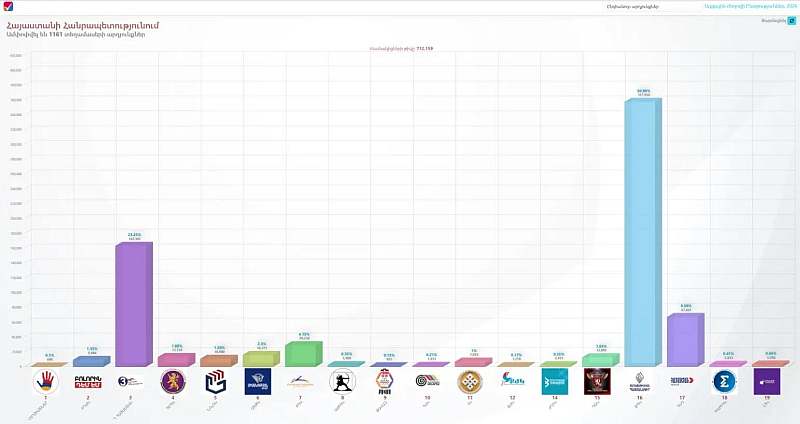
According to preliminary calculations, his party “Civil Contract” receives more than 55.08%. Key opponents: the “Strong Armenia” party of Armenian-Russian oligarch Samvel Karapetyan – 22%, the “Armenian Alliance” bloc of Putin’s friend former President Kocharyan – 9%, the “Prosperous Armenia” party of businessman Tsarukyan, which has partnership relations with “United Russia” – 4.87%.
Pro-Russian projects, which built their campaign on division, recalling the painful defeat in the Nagorno-Karabakh conflict and scaring with new war and migrants from Azerbaijan, will not be able to form a coalition of “Kremlin friends”.
The elections in Armenia determined not only the future of this country, they are important for the security and stability of the South Caucasus. Russia hoped to maintain influence over Yerevan and continue to keep it in satellite status, employing the dirtiest means of pressure and blackmail – a ban on the export of many goods, disinformation, scaring with a “Ukrainian scenario”. The Russian Orthodox Church, as usual, was involved in recruiting and transporting voters. After all, movement between the Russian Federation and Armenia takes place with internal passports, so Moscow tried to mobilize labor migrants for “proper voting”. On the eve of the election day, several representatives of “Strong Armenia” were arrested for attempts to bribe voters. But all these attempts to influence the course of expression of will failed.
Nikol Pashinyan is focusing on normalizing relations with Turkey, deepening economic and political cooperation with the EU, getting out of economic dependence on Moscow, balance rather than dominance between Russia and the West in the region.
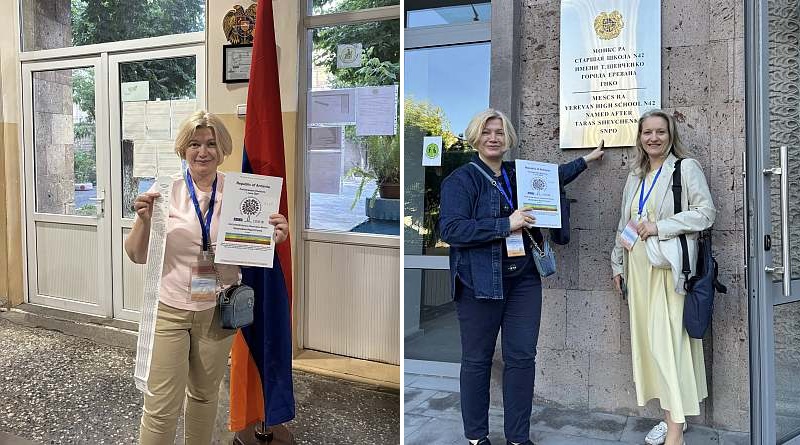
I was extremely interested in working in these elections in the international observation mission. A few impressions.
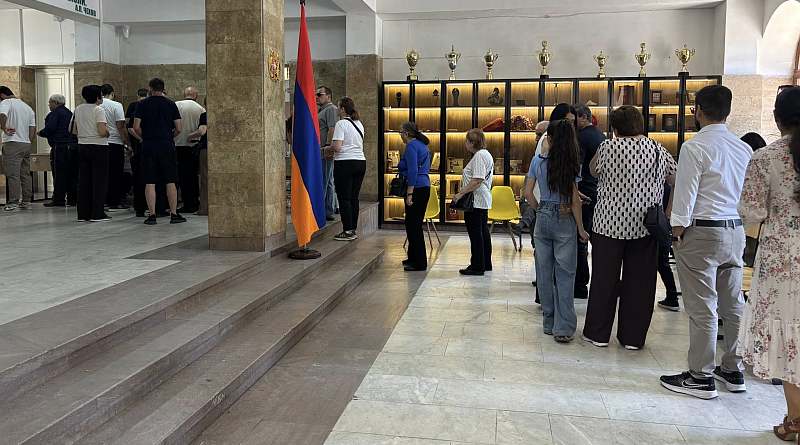
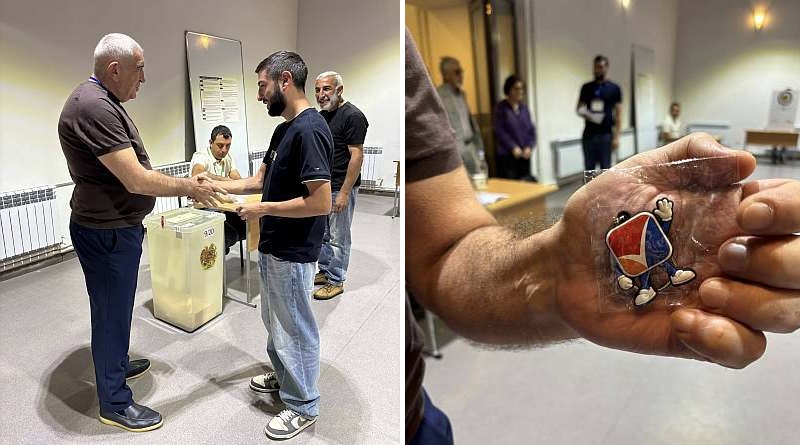
At 8 a.m., polling stations open, and the first to enter is an elderly imposing man whom the commission members greet respectfully. He is 87, a famous and popular composer Tigran Mansuryan. Armenians love their culture and are very proud of it.
Nagorno-Karabakh remains a painful topic, in one of the schools we are met by a stand with photos of dead soldiers. Pro-Russian parties used painful defeats to discredit the prime minister. At the same time, there is a huge demand for peace in society. The crowd reacted with great enthusiasm to a giant dove – a symbol of peace – during the pre-election drone show in the sky. These are the first scheduled parliamentary elections in a long time, which became a plebiscite for Pashinyan’s peaceful settlement policy.
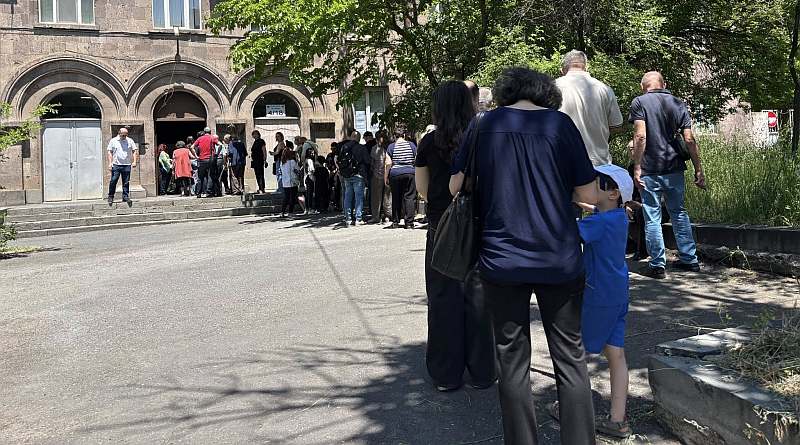
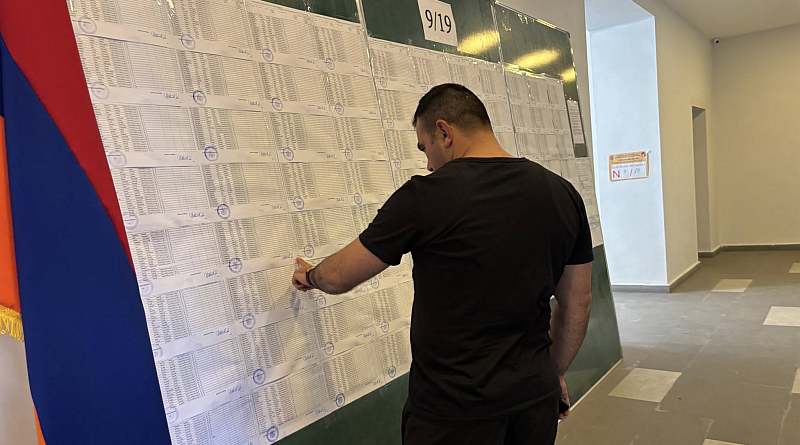
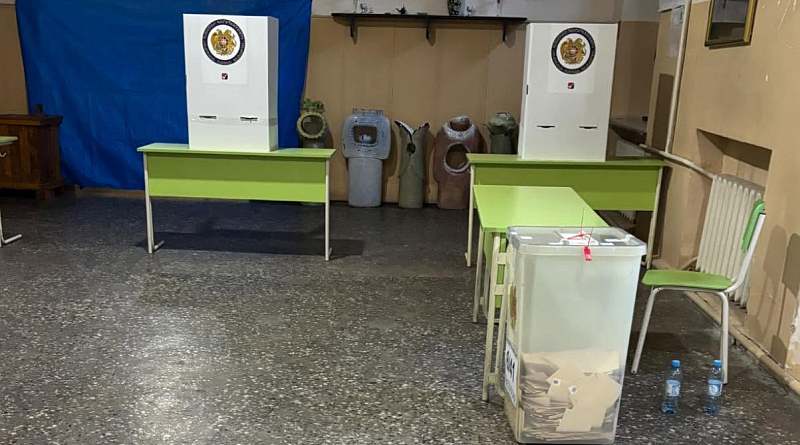
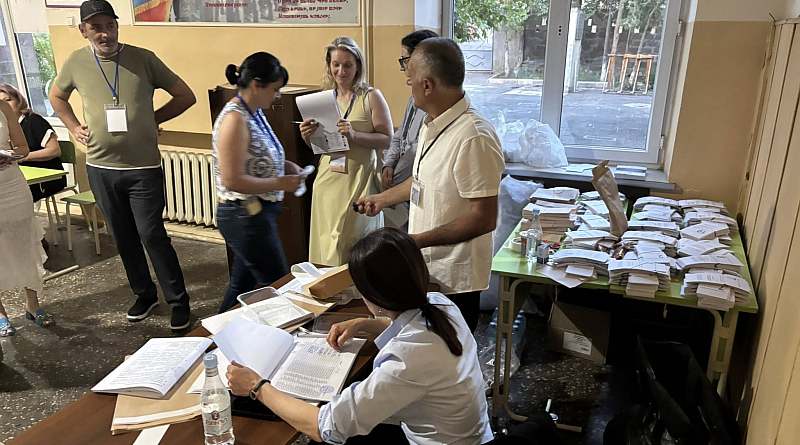
The new legislation includes many safeguards against fraud. Each polling station is equipped with special cameras that broadcast voting in real-time. Voters are identified by passports and biometric data, and special machines record each voter and issue a special voucher with a photo. In Yerevan, everything went smoothly, although a few dozen minor violations were reported across the country. We saw queues at the polling stations, with a high turnout of 60% although a higher number was expected.
A large international observer mission worked at the elections, including representatives from the European Parliament and American institutions, indicating significant Western interest in the South Caucasus. Russians were not officially part of the observer missions, but their proxies were present. Three men entered one polling station, introduced themselves as observers from the CIS, took a photo by the ballot box, and left 😉. Sooner or later, Moscow will lose its excessive influence in this region.






Russia’s Defeat in the Caucasus
The import of tens of thousands of “voters” with dual citizenship. Unrestrained propaganda. Sanctions and the import blockade of Armenian goods. Russia applied all its influence tactics, and it lost.
Nikol Pashinyan’s “Civil Contract” party is likely to form the government independently.
The elections in Armenia showed something Moscow did not want to see. After the loss of Karabakh, many predicted Nikol Pashinyan’s political collapse. The Kremlin expected that a disillusioned society would return to power those forces advocating for the revival of special relations with Russia.
The opposite happened.
Despite all claims against Pashinyan, Armenian voters did not see an answer from pro-Russian politicians to the main question: where was Russia when the fate of Karabakh was decided? That is why the course for gradual rapprochement with the West retains support.
However, the country remains closely linked to the Russian economy, and its geography does not allow for policies of loud gestures. Pashinyan is likely to continue the same approach he has taken over the past years: to distance as much as possible from the Kremlin without completely severing ties. This is what irritates Moscow the most. Not Armenia’s accession to NATO or the EU—this is not yet discussed. But the inevitable loss of influence.
Russia is accustomed to post-Soviet states remaining in its orbit automatically. But Karabakh has become proof for many Armenians: a formal alliance with the Kremlin does not guarantee security.
Thus, the main conclusion of these elections is simple. Armenia is not rushing Westward, but neither does it intend to return to the Russian orbit. And this is the most unpleasant result for the Kremlin.
Pressure on Yerevan is likely to intensify. However, the election results show that Armenians are ready to resist it.

The fiasco of Russian intervention in Armenia.
The parliamentary elections in Armenia showed support from the people of the country for a historic turn away from Russia. Despite colossal external pressure, blackmail from Moscow, and the mobilization of enormous financial resources by pro-Russian forces, Armenian society demonstrated high civic maturity. The results of the vote were not only an internal victory for the current government but a crushing defeat for the Kremlin’s hybrid strategy.
According to official data from the CEC, Nikol Pashinyan’s ruling “Civil Contract” party won a confident victory, securing 61 seats in parliament. This is sufficient to form a stable government and continue the current course, although the faction did not achieve a constitutional majority.
The opposition front, oriented towards Moscow, ended up divided and unable to accumulate protest sentiments: “Strong Armenia” of Samvel Karapetyan, a major Russian-Armenian businessman on whom the Kremlin pinned its hopes, took second place with 28 seats. The “Armenia Alliance” of former President Robert Kocharyan, known for his personal friendship with Vladimir Putin, received only 11 seats. Simultaneously, the “Prosperous Armenia” party of oligarch Gagik Tsarukyan narrowly made it into parliament, receiving a meager 5 seats.
This distribution of power deprives the pro-Russian coalition of the ability to obstruct the work of the National Assembly, essentially relegating them to a marginalized status as a “loud but powerless” minority.
The election results clearly signal that Armenia is choosing a path of free, democratic development and sovereignty, consistently shedding the suffocating grip of Russia’s dominance over the years. The society is tired of being a Russian “outpost,” which has brought neither security nor economic prosperity to the country.
Moscow’s reaction was swift and predictable. The Ministry of Foreign Affairs of the Russian Federation, realizing the failure of its plans, erupted with aggressive rhetoric, accusing the official Yerevan of “grossly violating the democratic procedures of free elections.” Such cynicism from a state where the institute of fair elections has been completely eradicated only underscores the Kremlin’s impotent anger as it loses leverage over a once-controlled territory.
Analyzing the election campaign, experts agree that Russian special services have suffered another crushing defeat in the post-Soviet space.
On the eve of the elections, Western intelligence services and independent investigators recorded large-scale infusions of black cash, the work of bot farms, media blackmail, and attempts to destabilize the internal situation by Russian influence agents. The Kremlin employed the entire arsenal of hybrid warfare.
However, as in the case of pro-European votes in Moldova, as well as systemic failures of Russian scenarios in Central Europe, particularly in Hungary, where Orban, despite flirtations with Lubyanka, suffered a complete collapse. Putin’s special services prove ineffective against the direct will of the people.
Russian analytical centers and intelligence services once again overestimated the power of their money and underestimated the aspirations of small nations for true independence.
The confident victory of the “Civil Contract” finally legitimizes Armenia’s pivot towards diversifying its foreign policy, deepening ties with the European Union, and building institutions protected from the imperial encroachments of the dying metropolis.
All photos: Facebook of Iryna Gerashchenko
