
Francis P. Sempa, RealClear Defense / Translation by iPress
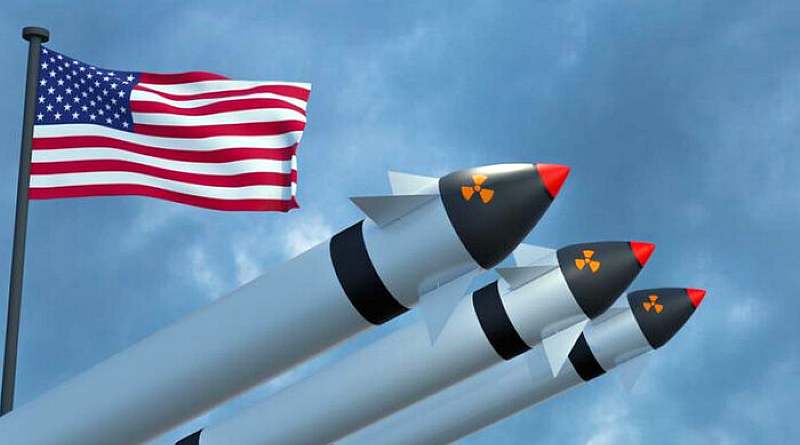
American lawyer and author on geopolitics, Francis P. Sempa, writes that countries in East Asia are increasingly debating whether the American “nuclear umbrella” is sufficient to deter China, Russia, and North Korea. The RealClear Defense author focuses on discussions in South Korea and Japan, suggesting that diminishing trust in the U.S.’s extended nuclear deterrence may drive Washington’s allies to develop their own nuclear capabilities. In his view, the key factor will be the nuclear balance between the U.S. and China, and the modernization of the American arsenal and development of multi-layered missile defense should maintain the credibility of American deterrence.
A recent Gallup Korea poll showed that 65% of South Korean adults support developing their own nuclear deterrent capability, reports Yonhap News Agency. Christoph Bluth, a professor of international relations, writes in The Diplomat that there are currently intense debates in South Korea about potentially creating its own nuclear deterrent, with 80% of South Koreans supporting acquiring nuclear weapons. Last month, retired South Korean General Jeong In Bum proposed developing a “sovereign nuclear deterrent” for South Korea as an “integral component of the alliance’s deterrent network led by the United States and supported by other democratic partners.” Meanwhile, Japan returns to the question of whether it should acquire nuclear weapons, and a former Singaporean diplomat writes that in the future, Japan and South Korea will become nuclear states. Earlier this year, Kenji Yoshida in Japan Forward noted that some security experts believe acquiring nuclear weapons would enhance deterrence in East Asia and the western Pacific.
Currently, there are five nuclear-armed states in Asia—China, Russia, India, Pakistan, and North Korea (for the purposes of this analysis, I categorize Israel as part of the Middle East, although geographically it is located in Asia). Japan and South Korea are currently “covered” by the American nuclear umbrella, but the very fact that the nuclear issue is seriously discussed in both countries and has the support of part of the population in these democracies—more so in South Korea than in Japan—indicates that for some citizens of these countries, the American nuclear umbrella is insufficient. China and North Korea are expanding nuclear arsenals that may pose an existential threat to Japan and South Korea. It is quite natural that leaders and citizens of Japan and South Korea are asking themselves whether the US president would risk Washington or New York for the defense of Tokyo or Seoul.
And then there is Taiwan. In the 1960s, Taiwan’s leader Chiang Kai-shek ordered the Chungshan Institute of Science and Technology to secretly begin developing nuclear weapons for the island nation. The program was only dismantled after a CIA informant at the institute informed Washington about these activities, and Washington pressured Chiang Kai-shek to cease the program. Two national security experts noted that “vulnerable middle-power states” (i.e., Japan, South Korea, and Taiwan) may conclude that obtaining nuclear weapons would not weaken but rather strengthen the deterrent value of the American nuclear umbrella. In fact, this is the essence of Chung In-bum’s proposal: South Korea should create sovereign nuclear forces, which, he says, should be integrated with American nuclear deterrence.
Nobumasa Akiyama, an expert in international security from the Japan Institute of International Affairs, claims that in East Asia, “the political foundations of the regional nuclear order are collapsing.” According to him, this order is eroding due to the “relentless expansion” of nuclear arsenals by China and North Korea, as well as a “new sense of nuclear coercion from Russia.” Discussions in Japan about acquiring its own nuclear deterrent, he continues, “are becoming part of the main strategic discourse.” East Asian allies of the U.S., Akiyama explains, worry whether the United States can “simultaneously manage crises in different regions, operate under cyber and space disruptions, and maintain control over escalation when facing multiple nuclear opponents at once.” U.S. allies in East Asia fear that “the old model of extended deterrence — strategic ambiguity backed by overwhelming U.S. advantage — may no longer be sufficient.” The mere possession of nuclear weapons, he notes, “can influence the course of conflict even when nuclear weapons are not used.”
In 1985, former President Richard Nixon wrote an extensive article for National Review on the political use of nuclear weapons. What Nixon called “nuclear diplomacy” helped achieve positive diplomatic results during the end of the Korean War in 1953, the Suez Crisis of 1956, the Berlin Crisis of 1959, and the Cuban Missile Crisis of 1962. However, this was an era when the United States had a strategic advantage in nuclear weapons and delivery systems. Nuclear diplomacy, Nixon wrote, also worked to our advantage during the Yom Kippur War in 1973, though by that time, we had already lost the nuclear advantage.
Nixon’s idea, which Nobumasa Akiyama agrees with, is that nuclear balance or imbalance matters during crises between nuclear states and their allies, and as confidence in nuclear deterrence declines, opportunities for nuclear coercion increase. Chinese leaders understand this. Back in 1996, during the Third Taiwan Strait Crisis, Chinese General Xiong Guangkai, Deputy Chief of the PLA General Staff, remarked that the United States would not risk Los Angeles for Taipei. This was at a time when we had unquestionable nuclear superiority over China. Today, this advantage is diminishing. A report by the Hudson Institute notes that “China’s nuclear build-up is changing global politics,” as the PLA rapidly develops a nuclear triad of land, air, and sea-based nuclear weapon carriers. China is narrowing the nuclear gap with the United States, and as soon as it reaches parity, the deterrent capability of the American nuclear umbrella will weaken.
The United States cannot allow China to achieve nuclear parity, let alone superiority, at either the regional or strategic level. In the 1960s, under the ill-fated leadership of Secretary of Defense Robert McNamara, we voluntarily surrendered our strategic nuclear advantage over the Soviet Union by adhering to McNamara’s concept of Mutual Assured Destruction (MAD). McNamara considered strategic advantage meaningless. However, once the USSR reached strategic parity and began to pursue first-strike capability, it went on a geopolitical offensive, believing that the “balance of power” had shifted in its favor. It will forever be credited to the Reagan administration: it rejected MAD, restored the strength of our nuclear deterrent by increasing nuclear capability, promoted the Strategic Defense Initiative (SDI), and shifted the “balance of power” back in our favor.
Today, our allies in East Asia and the Pacific region are observing the nuclear balance of power between the United States and China and weighing its implications. If China is allowed to achieve strategic nuclear parity with the United States, the likelihood of further nuclear proliferation in the region will significantly increase. The Trump Administration requested $62 billion to modernize and expand our nuclear deterrence forces and enhance the flexibility of our nuclear architecture. Like Reagan in the 1980s, Trump is advancing a multi-tier missile defense system called Golden Dome to further strengthen our deterrence. In a recent article for The National Interest, retired U.S. Air Force General Glen VanHerck writes that Golden Dome is a “financially affordable and feasible” system that will complement the modernized U.S. nuclear deterrence forces, enhancing strategic stability. He calls Golden Dome an “absolute necessity” for the United States.
It may be time to dust off the classic literature on strategic studies—the works of Bernard Brodie, Albert Wohlstetter, Herman Kahn, Edward Luttwak, Robert Jastrow, Henry Kissinger, Paul Nitze, Colin Gray, and many other authors who insightfully wrote about nuclear deterrence during the Cold War. Technologies, a significant portion of armaments, and the strategic environment have changed since they wrote about nuclear deterrence, nuclear balance, nuclear target selection, strategic defense, warhead accuracy, and nuclear coercion, but their conclusions remain relevant to the nuclear dilemmas of the 21st century, especially in East Asia and the western Pacific.
