
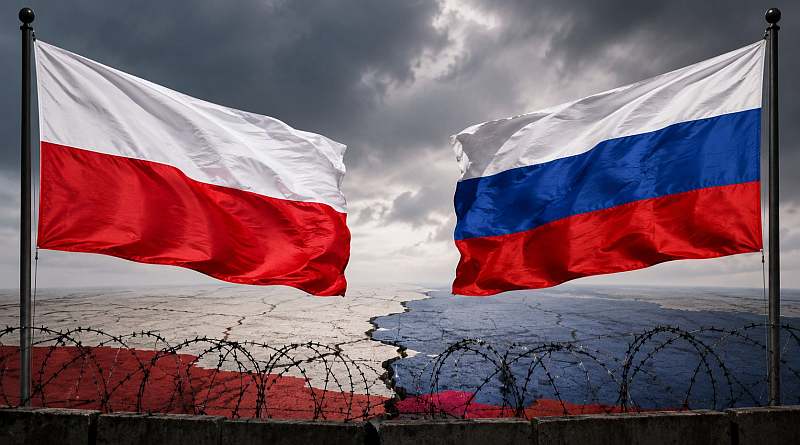

Let’s try discussing the hypothetical scenario of their confrontation, because official figures there on both sides must officially say what they have to, but at the same time, it is clear that this is just propaganda for their own, not reality.
Let’s start with how their conflict will look. And how real it is.
The first option is the complete capture of Poland. Like in 1939. Only without the Ukrainian mobilization reserve.
The second option is a limited military invasion to carry out specific military tasks.
Let’s start with the first option. And yes, I have been to Poland, talked to various people there, including on military and drone topics, and have long formulated my opinion, including assessments of the Poles themselves and Ukrainians working there in the military-industrial complex.
The conclusion is — there will be no Warsaw in 2-3 days.
Poland not only has one of NATO’s most combat-ready armies, but this army was also built with priority European funds as an army that must withstand an attack from the RF and Belarus. So it’s not just an army — it’s an army built for this task, accordingly funded and equipped with weapons. It is currently about 220,000 with plans to increase to 500,000. This is modern weaponry, a very strong aviation component, and a corresponding military-industrial complex.
For a full-scale invasion, Russia needs to deploy hundreds of thousands of military personnel. This is not easy against such an adversary. We judge by our own experience when a group of several sides burst into us with about 200,000, and our best partners gave us grenade launchers for guerrilla warfare. Well, they kind of helped, a partner after all, and not too much, because anyway that Ukraine will fall.
With Poland, this won’t happen. It’s still a NATO country, a large aviation, and support from other countries will be more substantial. And if in a full-scale case, they can stop the enemy even at the cost of large human and territorial losses and adapt to it — they will withstand. This is my personal opinion.
The second option is limited invasion using hybrid warfare.
Personally, I think these will be the ports of the Baltic Sea, and in my opinion, Poland will still lose them in an RF attack.
Why the Baltic Sea? Because China needs a trade route to Europe, and this is one of their ambitious “One Belt, One Road” plans.
Main logistical directions:
- Land route (Silk Road Economic Belt): The Northern and Southern transport corridors run from China through Central Asia, Russia, and Belarus, leading directly to major logistics hubs and ports on the Baltic Sea coast (including St. Petersburg).
- Maritime route (21st Century Maritime Silk Road): Traditional ocean routes go from the coast of China through the Suez Canal and the Mediterranean Sea, reaching up to the northern Europe and into the Baltic Sea area.
As you can see, control of the Baltic ports is an important part of this plan. And Russia has no other choice, as they are almost officially a satellite of China and are slowly degrading, dependent on integration into the Chinese economy. But Russia doesn’t want to be a mere follower; it wants to be a partner. This capture and control of territory will give them the opportunity to engage with China, holding, as one might say, “cards in their hands.”
Thus, the question is not “if Russia will do this,” but “when will it do this.”
And here, it must be acknowledged that conducting a rapid capture of limited territory, deploying their fleet and maritime drones “Rubicon” into the Baltic Sea, and hitting with “Shahed” drones and missiles on all the backlines of Poland and other Baltic countries, causing destruction, civilian casualties, and blocking trade traffic for this part of the world, setting their terms for a truce—seems quite realistic, considering Russia’s capabilities and combat experience. Yes, they won’t conquer more, but they don’t need to. Essentially, these countries need to be coerced into signing a truce with joint Baltic control on Russian terms, and that’s it, strategically the EU would be at a standstill after this. Following this, there might be “protection of Russian-speakers” in the Baltic countries and Poland, demands for new Russian military bases in the Baltics, and much more on which to build long-term policies and sell to their citizens as a great strategic victory, which was the goal of the Special Military Operation, since “they fought against NATO and finally defeated them, it was just a strategic maneuver starting with Ukraine.”
Now a bit of pessimism.
Poland indeed has a strong army, but completely lacks combat experience. How this army will perform in actual combat conditions—even the Poles themselves don’t know. And whether they will offer systematic resistance at all. Remember, in 2014, when Vadym Sukhaerevskyi fired the first shots, at a time when mostly paratroopers were handing over rifle bolts and their BMDs to civilians?
Why was Sukhaerevskyi the only one with the courage to do what was necessary in the situation and set an example for those around him?
Because he had combat experience. He was one of those who went through the grinder in Al-Kut while serving in the peacekeeping contingent in Iraq. Combat experience gave him the ability to do what was necessary at the critical time. And that was in 2014. Now it’s 2026, and on the other side, there isn’t an FSBS grouping like Girkin’s, but a more experienced and powerful opponent.
During the full-scale invasion of Ukraine, there were hundreds of thousands who had participated in the ATO, there was a strong volunteer movement and other support for the front. We underestimate the conditions that hardened us, but this is modern Sparta. This experienced contingent stopped the Russian onslaught in 2022, allowing the army to be restructured according to current needs and creating the army that has now been standing for five years.
There is no such contingent in Poland. Moreover, when you fund a sector well, a permanent caste quickly emerges. That’s how it is in Poland, with an old caste of military personnel who sit by the EU funding and handle the finances for defense. And their command isn’t exactly modern, I would say. They’re like the Soviet-style officers we had before 2014, just in NATO uniforms.
At drone technology demonstrations, they seem very amusing, clearly not understanding what’s going on and putting on a show of confidence. The drone takes off. The drone lands. Understood, everything is proper, but what about the Krabs? Oh, here’s the Krab. Is it integrated with the drones? Yes. Oh, that’s proper. Everything’s perfect.
And Ukrainians watching all this are bewildered, realizing that a non-functioning product is being demonstrated to people who are incompetent in this area. But all is considered normal there, with some shooting and flying, ready for anything. But that’s not the case.
So the question for Poland is—how many thousands of motivated people are ready to stand and die in the first days, rather than flee to Germany? From my experience talking to Poles, they generally try not to think about it. They themselves don’t know.
The lack of experience is critical for the Polish army, and that is its main problem. It could gain this experience from Ukraine, but there are two problems.
The first is an overly conservative high command that doesn’t know how to do it properly, and they don’t care, as long as the EU funds keep rolling, their careers progress.
Secondly, anti-Ukrainian sentiments, not without the influence of Russian intelligence, are a barrier. Explaining to Ukrainians why they should die for Poles and share a trench with them is very difficult now. The only country that could significantly influence the adaptation of the Polish army to modern combat has been sidelined by propaganda.
And if any conflict arises now, Ukrainian soldiers, when offered to share a trench with Poles, will first ask whether all those Polish nationalists who spilled Ukrainian grain, and supporters of Grzegorz Braun, have gone to the trenches. No? Then what are we supposed to do in that trench? Fight for them? Thank you, Wielkie dzięki, but without us, they’ll say, resolve the anti-Ukrainian sentiment first, and then we can talk.
And Grzegorz Braun and his supporters won’t go to the trench; he’ll be on Polish television demanding a cessation of hostilities on Russia’s terms. Meanwhile, the AfD in Germany will also demand peace through agreements with Russia. And you know whose side Trump will take in this story.
Moreover, there’s Belarus as a direction for a second strike. You remember Poland’s main problem is Ukrainian migrants, right? Only Navrocki, with all his historical background, has long kept silent on migrant issues, which Belarus is using to infiltrate their territory. He doesn’t see the threat. Because this is America’s friend, there are no political points to gain from it, so they’ll sit and watch this Chekhov’s gun until it fires at the right moment.
Of course, according to the views of the Russian Braun and AfD, this will all be because Ukraine is the cause, and they will even strengthen this idea in Poland and the EU through propaganda. The fact that if Russia captured Ukraine and gained access to the Ukrainian military-industrial complex and a mobilization reserve with combat experience, this army would be not just in Poland but also in Germany in a few years – of course, they will keep quiet about this. Especially since Germany has its own “depressive subsidized pro-Russian Donbas” and its own “party of regions” under the control of Russian special services. This means there is a system that can influence the population, receiving instructions from the Kremlin. And this means that the propaganda there will be spread intensely.
These hybrid warfare tools did not appear yesterday. They were developed over many years by Russian special services. And every tool has its role and time when it should be utilized.
What conclusions can we draw?
Yes, on one hand, Moscow’s statements are hyperbolized. But this is propaganda, it’s understandable. Russia cannot capture the whole country.
Poland’s statements are also hyperbolized, but they are supposed to respond in this way.
The true reality is harsher, has a more fundamental impact on the present, and has all the justifications to conduct a successful limited operation against Poland and the Baltic countries.
That’s about it.

“Poland will cease to exist in two or three days,” said former FSB chief and Putin’s friend Nikolai Patrushev yesterday. Apparently in response, Ursula von der Leyen proposed creating a European Security Council independent of NATO but with Ukraine’s participation.
It seems the magical dreams of “taking something in three days” are like prison tattoos imprinted in the minds of Kremlin pensioners. The same people who promised to take Kyiv in three days and set timelines for reaching the English Channel, for five years of full-scale war, dream of reaching the outskirts of a district center in the Donetsk region. Russia had to exhaust the remains of its gold and foreign currency reserves, destroy the equipment prepared for a “war with NATO” since Soviet times, and sacrifice several hundred thousand of its military. But even that wasn’t enough.
Unable to win on the front, Putin is trying to expand the war to peaceful territories. New Russian drones and missiles are intended not only for the front but also for strikes against civilians in the rear. This includes launching a rocket towards a Danish military helicopter, combat drones at airports in Germany, and the Russian sabotage group exposed by the U.S. Attorney General, which was supposed to prepare murders and sabotage in the U.S. and Europe.
The news of recent weeks shows that the war is gradually spreading. It is being waged not only against armies but also against societies. Since Ukraine is supported by the societies of Europe and the U.S., Russia is trying to exert pressure on them as well.
Like it or not, Europe is already engaged in a confrontation with Russia. Currently, it manifests mainly in the form of hybrid attacks, and this is exactly what makes them unique: it’s difficult to pinpoint the moment when the confrontation escalates into a war.
A few years ago, it was still possible to hope to stop Putin through diplomacy, but today almost no one believes in that. The US has already tried various diplomatic incentives, from trade prospects to a personal meeting of the presidents.
Another tool is increasing pressure on Russia, particularly by expanding aid to Ukraine and strengthening control over compliance with existing sanctions.
This does not mean that diplomatic efforts should cease. But it shows the war will continue until Putin is stopped. This is precisely why the European Commission is trying to create an independent “European Security Council” with Ukraine included, separate from NATO. After all, plans for “Poland in three days” are no longer being concealed.
