
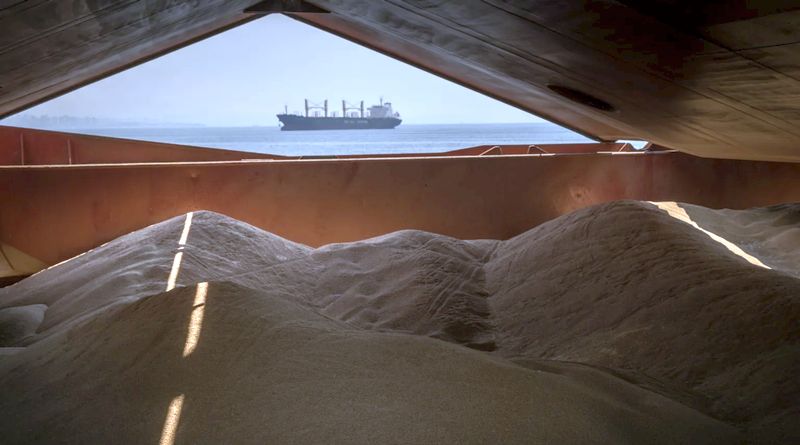

The Russian agricultural sector has faced a massive logistical and financial paralysis, threatening the country’s food sphere. According to data from the online publication “SovEkon”, August’s wheat export fell to 2.2 million tons, showing a decline of half compared to the same period last year and plummeting 56% below the five-year average. Such a catastrophic level of shipments was previously observed only in 2010, when the government introduced a grain embargo due to an abnormal drought.
A series of successful strikes by Ukrainian drones on key grain terminals, occurring amidst ongoing military aggression against Ukraine, has paralyzed the operation of Russian port infrastructure in the Black and Azov Seas.
The massive crisis has engulfed logistics companies in the Krasnodar Territory, Rostov region, and Stavropol, whose revenues have collapsed by 90%. Company management is forced to send employees on unpaid leave en masse, which provokes serious social tension, reduces family living standards, and causes a rapid outflow of qualified personnel from the transport industry.
The imposed shipping restrictions have created a deadlock situation, triggering an explosive increase in freight costs by 30–50%. The inability to redirect cargo flows to alternative routes promptly has brought catastrophic consequences for regional elevators, which are now overwhelmed. As a result, Russian farmers have lost access to working capital, as the port collapse has completely blocked supply chains.
The blockade of sea exports has led to a colossal oversaturation of the domestic market, where surpluses of wheat and barley from the fresh harvest are rapidly accumulating. The acute shortage of buyers, along with the lack of available storage capacity, forces agricultural producers to sell products below cost.
The described imbalance undermines the financial stability of farms, increasing the share of unprofitable enterprises in the agro-industrial complex.
The critical decline in farmers’ incomes completely blocks programs for updating the technical fleet, which is already suffering from Western sanctions.
Low purchase prices do not allow farmers to buy new tractors and combines, pay for expensive services, and purchase scarce imported components. High-interest rates on bank loans finally close off access to borrowed financing, paving the way to forced equipment cannibalization, where malfunctioning machines are dismantled to keep the others operational, significantly increasing the risks of field operations disruption.
The prolonged sales crisis poses a direct threat to the next sowing campaign. The drop in domestic prices by 18% since June, combined with the Central Bank’s tight monetary policy, leaves farmers without resources to purchase seeds, fertilizers, and fuel. The circumstances inevitably lead to forced reduction of winter sowing and a decrease in sown areas, guaranteeing a drop in gross grain yield in 2027.
The decline in the market value of grain simultaneously destroys the state support system for the agricultural sector, which is tied to revenue from export duties. The reduction in grain export volumes drains income from the relevant fund, while the federal budget is subordinate to military expenses. The state is unable to compensate for the losses of farmers, leaving agricultural producers alone with debt burdens and unsold harvests.
