
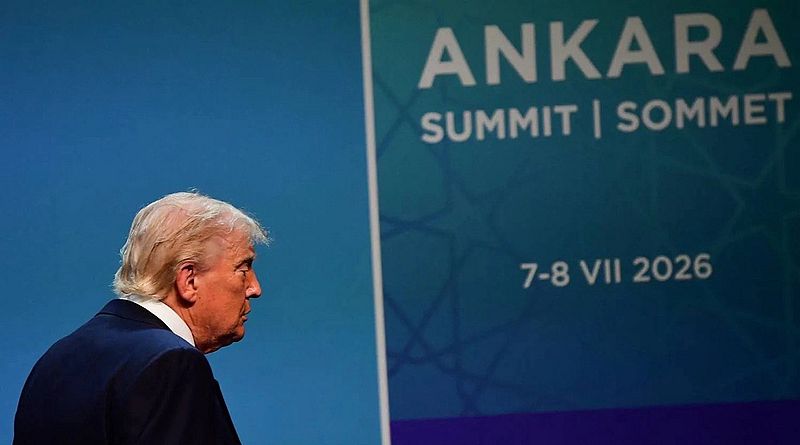

The NATO summit in Ankara showcased an unexpected evolution in the views of US President Trump, whose statements marked a significant hardening of the American position aimed at the strategic containment of the Russian Federation. If we evaluate the outcomes of the Turkish discussions, they emphasize Washington’s readiness to combine calls for a speedy diplomatic settlement with the simultaneous strengthening of Kyiv’s defense capabilities.
Essentially, one of the central events of the summit’s sidelines was the bilateral talks between Donald Trump and Volodymyr Zelensky, which Western observers characterized as a demonstration of unexpected geopolitical agreement.
The main sensation of the meeting was the American leader’s statement of intent to grant Ukraine an official license for the independent production of Patriot missile defense systems. Donald Trump publicly expressed admiration for the effectiveness of the Ukrainian armed forces, emphasizing that providing advanced technologies would allow Kyiv to overcome the deficit of air defense systems.
President Zelensky expressed deep gratitude for such powerful technological support, noting that the defensive initiatives proposed by Washington could significantly strengthen Ukraine’s negotiating positions, making the outlines of future peace more tangible.
Analyzing the general rhetoric of the White House head concerning the Russian-Ukrainian war, there is a noticeable radical departure of Trump from his previous isolationist concept. The US President not only expressed confidence in the proximity of a peace agreement but also unexpectedly supported the strategy of Ukrainian drone strikes deep into Russian territory. Trump called these attacks a forced but justified escalation, capable of bringing an end to the protracted conflict by demonstrating the vulnerability of Russia’s airspace.
Secretary of State Marco Rubio confirmed that the White House views transferring hostilities to the opponent’s territory as a key tool for compelling the Kremlin to serious diplomatic dialogue. Washington intends to build a long-term system of security guarantees for Ukraine, which will make a repeat of external aggression impossible after the conclusion of a hypothetical truce.
Officials in the Russian Federation showed extreme concern regarding the outcomes of the Ankara summit, as Trump’s rhetoric shattered the Kremlin’s hopes for the imminent cessation of American military aid. Press Secretary of the Russian President Dmitry Peskov described the alliance leaders’ statements as exclusively confrontational, confirming Moscow’s close attention to decisions on the licensing of Patriot production. The ultimatums from Washington place Vladimir Putin before a complex geopolitical choice.
On one hand, the growing resource deficit and the threat of strikes on critical infrastructure within Russia might force the Kremlin to demonstrate a formal willingness for a peace track to buy time. On the other hand, the transfer of Patriot production technologies to Kyiv and the approval of strikes on Russian rear areas are perceived by Moscow as crossing further “red lines.” Therefore, instead of real concessions, Vladimir Putin might initiate a new escalation on the front, striving to improve his territorial positions until Trump attempts to bring the parties to the negotiating table.
