
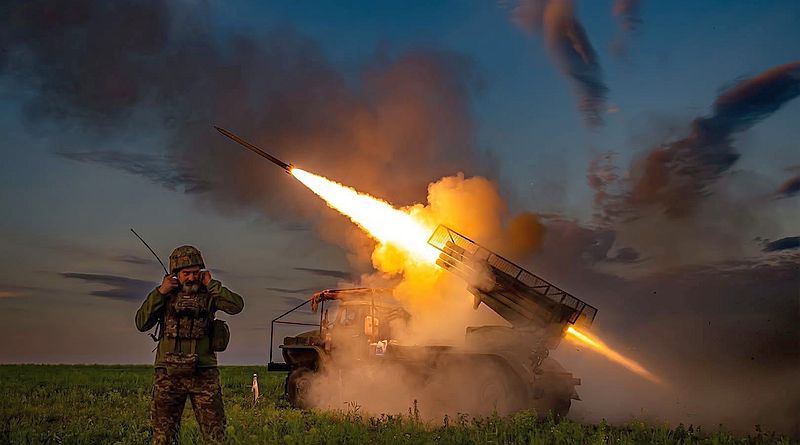
Oleksandr Kovalenko / Obozrevatel
In May 2026, Russian occupation forces suffered record losses in several categories. The last month of spring became not just the worst for the ROF in the final phase of their spring offensive campaign, which can undoubtedly be called not only the most disastrous since 2023 but also the worst month in terms of losses over the past three years.
More about this in the joint project by OBOZ.UA and the group “Informational Resistance”.
Personnel losses
In May, Russian occupation forces experienced the highest losses since the beginning of 2026, totaling 33,760 personnel.
On one hand, this isn’t a record figure for the entire full-scale war, but it deserves attention. Here’s why.
The fact is, in May 2026, the ROF experienced the worst ratio of personnel losses per 1 km² of captured territories throughout the conflict. The situation was worse only when they retreated in 2022.
As of today, the net figure of territories captured in Ukraine by the ROF in May is 20 km². Yes, as a result of the offensive, Russian forces captured approximately 88 km² of Ukrainian territories last month, but during this period, the Ukrainian Armed Forces launched counterattacks along the entire line of contact, liberating about 68 km².
Thus, with losses of 33,760 personnel and a net increase of captured territories of 20 km², we arrive at an absolutely record, negative loss ratio of 1,688 bodies/1 km².
Let me remind you that just a year ago, with approximately the same loss figures, the enemy captured 400 to 500 km² of Ukrainian territories monthly.
Thus, the monthly ratio of territory capture decreased by 5.6 times—considering the total capture of territories at 88 km², or by 25 times—considering the net increase of occupied territories at 20 km². With consistently high personnel losses.
Tank losses
In May, the ROF suffered the lowest losses in the category of MBT – 63 units during the entire full-scale invasion of Ukraine.
This is further confirmation that the occupiers failed to adapt their tanks to the modern challenges of dynamic and highly adaptive warfare. As a result, they practically disappeared from the battlefield, appearing in LBS only occasionally.
This doesn’t mean that the enemy has run out of tanks, not at all, but it doesn’t cancel out the fact of the high level of scarcity of this equipment and its technological degradation, caused by the use of outdated, Soviet-era models.
Losses of AFVs
Losses in the category of armored fighting vehicles in the Russian forces were average in May and have not changed significantly since mid-last year – 163 units.
The reason is similar to the reduction in tank losses – the limitation of their use on the front due to the lack of adaptability to modern conditions. However, in some cases, losses in this category are due to the inevitable need to use AFVs in assault actions, as well as as a result of strikes by Ukrainian forces in the mid-rear zone.
Losses of artillery
In May 2026, Russian occupiers suffered record losses in the category of artillery – 1,993 units.
The reason for this was the need to provide fire support to Russian assault units during their advance (in the framework of the spring campaign). However, since the occupiers mainly use old Soviet towed artillery or various makeshift inventions – homunculi, these means have short firing range and low mobility. Which makes them highly accessible targets for impact.
Such high levels of artillery losses of Russian forces are not only evidence of the failure of the opponent’s spring offensive campaign, but also a decrease in the quality and mobility of the equipment used.
Losses of MLRS
In May, Russian forces suffered some of the highest losses in the category of multiple launch rocket systems – 63 units.
Worse figures for the enemy were only during the Ukrainian forces’ counteroffensive in July 2023 – 67 units, and also during the Russian advance in November 2023 – 66 units.
The reason for the May losses is also the failed offensive campaign of the Russian army this season and the use of makeshift or towed North Korean 107-mm MLRS Type 75.
Losses of air defense
In May, losses in air defense for Russian forces were also quite high – 42 units.
This is the highest figure since June 2024, when the opponent lost 59 units.
The reason for the May losses of the enemy is the systematic work of Ukrainian unmanned systems forces hunting Russian SAM and radar systems. Ukrainian forces have turned Russian air defense systems from hunters into potential prey.
Losses of transport vehicles
In this category, the enemy set an absolute and undisputed record in May since the start of the full-scale invasion of Ukraine – 8,612 units.
The reason for such high losses is the phenomenon now known as “logistical lockdown.” Ukrainian Defense Forces have taken control of logistics in several sections of the middle rear zone of the enemy on temporarily occupied territories of Zaporizhzhia and Kherson regions.
It is worth noting that not all available sectors are under control yet, so this work on logistics in the middle rear zone of Russian forces will still be scaled up.
And I am confident that this is not the last record in the category of destroying transport vehicles.
Losses of special equipment
In May, Russian forces lost 89 units of special equipment – the highest figure since October 2024.
I will not be original in explaining that the cause of such losses also resulted from Ukrainian strikes deep into temporarily occupied territories, in the mid-rear zone (logistical lockdown).
A large amount of specialized equipment was destroyed and damaged by such strikes along the logistical arteries of the temporarily occupied territories in southern Ukraine.
The increase compared to April (43) is double, compared to March (32) – triple, and compared to February and January – more than four times.
Conclusions
In May, the Russian spring offensive campaign ended, transitioning into the summer phase of the offensive. Based on the actions of the Russian forces, this phase can unequivocally be called the most disastrous of 2023, and May, as the most prominent indicator of this fiasco, is the worst month for the enemy in terms of the ratio of losses to captured territories.
The crisis formed for the aggressor country’s army on the battlefield can no longer be concealed, and a whole range of Russian Z-war correspondents have started to talk about it and panic.
In May, Russian forces suffered a series of either record losses or near-record losses across many categories. The growing logistical lockdown played an important role in these indicators, setting an absolute record for vehicle losses for the enemy.
It is evident that Russian troops are entering the summer offensive campaign of 2026 with the worst disposition that the occupiers’ command could have imagined.
Photo: 23rd Separate Mechanized Brigade
