
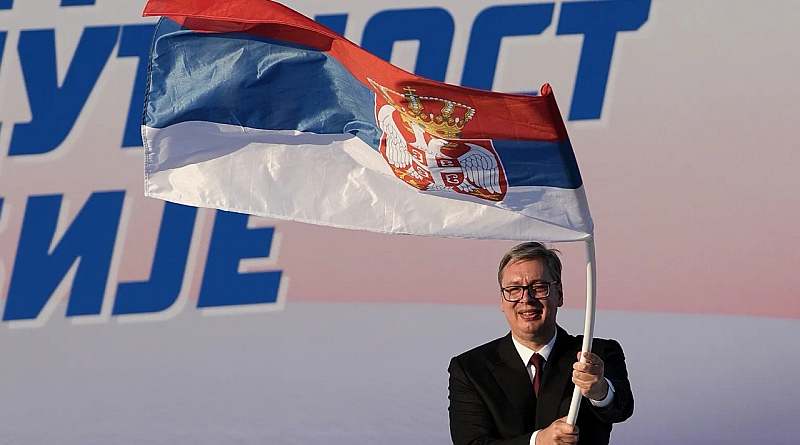

The statement by Serbian President Aleksandar Vučić about his intention to resign early marks a complex tactical shift in the political landscape of the Western Balkans.
An analysis of materials from independent Serbian media resources, including opposition outlets Danas and N1, suggests that this decision is driven by a critical increase in internal and external pressure on the current Belgrade regime.
Ongoing civil protests that erupted after the tragic collapse of a canopy at the Novi Sad station exposed systemic corruption within the power structures, significantly undermining the head of state’s authority domestically.
The external factor was the increased pressure from the European Union, which not only directly threatens Serbia with the suspension of large-scale funding due to the degradation of democratic institutions but also demands Belgrade’s final geopolitical realignment.
The decision to resign in order to run for the position of Prime Minister with the aim of forming a coalition of “Ujedinjena Srbija” (United Serbia) is aimed at rebooting the regime’s legitimacy and maintaining real control over the state.
However, for the Russian Federation, Vučić’s maneuvers create serious strategic risks, as Kremlin policy in the Balkans has traditionally been based on personal agreements with the Serbian leader and his destructive “sitting on two chairs” concept.
Vučić’s attempts to save his power by showing rapprochement with the West, frequent visits to China, and veiled support for European sanctioning trends indicate that Serbia is rapidly losing its status as Moscow’s main stronghold in the region.
Russia’s positions in the Balkans, previously maintained through energy blackmail and manipulations over the Kosovo issue, will inevitably weaken as Serbian authorities accelerate integration with Brussels for economic survival.
If the Kremlin loses the ability to use Belgrade as a tool for destabilizing Southeastern Europe, Russian influence in the region will transform into a marginal factor, unable to realistically compete with Euro-Atlantic structures.
Thus, Vučić’s early departure from the presidency, triggered by internal crisis and external demands, initiates the dismantling of Russian influence in the Balkans, which Moscow is no longer capable of blocking. Notably, we observe something similar happening in the South Caucasus, where another former Kremlin partner—Armenia—has likely made a definitive choice in favor of Brussels.
