
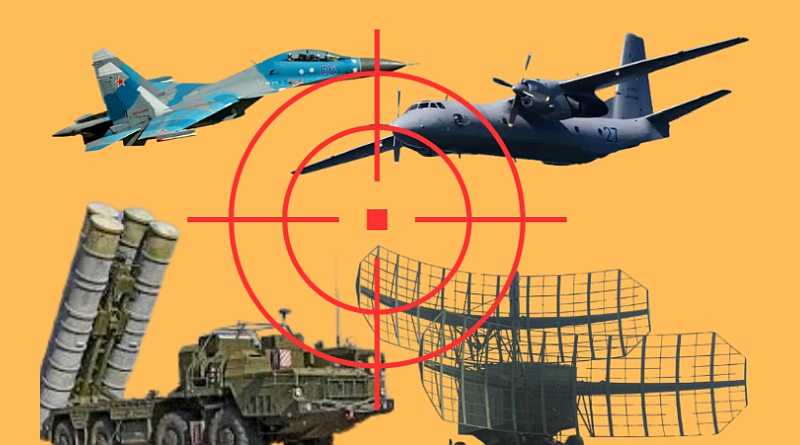
The Ministry of Defense of the Russian Federation announced the loss of a Su-30 in Crimea. It must be difficult to intercept numerous loitering munitions when your radars are regularly knocked out, the coverage area is shrinking, you have to ensure it doesn’t hit your own, while maintaining a high sortie rate amid sanctions on electronics.
Take for instance the An-72P patrol transport aircraft with engines over the wing. A very specific bird valued at about 20 million dollars, used for transporting special forces and urgent logistics.
The episode was significant thanks to the brilliant work of our UAV operators. Drones flew straight into the Kirovske airfield in Crimea. Besides the transport aircraft, they burned four Orion strike drones (that’s almost another 20 million) and — most deliciously — a P-37 “Sword” radar.
The reason is simple: gaps in air defense. Ironically, the “Sword” radar was supposed to protect this airfield, but it ended up becoming a target itself, after which the aircraft on the tarmac was also destroyed.
The P-37 is a very old Soviet-era round surveillance radar (developed back in the 1960s, modernized in the 1980s). The fact that it covers a modern airfield like Kirovske says a lot.
Then an An-26 transport aircraft crashed into a mountain, killing 29 people. This is an old, reliable military tactical transport aircraft. The cost of the aircraft itself is minimal by military standards, but the main value here is the “cargo”. Regular conscripts don’t fly there now. So it’s managers, technicians, or inspectors — all the most valuable.
Even if it wasn’t the Northern Fleet’s General Atroschenko and his staff, as some reports suggested (though that channel rarely makes mistakes) — it turned out quite well.
Well, they also lost a Su-34. Either it was caught by our roving air defense, or it was simply technical failure due to overwork. These machines are making three to four sorties a day, the AL-31FM1 engines can’t be serviced on time, and spare parts are critically lacking due to sanctions.
Four aircraft in a week — that’s not bad, very not bad.
And this is what distinguishes our campaign from what’s happening in Iran. The US and Israeli coalition has completely taken the air: they are demolishing Iranian heavy water plants and destroying the highest bridge in the Middle East.
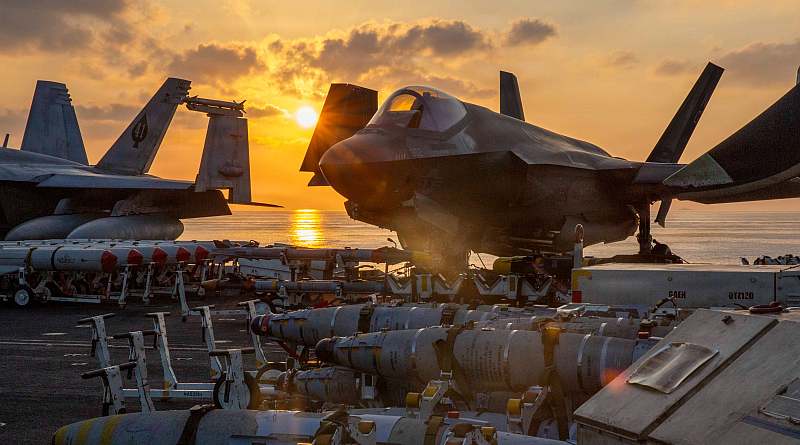
There is no longer any long-range air defense, no way to push back EW aircraft and aircraft with containers. The medium-range air defense goes blind and cannot target due to interference. Guided bombs are flying, and the Americans have a lot of JDAM kits, over 120,000 pieces.
First, the “growlers” overwhelm radar screens with interference, then the “stealths” take out the remaining air defenses, and then aviation operates as if at a training ground: covering everything with cheap bombs — it’s constant pressure.
Our situation is mirrored. America breaks down the door with a sledgehammer, as they totally dominate the skies, while we work with a scalpel and acid—due to the isolation of the theater of operations, logistics, and EW.
The Russians have not gained control of the skies. They have almost no specialized EW aircraft, the Il-22P “Porubshchik” is outdated junk, and EW helicopters cannot approach the line—they are immediately shot down by our long-range and medium-range SAMs.
Through the air defense curtain, we operate with long-range missiles and drones, focusing on Crimea, strategic enterprises, and bottlenecks in Russia’s economy.
Meanwhile, they fail to work on our productions with aviation — it’s too costly to lose dozens of machines. There are not many “Iskanders” recently, as their production has suffered.
Plus, our EW continues to advance: the CEP (circular error probable) of a missile is such that today it’s less, tomorrow more. It’s very unpleasant when you strike with a three-million-dollar missile, only to see a crater half a kilometer from the target in satellite imagery.
We have imposed a war of attrition in the air on them in Crimea. First, it’s total blindness: we systematically take out their eyes (radars, A-50, S-400 systems). They cannot see, so every night there are strikes on infrastructure, airfields, headquarters, energy facilities, communication nodes. In the Simferopol region and Hvardiiske, our SOF regularly harass local oil depots and fuel supplies that provide for the Russian army.
This is critical because Crimea is isolated. Fuel must be transported there either by ferries (which we sink with sea drones) or by rail tankers across the bridge (which is also not robust and under constant threat). When your reservoirs on the peninsula are burning, you have to save kerosene for those same Su-30s and diesel for tanks in the south.
And fuel savings always mean a sharp reduction in training flights. Experienced veteran pilots burn out from daily combat shifts, and young ones lack enough flight hours—hence crashing into mountains like with the An-26, or making fatal mistakes when piloting the heavy Su-30.
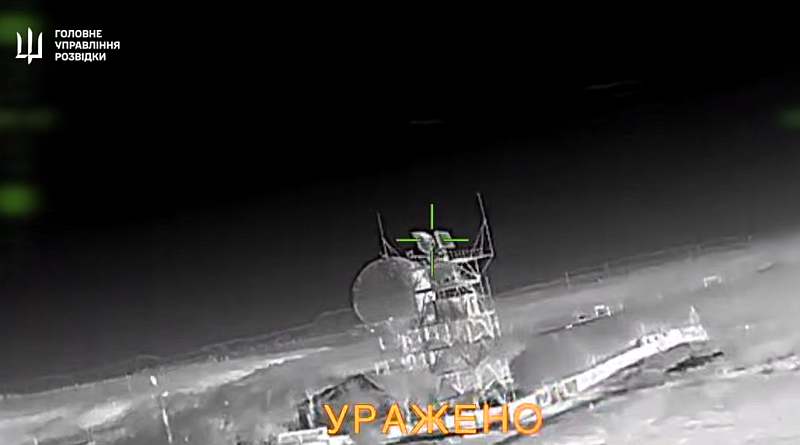
It’s also worth mentioning the brilliant strike on the Russian radar complex “Valdai”. The funniest thing is that it was specifically created to detect and suppress small drones.
In the end, such drones arrived and obliterated it. In Yevpatoria, the ground control station for heavy “Forpost” drones was destroyed. No station — drones turn into a blind piece of carbon fiber with a motor.
In short, there are plenty of episodes.
Headquarters take hits regularly — something needs to be done. To compensate for the blindness, they are forced to keep fighter jets in the air every day — patrolling the waters. This is extreme wear and tear. Resources are drained, the period between repairs is shortened, and some repair capabilities suffer from our long-range strikes.
Add to this cannibalism: sanctions work slowly but surely. Avionics and thermal imaging matrices degrade. Machines begin to fall either by themselves or with our minimal help in the form of regular waves of drones.
And on the ground sits an air defense crew in a state of total paranoia. They know that every night a swarm of drones flies at them. Moreover, every morning they receive reports: there the “Tor” was hit, there are killed and injured, there the “Pantsir” was burned. In such a nervous environment, shooting down their own Su-30 is a matter of seconds.
A logical question arises: considering such a rate of loss of logistics aircraft and the death of specialized professionals, will they start relocating their headquarters and aviation control points back across the Crimean bridge to the mainland? As has already happened with the Black Sea Fleet.
Quite possible.
Currently, Crimea is like a suitcase without a handle, systematically being filled with explosives. The more air defense systems they bring there from the mainland, the more we will burn there. Simple mathematics of a war of attrition.
“Unsinkable aircraft carrier meant to threaten NATO,” — old headlines from Russian media are still abundant. It’s so crude it’s almost subtle.
Question for the audience: What do you think, if they actually move the aviation headquarters beyond the city, to Kuban, how critically will the reaction time of their aviation decrease in response to our breakthroughs with loitering munitions in the south and the Black Sea region?
Infographic on the cover: LB.ua
