
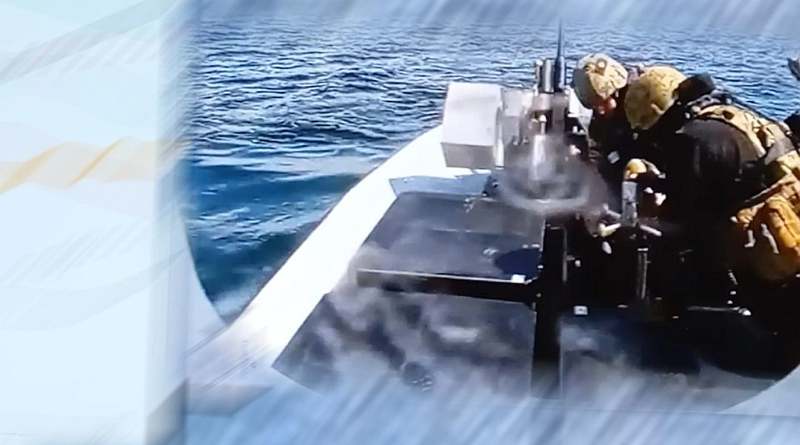
Bohdan Miroshnychenko / Defense
In April 2026, the first interception in history of a Russian “Shahed” by an interceptor drone occurred, launched by the military from an unmanned boat.
The event is not only significant in the world of military technology but also has important implications for Ukrainian air defense. Shooting down kamikaze drones in the Black Sea at the accumulation stage allows thwarting enemy attacks on coastal cities before they even begin.
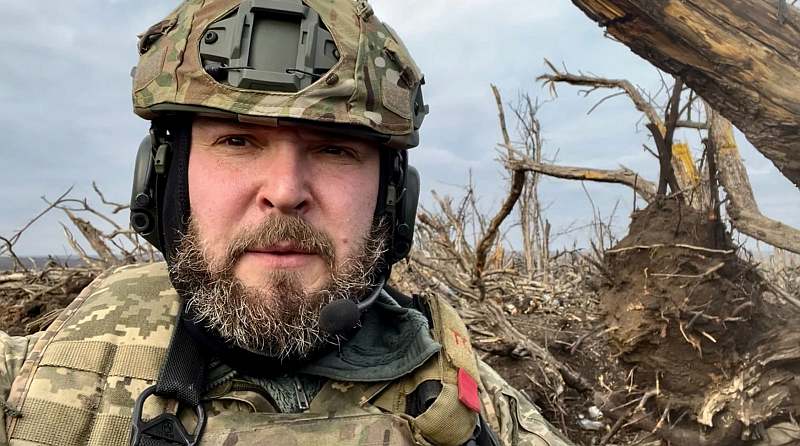
Preparation for such the use of maritime drones and interceptors lasted over a year. “Defense” spoke with the commander of the unmanned surface complexes division of the 412 Nemesis Brigade, Yuriy Kochevenko, who accomplished the first historical strike.
Why shoot down “Shaheds” over the Black Sea?
Shooting down drones over the Black Sea is more important than it might seem at first glance.
Russians often employ the tactic of launching as many kamikaze drones as possible simultaneously at a Ukrainian target to overload air defenses. The more Russian drones simultaneously cross a boundary in one place, the harder it is for Ukrainian interceptors and other means to counter them.
However, Russians cannot launch all their drones simultaneously from launch pads due to security and technical constraints. Thus, “Shaheds” are released in small batches and gradually accumulate in a zone out of reach of Ukrainian air defenses. In such cases, they circle over the Black Sea.
When enough “Shaheds” have gathered, they fly in a concentrated group to attack. The task for Ukrainian air defenses is to find a way to reach the “circling” area of Russian UAVs and make such pre-attack concentration impossible.
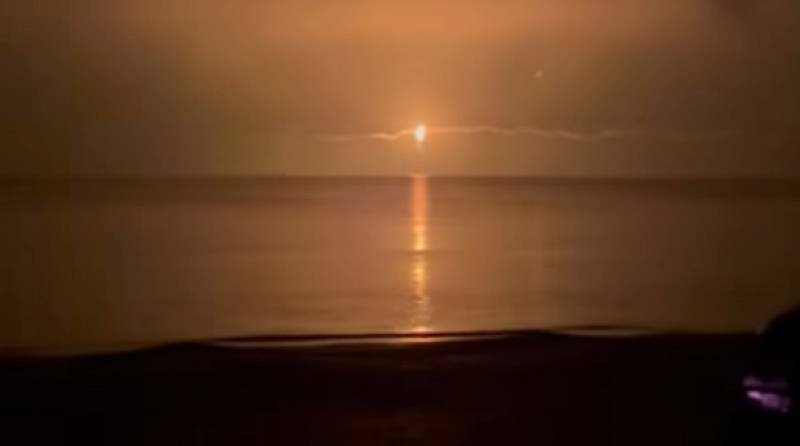
This is also important in that Russian drones from the sea attack coastal cities directly. Therefore, shooting down over water is the only way to keep enemy targets from reaching cities. Shooting down drones directly over the city can be dangerous for people.
But the enemy sends over the sea not only kamikaze drones. It is also important to shoot down reconnaissance drones, which can adjust ballistic missile strikes in real-time.
How does shooting down “Shaheds” over the sea work?
The development of technology for shooting down “Shaheds” from sea platforms took more than a year. The military consulted with manufacturers, sought tactical solutions, and eventually, in April 2026, the unmanned surface complex division of the 412th Nemesis brigade made its first successful takedown.
Before this became possible, arms manufacturers and the military had to solve several technological challenges.
The first challenge is detecting a target at sea. Usually, drone-interceptor operators see enemy “Shaheds” thanks to small radars, and the approach is alerted by larger radar or sensor systems. Small radars simultaneously see the interceptor drone and the target itself, allowing the operator to “connect” them in the air and eliminate the threat.
However, such small radars have a limited range, making it more difficult to control interceptors over long “sea” distances.
Division commander Yuriy Kochevenko noted in a comment to “Oboronci” that for successful interception at sea, it is necessary to engage a whole complex of different radars and sensors, which are combined into a single system. This differs from how operators work “on land.” He does not specify which means exactly for security reasons.
The second challenge is creating a sea platform for launching interceptor drones. Technologically, a boat for launching interceptors differs significantly from ordinary kamikaze boats.
“It’s like comparing a trailer with explosives to a sophisticated bus,” Kochevenko noted.
Ordinary sea kamikazes are single-use products designed to reach a target and detonate.
In contrast, interceptor carriers are more complex – they must be able to stay on combat duty for an extended period and be used repeatedly. Onboard, there is special equipment – a launch container, systems protected from electronic warfare, the drones themselves, and even a machine gun turret for protecting the boat in case of an attempt to destroy it with a drone or another sea drone.
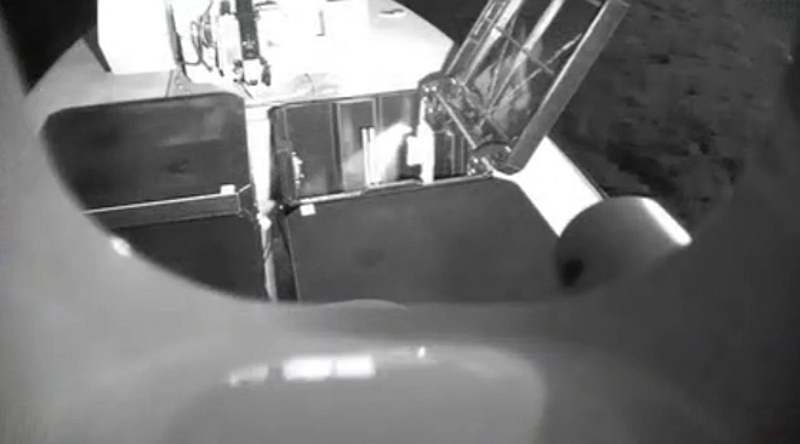
Kochevenko notes that this imposes certain requirements on the stability, autonomy, and airtightness of the vessel, which need to be considered without significantly increasing dimensions. Various Ukrainian manufacturers are currently working on this.
The third task is to create an interceptor drone for the specific mission.
“In shooting down at sea, we used an interceptor drone, but it is not ordinary. This is NOT a niche ‘marine’ modification, but it is the next generation of interceptors. It has a more advanced communication system and remote start system,” said Kochevenko.
It became known after the shooting down that the “Shahed” was brought down by the STING drone from the “Wild Hornets” company, as reported by the manufacturer on their Telegram channel.
Ultimately, the use of marine platforms with interceptors forces the search for original tactical solutions. This applies to detection, deployment, and maintenance/refueling of boats.
The latter is a separate challenge, as the enemy monitors the coastline and can target boat launch sites with missiles. The flight time of an “Iskander” missile to the Ukrainian Black Sea coast is 3 minutes.
“Launching a boat into the water is an entire operation with planning, route changes, and covert movement,” noted the commander.
According to Kochevenko, for now, such operations in the Black Sea are experimental in nature. However, if the military manages to test the effectiveness of their tactical and technical solutions and improve them qualitatively, shooting down drones over water could become quite a routine occurrence.
On the cover: Equipping the surface complex. Photo: Nemesis 412 Brigade
