

Information on current losses of the Russian Federation due to sanctions as of 23.04.2026.
1. For the third time this week, an oil refinery in Russia has halted operations after a drone attack.
– The Syzran refinery, owned by Rosneft, was forced to suspend oil processing after damage to technological equipment during a UAV attack on April 18.
– According to their data, the primary oil processing unit AVT-6 was emergency shut down at the enterprise. It provides about 71% of the plant’s total capacity, which can process up to 8.5 million tons of oil per year. The capacity of this unit is approximately 17.1 thousand tons per day. Repairs are likely to take one to two weeks.
– The Syzran refinery is part of Rosneft’s Samara group. Last year, the enterprise produced about 800 thousand tons of gasoline and 1.5 million tons of diesel fuel.
– This is the third instance of Russian refineries halting operations in the last week.
2. On the night of April 23, Ukraine launched a series of drone strikes on fuel and energy complex facilities in Russia — near Samara, in the Nizhny Novgorod region, and in occupied Crimea.
– In Novokuibyshevsk, Samara region, a Rosneft industrial enterprise — Novokuibyshevsk oil refinery/petrochemical complex was hit. Reports from open sources indicate a fire broke out on the enterprise’s territory. Previously, it was considered an important site for the production of petrochemical products used, in particular, in explosive components.
– In the Nizhny Novgorod region, drones attacked the Gorky oil pumping station in the Kstovo area. Local residents reported explosions and a fire, after which thick smoke rose in the area of the facility. The station is part of the Transneft trunk oil pipeline system and is one of the key nodes for oil transportation.
– Separately, there is a report of a strike on an oil depot in Feodosia, occupied Crimea. Observational channels recorded several hits and subsequent ignition. Russian authorities confirmed the fact of the drone attack, claiming to have shot down some of the drones, though they did not disclose details of the consequences.
– The series of strikes once again demonstrates the growing vulnerability of Russia’s energy infrastructure, which remains one of the key elements financing the war against Ukraine.
3. Russia is considering introducing a windfall profits tax for raw material companies and banks as it tries to close the growing budget gap caused by war expenses.
– The Russian Ministry of Finance is considering seizing part of the revenues from the most profitable sectors, including metal and gold producers like “Polyus” and “Norilsk Nickel,” as well as the banking sector, which maintains high margins despite the overall economic slowdown.
– The initiative arises amidst deteriorating macroeconomic dynamics: signs of GDP contraction have been recorded in the first quarter of 2026, and industrial production has already decreased by almost 2%, marking the first decline in two years.
– An additional signal of economic degradation is the drop in business activity indicators into the negative zone, indicating a decrease in investment demand and a general loss of business confidence.
– Against this backdrop, the Kremlin is intensifying the practice of administrative resource redistribution, effectively forcing big business to compensate for budgetary imbalances.
– Such measures have been applied before, but the new wave of fiscal pressure is occurring under a significantly weaker economic base. Despite high global prices for certain raw materials, including gold and copper, the Russian economy is becoming increasingly unstable due to structural constraints, sanctions pressure, and high capital costs.
– Detailed discussions of the new tax are expected in the second half of the year within the formation of the next budget cycle, but the mere fact of such initiatives indicates growing financial problems.
– Attracting business super-profits may provide a short-term effect for the budget, but it simultaneously undermines the investment climate and stimulates further capital outflow, increasing long-term risks for the economy.
4. Business sentiment in Russian retail trade has fallen to a minimum during Putin’s entire tenure.
– Tax hikes, economic slowdown, and consumers switching to savings mode have sharply increased pessimism in the sector. The business confidence index in retail fell to minus 8 points in the first quarter — the worst figure in the entire history of observations since 2000.
– Compared to the fourth quarter of 2025, the index fell by 2 percentage points, and relative to the end of 2024, by 8 percentage points. The current level is lower than during the crises of 2008-2009 and 2014-2015, and even worse than during the pandemic.
– The main issue businesses cite is tax increases — 43% of respondents consider this a key limiting factor (8 percentage points more than a year ago). Another 38% of companies complain about weak solvent demand, and 21% about a lack of financial resources. Consumer activity is declining throughout the country.
– According to the Central Bank of Russia, people are increasingly cutting back even on food products and switching to cheaper segments when buying appliances, clothing, and shoes. In 2025, clothing and shoe sales decreased by 11%, hardware store visits fell by 18%, and 80% of shopping centers reported a drop in turnover.
– Every fifth shopping center lost more than 20% of revenue. For the first time since 2000, the number of operating stores in Russia decreased by 4,500 over the year. Only food sales remain stable, as food consumption has natural limits.
5. There is a continued sharp decline in the production and sales of agricultural machinery in Russia due to warehouse overstocking and reduced demand.
– According to the industry association, in January-March 2026, production volume amounted to 42 billion rubles, which is 36.8% less year-on-year. Deliveries to the domestic market decreased by 16% to 32.4 billion rubles, while exports declined by 15.5% to 4.7 billion.
– The reduction covered almost all segments: tractor shipments decreased by 16%, cultivators and harrows by almost a quarter, seeders by 36%, grain cleaning machines by 31%. The only exception is combines, which saw a slight growth of 3%, not changing the overall negative trend.
– The agricultural machinery market has been in decline for the third consecutive year: in 2024, sales fell by 18%, and in 2025 by another 21%. Current dynamics indicate a systemic crisis in the industry, caused by a decrease in the purchasing power of the agricultural sector, high financing costs, and an overall deterioration of the economic environment. Russian manufacturers face excess inventory and are forced to cut production, exacerbating the degradation of an industrial segment critically important for the agricultural economy.
6. In March, Russia increased its maritime export of fuel oil and vacuum gas oil to Saudi Arabia by 18% compared to February to about 1 million tons.
– This reflects a forced restructuring of logistics under the influence of sanctions and price fluctuations in the global energy market. The increase in shipments occurred against the backdrop of rising oil prices due to the war in the Middle East, compelling some countries to more actively purchase discounted Russian products for domestic needs.
– Saudi Arabia uses Russian fuel oil for electricity generation, preserving its oil for export, while Russia is effectively forced to sell energy resources at discounts, losing part of its income.
– After the introduction of the EU embargo in 2023, Middle Eastern and Asian countries became key sales destinations, but the export structure remains unstable and dependent on circumstance.
– At the same time, there is a reduction in supplies to traditional hubs: exports to Singapore and Malaysia fell by 23%, and to India by as much as 66%, indicating increased competition and narrowing sales markets.
– Such dynamics highlight the vulnerability of the Russian energy sector, which is increasingly dependent on a limited circle of buyers and forced to adapt to less favorable trading conditions.
7. The European Union agreed on the 20th package of sanctions against Russia in response to the war against Ukraine.
– The new restrictions target the energy sector, the “shadow fleet”, banks, and companies that help bypass sanctions.
– In the energy sector, a full ban has been agreed on providing maritime services for transporting Russian oil and petroleum products, but its actual implementation will depend on coordination with G7 countries. Starting from April 25, 2026, a ban will be imposed on technical, financial, and brokerage services for icebreakers and LNG tankers under the Russian flag. From January 1, 2027, similar restrictions will apply to foreign icebreakers and LNG tankers operating in Russia. It is also prohibited to directly or indirectly provide LNG terminal services to entities more than 50% controlled by Russian citizens or companies.
– The package also targets the logistics of Russian oil. The EU bans transactions with the Indonesian oil port of Karimun, as well as with Russian ports Murmansk and Tuapse. An additional 46 vessels of the “shadow fleet” are added to the sanctions list, increasing their total number to over 600. Separately, a ban on the sale of tankers to Russian entities is introduced, and all contracts must include a clause prohibiting their further transfer or use in Russia.
– Sanctions are also extending personal restrictions. 120 individuals and legal entities have been added to the list with travel bans, asset freezes, and a complete ban on transactions. Of these, 56 are connected with the Russian military-industrial complex, including 17 in third countries — China, the UAE, Belarus, and Central Asian states. Another 36 inclusions concern energy and the “shadow fleet”.
– Separately, the sanctions affect the Russian oil industry. Seven refineries have been listed: Tuapse, Komsomolsk, Angarsk, Achinsk, Ryazan, Afipsky, and the Lukoil plant in Usinsk. Oil companies Bashneft and Slavneft, as well as several entities connected with Rosneft and Gazprom, including companies from the UAE involved in “shadow fleet” schemes, have also been affected by the restrictions.
– In the financial sector, a ban is introduced on transactions with 20 more Russian banks. Restrictions also apply to credit institutions in third countries that help circumvent sanctions, including in Kyrgyzstan, Laos, Azerbaijan, and Armenia. Kyrgyzstan has become the first country against which the EU has applied an anti-sanctions circumvention instrument: it faces a ban on supplies of metal-cutting machines and telecommunications equipment from the EU.
– The package also includes mechanisms to counteract the expropriation of European assets in Russia. The EU will be able to ban business with companies outside the bloc attempting to enforce Russian court decisions on asset seizure or the use of European companies’ intellectual property. EU companies will have the right to seek compensation for damages in EU courts.
– Additionally, a ban is introduced on the import of a range of Russian metals and chemical materials, including nickel rods, iron ore and concentrates, copper, scrap metal, as well as goods such as ammonia, silicon, salt, and some other materials.
8. The agreement on the 20th sanctions package became possible against the backdrop of anticipated political changes in Budapest, as well as after signals of the resumption of Russian oil transit via the “Druzhba” pipeline to Hungary and Slovakia.
– However, the key blow to Moscow’s so-called “shadow fleet,” which involves a complete ban on maritime transportation of Russian oil, has been postponed.
– It was previously discussed that the European Union would cease providing tankers carrying Russian oil with any maritime services in Europe — from insurance and maintenance to port access and repairs. Such a move could severely complicate the operations of the “shadow fleet,” through which the Kremlin attempts to bypass Western sanctions.
– However, due to the tense situation in the global oil market caused by the war in the Middle East, European governments decided to temporarily delay the harshest element of sanctions, fearing an additional spike in energy prices.
– Nonetheless, the very fact of agreeing on a new sanctions package indicates that economic pressure on Russia continues to grow, and Moscow’s ability to use maritime transportation to circumvent restrictions remains under increasingly vigilant scrutiny.
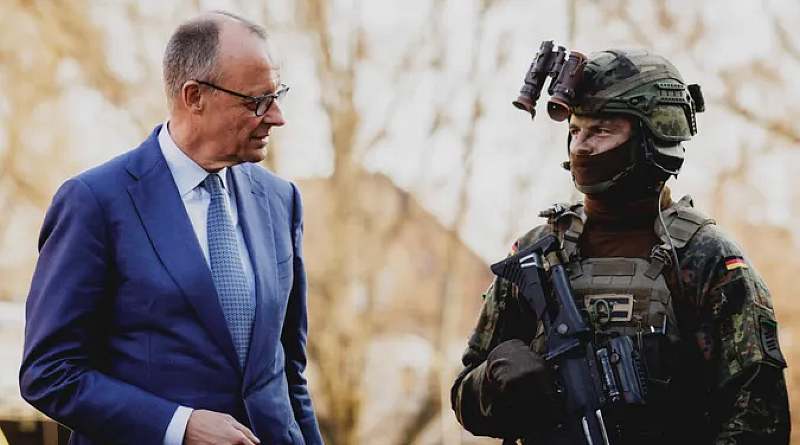
9. For the first time since World War II, Germany has adopted a comprehensive defense strategy identifying Russia as the main threat to Europe’s security.
– German Defense Minister Boris Pistorius stated that Russia is actively rearming and preparing for a possible military confrontation with NATO, viewing force as a tool for achieving political goals. According to him, Moscow seeks to weaken the Alliance by breaking ties between Europe and the USA and expanding its influence.
– The document includes both a military strategy and a development plan for the Bundeswehr, with a description of the structure and future composition of the armed forces.
– The strategy notes that Russia is already creating conditions for potential aggression against NATO countries and is conducting hybrid activities against Alliance members, including Germany.
– This involves sabotage, cyberattacks, misinformation, and espionage, which are considered a constant threat requiring systematic counteraction from the military and the state as a whole.
