
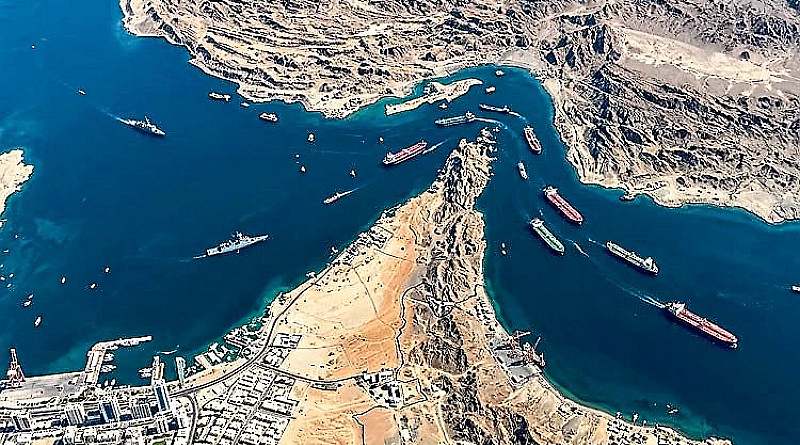

The Strait of Hormuz is one of the strategic points of global shipping, a sort of “energy jugular vein” of the planet, and is now at the epicenter of a geopolitical storm.
Tehran uses the threat of closing the strait as a tool of blackmail, and Moscow mistakenly believes that global chaos will play to their advantage. However, deep analysis shows that for a regime already sanctioned and mired in a protracted conflict, Iranian adventurism could become a fatal factor.
Today, the Strait of Hormuz remains the most vulnerable point of global transit. Around 20–30% of all the world’s oil and liquefied natural gas (LNG) pass through this narrow corridor. Iran is systematically increasing the presence of the IRGC in the region, using “gray zone” tactics: tanker seizures and drone attacks, not to mention blocking shipping.
Any attempt to fully blockade Hormuz will lead to such negative shock effects as a surge in oil prices above $150 per barrel, the collapse of logistical chains in Asia, which is the main consumer of Middle Eastern raw materials, and, of course, global inflation that will hit developing markets even harder, further destabilizing the international situation.
For the global economy, this is not just a crisis, but a challenge to the existence of trade routes that have been established over decades.
The collective Western countries and regional leaders do not intend to passively watch Iran’s attempts to dictate its terms. Efforts to unblock the strait have activated international coalitions. According to available data, the US and the UK are strengthening their group within the framework of Operation Prosperity Guardian, adapting it to tasks in the Persian Gulf.
It is important to note the change in the position of the Arab monarchies. Fearing for their revenues, the UAE and Saudi Arabia are increasingly coordinating actions with Western players. This leaves Russia in an extremely uncomfortable position: its “strategic partner” Iran is turning into a global pariah, whose actions directly threaten the economic interests of even those countries that Moscow is trying to pull to its side within the framework of BRICS+.
There is a false myth that Russia benefits from high oil prices. However, in the realities of 2026, the blockade of the Strait of Hormuz carries catastrophic consequences for the Kremlin. Firstly, there is the vulnerability of the “shadow fleet.” Russian oil exports are critically dependent on the safety of sea routes. Chaos in the Indian Ocean and the Persian Gulf will make insurance and freight for Russian oil prohibitively expensive, effectively nullifying the benefit of high quotes.
Secondly, there is the looming problem of logistical deadlock. Russia actively promoted the “North-South” corridor through Iran. In the event of a major conflict or blockade, this route, with billions invested, will become a useless asset in a combat zone.
Thirdly, there is the resource depletion of an ally who is a key supplier of military technologies for the Russian Federation. If Iran becomes involved in full-scale war in the strait, its resources will be redirected to its own survival, leaving Moscow without critically important military-technical support.
Finally, fourthly, China, as the main importer of oil through Hormuz, will incur colossal losses. In this situation, Beijing is unlikely to appreciate Moscow’s passivity or tacit approval of Iran’s actions, which could lead to a cooling of relations with Russia’s only remaining major ally.
The blockade of the Strait of Hormuz is by no means a “gift” for the Russian budget but a strategic trap. By supporting or ignoring Iran’s destructive behavior, the Kremlin only accelerates its own isolation and destroys the remnants of stability that its export model relies on.
Therefore, Hormuz is still a thorn for the Kremlin, which is far from fully assessing all the risks.
