

Information on current Russian losses due to sanctions as of 06/09/2026.
1. On June 8, a Ukrainian UAV attacked the Protasovo airfield in the Ryazan region, where the “Protos” scientific and production center is located — one of the sites of the Russian unmanned technology industry.
– The “Protos” scientific and production center operates at the airfield, opened in July 2024 for the development of the Russian unmanned systems sector. As of June 2026, 54 resident companies were working there, engaged in the development of drones, components, software, communication and control systems.
– One of the main advantages of the center is the presence of an active runway, which allows for testing UAVs in real conditions.
– In addition to the production and testing of UAVs, the center also trains future specialists for the unmanned technology sector.
– The strike on Protasovo was another attack on facilities related to Russian UAV production and the military-industrial complex.
2. Ukraine attacked the Chongar Bridge for the second time in three days, which connects the occupied part of the Kherson region with Crimea and is used by Russian troops for moving equipment, ammunition, and fuel.
– On the night of June 9, drones attacked the crossing over the Chongar Strait. Local authorities acknowledged the bridge damage and reported a temporary suspension of traffic. The “Dzhankoy” automobile checkpoint was also closed.
– This is the second attack on the Chongar Bridge in the last three days. During the previous strike on June 7, the roadway was damaged, and movement through the crossing and the “Dzhankoy” checkpoint also had to be temporarily stopped.
– Repeated strikes on the Chongar Bridge create additional difficulties for Russian military logistics since this crossing remains one of the key supply routes for troop groups in southern Ukraine and occupied Crimea.
3. Despite relatively stable export figures, the Russian oil industry is increasingly facing systemic problems due to regular strikes on refining and logistical infrastructure.
– The industry is effectively entering a phase of structural instability, where even maintaining export revenues no longer guarantees the normal functioning of the production cycle.
– Damage and stoppages at oil refineries reduce the ability to process raw materials domestically. As a result, companies are forced to redirect additional volumes of oil for export, creating additional pressure on port infrastructure and transshipment capacities. At the same time, storage options for surplus raw materials remain limited.
– The inability to promptly process or export extracted oil forces producers to cut production. Russian authorities have already acknowledged that production declines are linked to unscheduled refinery repairs.
– If processing and logistics issues worsen, some wells may be mothballed, and restoring production at certain fields will become a complex and expensive process. The imbalance between extraction and processing is also beginning to affect the domestic market.
– Despite rising revenues from crude oil exports due to high global prices, fuel supply disruptions have already been recorded in several regions, and gasoline sales restrictions have been implemented.
– Simultaneously, market prices for oil products are rising. If attacks on Russian oil infrastructure continue, the gap between raw material exports and finished fuel production will only widen.
4. Russian oil is once again being sold to India at a discount after more than two months of trading without a discount.
– Amid the war between Iran and Israel and the US decision to allow some countries to purchase sanctioned Russian oil, Moscow was able to increase supplies to India. Meanwhile, the situation in the global oil market is gradually stabilizing, weakening the position of Russian exporters.
– According to Argus, as of Friday, Russian oil delivered to India’s coast cost $93.59 per barrel. This corresponds to a price of about $73.46 per barrel at Russian loading ports and indicates the return of a discount for Indian buyers after more than a two-month hiatus.
– The easing of tension in the oil market is linked to restrained demand from China, increased exports from the US, and other factors that have reduced the risk of a raw material shortage. In such conditions, India has again gained the opportunity to demand more favorable terms from Russian suppliers.
– Although current prices remain significantly higher than the $59 per barrel embedded in the Russian budget, the return of the discount indicates Russia’s continued dependence on a limited circle of buyers who continue to dictate purchasing terms.
5. Russia faced a new failure in attempts to create its own Starlink analogue.
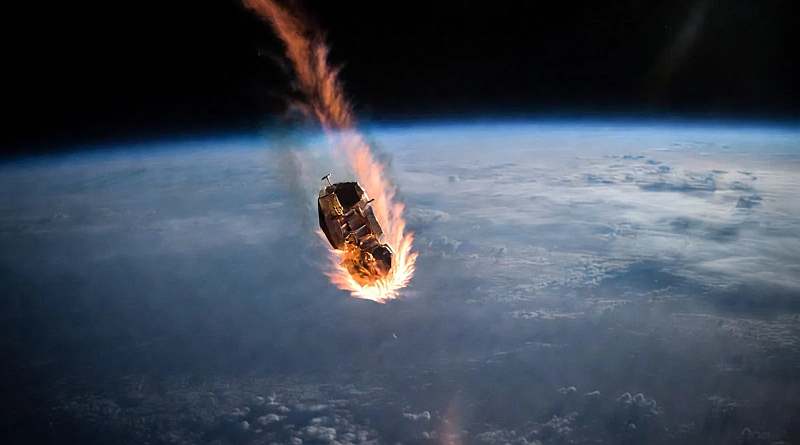
– One of the 16 satellites from the “Rassvet” project, launched in March 2026, failed almost immediately after reaching orbit and burned up in Earth’s atmosphere on June 6.
– According to RussianSpaceWeb, the device failed to execute the planned maneuver due to an engine failure. As a result, it began to lose altitude and entered the dense layers of the atmosphere over the North Atlantic.
– “Rassvet” is a key project by the Russian authorities to create a satellite network for broadband internet. A total of 383 satellites are planned to be deployed, with 292 to be placed in orbit by the end of 2030. The cost of the program exceeds 430 billion rubles.
– Russia hopelessly lags behind Elon Musk’s SpaceX: the company launched the first satellites for the Starlink project back in 2019, and today their group consists of over 10,000 devices.
– The loss of one of the first satellites demonstrates the challenges facing the Russian space industry even in priority state projects.
– Despite significant budget expenditures, Russia continues to significantly lag behind world leaders in satellite communications and is forced to implement large-scale technological programs under sanctions and limited access to modern technologies.
6. Russia continues to lose ground in the global technological competition.
– It is estimated that Russia today accounts for less than 2% of global research and development expenditures, while the USA and China have been increasing their investments in science for almost a decade, with Japan, the UK, and South Korea actively joining the technological race.
– It is forecasted that by the second half of the 2020s, China may surpass the USA in terms of innovation investments. For Russia, this means further increased dependence on foreign technologies and loss of chances to be one of the world’s technological leaders.
– Problems are accumulating within the country as well. After the first sanctions in 2014, the pace of development in the innovation sector began to slow down, and in 2022, the Russian venture market and technological entrepreneurship were essentially plunged into a deep crisis due to international isolation, brain drain, and reduced access to modern technologies.
– As a result, the Russian economy increasingly risks becoming entrenched as a raw materials supplier, while key centers for creating new technologies are concentrated outside the country.
– In the context of growing global competition, this exacerbates long-term risks for Russia’s economic development and technological independence.
7. The Russian authorities are preparing to shift part of the costs of protecting industrial facilities from Ukrainian drones to businesses themselves.
– Enterprises will be allowed to purchase large-caliber air defense systems at their own expense to protect factories and critical infrastructure.
– The Ministry of Defense will maintain control over these systems, and they will be serviced by reservists. The list of equipment may include anti-aircraft artillery installations, radar complexes, and electronic warfare tools.
– The decision reflects the growing pressure on the Russian economy due to regular strikes on military and industrial facilities deep in the rear. Some large companies have already been forced to negotiate with the Ministry of Defense to place “Pantsir” systems near their enterprises.
– Essentially, the Kremlin acknowledges that the state air defense system is no longer able to fully meet the needs of the industry, so security expenses are increasingly being shifted onto the enterprises themselves. This means additional financial burdens for businesses that are already operating under high rates, staffing shortages, and sanctions pressure.
– For Russian companies, protection against drones is gradually becoming another mandatory expense item, which increases production costs and worsens the competitiveness of the economy.
8. The Russian authorities are preparing a new increase in the tax burden on the population and businesses due to the worsening state of regional finances.
– The Federal Tax Service recommended that the regions revise the tax policy to reduce the record budget deficit, which is projected to reach 1.54 trillion rubles by the end of 2025. According to the FTS recommendations, regional authorities should expand the list of real estate taxed at cadastral value, raise transport tax rates to the maximum permissible level, and review benefits and rates for land and property taxes for individuals.
– Regions are also instructed to conduct an inventory of real estate and more actively identify land plots used for non-target purposes. For such objects, the tax burden may increase several times.
– The financial situation in the regions is rapidly deteriorating. The cumulative deficit of local budgets has increased fivefold compared to 2024 and almost eightfold compared to 2023.
– The most difficult situation is in the Kemerovo, Vologda, Arkhangelsk, and Tyumen regions, where the deficit exceeded 30% of their own revenues. The Russian Ministry of Finance has already warned that in 2026 the deficit of regional budgets could increase to 1.9 trillion rubles.
– Against this backdrop, the Kremlin is increasingly shifting financial problems onto the population and businesses, trying to compensate for budget losses amid rising military expenditures and a slowing economy.
9. The European Union is preparing a new package of sanctions against Russia, targeting around 80 individuals and legal entities involved in supporting the war against Ukraine.
– This was stated by the head of European diplomacy, Kaja Kallas, after an informal meeting of EU defense ministers in Cyprus. According to her, the new restrictions will target enterprises of the Russian military-industrial complex, individuals involved in human rights violations, as well as representatives of the Russian propaganda machine.
– Kallas emphasized that the pressure from sanctions has already dealt a serious blow to the Russian economy. According to EU estimates, the cumulative losses of the Russian economy from international sanctions amount to 1.2 to 1.5 trillion dollars. “Brick by brick, we are dismantling the foundations of Russia’s war economy,” stated the head of European diplomacy.
– The EU believes that the worsening economic situation and increasing financial losses are forcing the Kremlin to rely more heavily on military escalation.
– At the same time, the sanctions are gradually limiting the Russian authorities’ ability to finance the war and support the operation of the military-industrial complex.
– The EU is intensifying sanction pressure amid signs of growing problems in the Russian economy, including decreased investments, declining business activity, and an increasing budget deficit.
– The new package of restrictions is expected to be another step in the strategy of long-term depletion of resources that the Kremlin uses to continue the war against Ukraine.
