

Information on the current losses of Russia due to sanctions as of 24.06.2026.
1. The Russian stock market is experiencing the worst decline in history.
– The Russian stock market is rapidly depreciating: the Moscow Exchange Index has been falling for 16 consecutive weeks – a record series in its history. Over the past week, Russian stocks have fallen more than 11%.
– Market capitalization has returned to the 2017 level, and taking inflation into account, stocks have depreciated by approximately 45%. On June 22, the Moscow Exchange Index fell by almost 5% – the worst day since autumn 2022.
– Shares of Gazprom have fallen to multi-year lows, and major Russian companies have lost 3–7%. Investors fear government intervention, causing the market to lose its role as an investment source. The stock market reflects business expectations.
– The current decline indicates growing investor distrust in Russian companies and government policies. The Russian market is increasingly turning into one of the key indicators of the long-term decline in the country’s economic potential.
2. Russian government bonds have experienced the biggest collapse since mobilization.
– Following the prolonged decline of the stock market, investors began massively shedding government bonds, reacting to the Kremlin’s plans to increase spending on the war against Ukraine.
– The Russian Government Bond Index RGBI lost almost 1.6% in one day, the worst result since September 2022 – the period of mobilization announcement. The yield on long-term bonds rose to 15.5% annual, meaning the government will have to borrow money at record high rates.
– One of the main reasons was information about the Russian authorities’ intentions to increase military spending in 2026 by another 4–5 trillion rubles, or almost 40% from the initial plan. The Ministry of Finance plans to attract an additional 2–3 trillion rubles in debt to finance these costs.
– The market is essentially beginning to factor in the growth of budgetary risks in prices. The more the Kremlin spends on the war, the more funds need to be borrowed, which automatically increases the budgetary burden in the future.
– The cost of war is increasingly evident precisely in the debt market. This year alone, about 4 trillion rubles, or 9% of all budget expenditures, will be directed solely to the payment of interest on the national debt.
– These are funds that will not go to economic development, infrastructure, or social programs. The simultaneous decline of the stock market, an increase in borrowing costs, a reduction in oil and gas revenues, and the necessity to increase military spending indicate a gradual deterioration in Russia’s financial stability.
3. Russia is considering a complete ban on diesel exports due to refinery attacks.
– The Russian authorities are discussing the possibility of a complete ban on the export of diesel fuel amid growing problems in the oil refining sector following a series of Ukrainian strikes on refineries.
– Currently, the restrictions only apply to traders without their own production facilities, but the government is considering a much stricter scenario. Its aim is to prevent a fuel shortage in the domestic market, which is becoming increasingly apparent due to damage to refineries and reduced production.
– The idea of banning exports indicates the seriousness of the problems in the Russian fuel sector. Since the beginning of the year, at least 47 attacks on Russian refineries have been recorded, and gasoline production has already decreased by about a quarter compared to last year.
– In many regions of the country, the authorities report disruptions in the supply of certain types of fuel and are introducing sales restrictions. For Russia, the situation is particularly painful as diesel remains one of the key export petroleum products.
– The country is the second-largest exporter of diesel fuel in the world after the USA. In 2025, about 907 thousand barrels of diesel and gas oil were supplied to external markets daily, accounting for approximately 11% of global exports.
– If the ban is implemented, the Kremlin will effectively sacrifice part of its foreign currency revenues for the stability of the domestic market. This will further confirm that the strikes on refining infrastructure are causing not only production but also financial problems for the Russian economy.
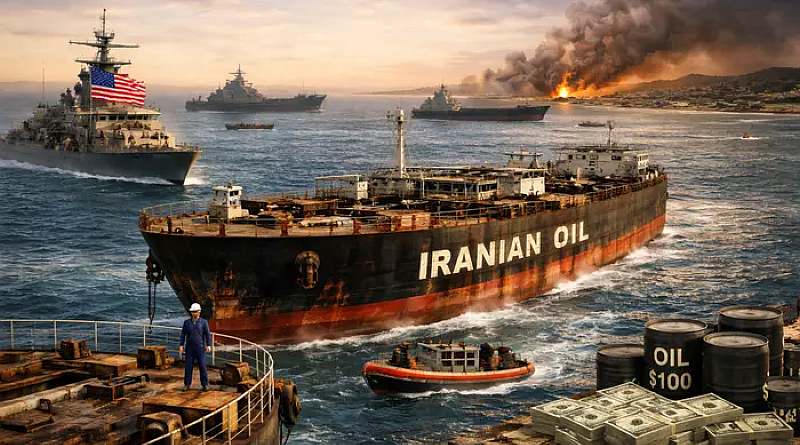
4. Russian oil exports increased to a maximum in 2026, but new competition from Iran threatens the Kremlin’s revenues.
– Russia has managed to increase its maritime oil exports to the highest level since early 2026. In the week leading up to June 21, seaborne shipments reached 4.11 million barrels per day, while the four-week average was 3.89 million barrels.
– However, behind the seemingly positive statistics lie significant problems for the Russian oil industry. The increase in exports is largely not due to rising demand, but to the consequences of Ukrainian strikes on oil refining infrastructure.
– Due to damage to refineries, it has become more difficult to process some oil domestically, so it is directed to foreign markets. An even more serious threat for Moscow is Iran’s return to the global oil market.
– Following agreements between Washington and Tehran, the US temporarily eased sanctions on Iranian oil, and the reopening of shipping through the Strait of Hormuz paves the way for increased exports from the Middle East.
– India, which in recent years has become one of the main buyers of Russian oil, may redirect some of its purchases to Iranian crude. This is particularly painful for Russia as the Indian market remains one of the few major sales channels after losing a significant portion of the European market.
– The consequences are already visible in financial indicators. World oil prices have dropped by about 16%, and Russian export grades have lost about 20% of their value.
– As a result, even amid record volumes of shipments, Russia’s export revenue decreased from about $2.02 billion to $1.72 billion over a four-week period. Russia is forced to sell more oil to earn less money.
– Increased competition from Iran, falling prices, and strikes on the oil refining industry are gradually undermining one of the main sources of financing for Russia’s economy and the war against Ukraine.
5. Gasoline production in Russia fell by 25%, fuel shortages are covering more and more regions.
– Ukrainian strikes on Russian refineries continue to inflict significant damage on the fuel industry. Gasoline production in Russia has decreased by approximately 25% compared to the average daily level of June 2025.
– Currently, Russian refineries produce about 90 thousand tons of gasoline per day, or approximately 765 thousand barrels. The reduction in production is a result of numerous drone attacks, after which enterprises are forced to conduct emergency repairs and shut down certain production capacities. The problems now extend far beyond the oil refining industry.
– In many regions of Russia, authorities report disruptions in gasoline and diesel fuel supplies, as well as sales restrictions. The shortage affects both the European part of the country and remote regions of Siberia and the Far East.
– The export sector has also taken a hit. According to LSEG and industry sources, maritime export of Russian oil products in the first half of June decreased by 15% compared to the same period in May, down to about 3.3 million tons.
– This implies a loss of some foreign currency revenue, which is critically important for budget financing and the war effort. Additional evidence of the worsening situation is the rise in fuel prices. The Federal Antimonopoly Service has already had to demand explanations from major gas station chains regarding the increase in the cost of the most popular gasoline brands.
6. The return of Iranian oil increases pressure on Russia’s position in India.
– Preliminary agreements between the U.S. and Iran regarding the resumption of oil shipments through the Strait of Hormuz may create new challenges for Russian oil exports.
– Following news of a possible increase in supplies from the Persian Gulf, global oil prices have started to decline, and competition in the key Indian market for Russia is intensifying. Russia currently supplies about 3.73 million barrels of oil per day to Asia, with roughly 640 thousand barrels daily going to India.
– The Indian market has become one of the main sales destinations after losing a significant part of European buyers. However, the resumption of Iranian oil exports could significantly change the balance of power. If shipments through the Strait of Hormuz return to normal, Indian refining companies will have more alternatives for purchases and could demand additional discounts from Russian suppliers more actively.
– The more alternatives Indian buyers have, the harder it will be for Russia to maintain prices and income from oil exports, which remains one of the main sources of funding for the war against Ukraine.
7. Hungary once again stalled Ukraine’s progress towards EU membership.
– Budapest became the only EU country that refused to support a joint letter from the 27 member states to the European Council and the European Commission on further advancing the applications of Ukraine and Moldova to join the bloc.
– Unanimous support from all EU members is required to approve the document, so due to Hungary’s position, the decision was once again postponed. The issue is planned to be brought back for discussion next week.
– After the departure of pro-Russian politician Viktor Orbán from power, Hungary’s new Prime Minister Péter Magyar formally does not block the negotiation process regarding Ukraine, but continues to slow its pace.
– Specifically, Budapest insisted on excluding the wording “as soon as possible” regarding Ukraine’s EU accession from the document and opposes the simultaneous opening of all negotiation clusters.
– Thus, despite the support of Ukraine by most EU countries, the Hungarian position continues to create additional political obstacles to accelerating Kyiv’s European integration process.
8. In May 2026, Saudi Arabia became the largest buyer of Russian fuel oil delivered by sea, despite the overall reduction in Russian petroleum product exports.
– Supplies of fuel oil and vacuum gas oil from Russia decreased by approximately 6% compared to April — to 3.2 million tons. The decline in exports occurs amid issues in Russian oil refining caused by strikes on energy infrastructure and reduced production.
– This limits Russia’s ability to increase sales in external markets and increases pressure on the income of the fuel and energy sector.
– Despite the increase in purchases by Saudi Arabia, the overall dynamics indicate a deterioration in the export performance of Russian petroleum products, while a series of attacks on refining facilities increasingly impacts the industry’s operations and Russia’s export potential.
