
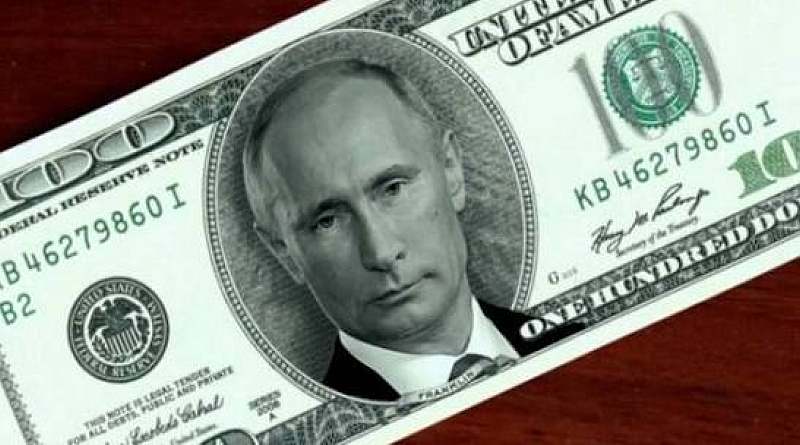

Information on current losses of the Russian Federation due to sanctions as of 09/15/2026.
1. Ukrainian drones and missiles attacked several industrial facilities in Russia on the night of September 15.
– In Syzran, the Rosneft oil refinery caught fire after an attack by Ukrainian UAVs. The plant’s capacity is about 8.5 million tons of oil per year. According to reports from the scene, a fire erupted at the refinery after the explosions.
– Explosions were heard near “Sebryakovcement” in Mikhailovka in the Volgograd region — one of the largest cement enterprises in Russia. In Taganrog, during a massive air attack, there were reports of a missile strike in the area of the Beriev Aircraft Scientific-Technical Complex. The company is engaged in the development and repair of aviation equipment, including military aircraft.
2. Half of the six largest Russian refineries producing diesel fuel drastically reduced or completely stopped production in September following drone strikes.
– This concerns the Omsk Refinery, “Kirishi,” “TANECO,” Volgograd Refinery, NORSI, and Perm Refinery. Together they provide about half of the diesel fuel production in Russia.
– According to sources, “Kirishi” has completely stopped, and the Volgograd Refinery and NORSI are operating at about a quarter of their nominal capacity. Thus, diesel production at these facilities has dropped several times. “TANECO” also suffered an attack by Ukrainian UAVs on Sunday, but the extent of the damage is still impossible to assess. The problem is exacerbated by frequent strikes on Russian refineries.
– According to the International Energy Agency, from January to August 2026, a Russian refinery was attacked on average every three days. The reduction in processing is already affecting exports.
– In June, before the introduction of restrictions on fuel exports, Russia exported less than 1 million tons of diesel fuel, while the export of diesel and gasoil together amounted to about 1.8 million tons.
– A year earlier, Russia sold about 2.5 million tons of diesel abroad every month, or 3.3–3.4 million tons together with lower quality gasoil.
3. In August 2026, the Russian oil industry produced almost 3 million barrels per day less than at the beginning of 2022.
– According to the International Energy Agency, production was 8.36 million barrels per day compared to more than 11 million at the start of the full-scale war.
– At current oil prices, this gap potentially means about $100 billion in lost revenue annually. Estimates from various organizations differ significantly. OPEC estimated Russia’s August production at 8.718 million barrels per day — about 400,000 barrels more than the IEA.
– Even by OPEC’s estimate, Russia produces about 1.5 million barrels per day less than its quota under OPEC+. The problems are even more evident in oil refining. According to calculations based on IEA data, after accounting for exports, about 2 million barrels per day went to Russian refineries in August.
– This is more than twice less than the April level of 5.2 million barrels when Ukrainian strikes on oil refining infrastructure were only gaining scale.
– The decline in refining is already creating problems in the Russian domestic market: gasoline and diesel production is decreasing, fuel shortages are emerging, and queues at gas stations are growing.
– At the same time, lower production and export volumes are reducing Russia’s potential oil revenues.
– The Russian oil industry is simultaneously losing production, refining capacities, and part of its export capabilities, which is increasing pressure on both the fuel market and state finances.
4. In a quarter century of Putin’s rule, the Russian economy has lost through capital outflow an amount exceeding the country’s annual GDP.
– According to the Center for Macroeconomic Analysis and Forecasting (CMAF), closely associated with the government, from 2001 to 2025, cumulative outflow from the real sector exceeded 110% of GDP, and from the economy as a whole — 130% of GDP.
– Over the last three decades, Russia has annually taken out an average of 4–5% of GDP abroad. In the last 10 years, the real sector has lost about 3% of GDP annually.
– The largest outflow was recorded in 2022 — over 12% of GDP. After the start of the full-scale war, Western companies left the Russian market, and hundreds of thousands of people left the country, taking savings and proceeds from asset sales. Russia lost over 10% of GDP due to capital outflow in 2014 after the annexation of Crimea and the first large wave of Western sanctions.
– The scale of the problem significantly exceeds that of most countries with comparable income levels. Hungary, Slovakia, and Thailand have a net outflow of less than 1% of GDP per year, while Argentina and South Africa have less than 0.5%. Bulgaria, Poland, Egypt, India, and Brazil, on the contrary, have a net capital inflow.
– After the start of the war, the Russian Central Bank classified statistics on private sector capital outflow. According to its historical data, from 2001 to 2021, $780.8 billion was withdrawn from Russia. This is about 1.5 times the current annual volume of the federal budget of Russia at 44 trillion rubles and exceeds its gold and foreign exchange reserves, which as of September 1 were $769 billion.
– According to the Central Bank, from 1994 to 2021, the cumulative capital outflow from Russia reached $907.4 billion. The large and chronic withdrawal of money abroad indicates a prolonged loss of internal resources for investment and development by the Russian economy.
5. Russian “Norilsk Nickel” is negotiating with China’s North Copper Co. for copper processing, as Western technological sanctions have made modernization of its facilities in Russia significantly more expensive.
– North Copper needs to adapt the enterprise in Houma, Shanxi Province, to process Norilsk Nickel’s raw materials. The Russian copper concentrate contains more nickel than the raw materials usually processed in China, so the Chinese company may need to install a separate furnace to recover copper-nickel matte.
– Such modernization could take up to two years. Initially, Norilsk Nickel planned to build its own copper smelting plant in Fangchenggang, China. The project was postponed after the company’s partner withdrew from it at the end of 2025.
– Transferring processing to China is also expected to reduce Norilsk Nickel’s costs, as the company’s main clients are located there. Russia’s access to equipment and technologies from Europe, the USA, and Japan was restricted by sanctions after the start of the full-scale war, making similar projects within the country significantly more expensive.
– Negotiations with North Copper are not yet complete: the parties are still agreeing on technical parameters, and a mandatory agreement has not been signed.
6. The United States imposed additional sanctions against the Russian bank VTB, accusing it of aiding Iran in circumventing American restrictions. This was reported by the Office of Foreign Assets Control (OFAC) of the US Department of the Treasury.
– VTB is already under US sanctions due to its operations in the Russian financial sector, but now the bank has also been added to the sanctions list related to Iran. According to American officials, VTB provided clearing accounts to the Central Bank of Iran and several sanctioned Iranian banks, allowing for settlements and the conversion of Iranian rials into Russian rubles.
– VTB also helped transfer billions of dollars of frozen Iranian assets and expanded its presence in Iran. VTB is the second-largest bank in Russia. The US is also signaling to foreign companies that cooperation with a bank that helps Iran circumvent sanctions could pose a risk of secondary restrictions for them.
– The new sanctions increase the risks for VTB’s international operations. American authorities will now assess not only the formal participants in transactions but also who actually controls the assets and benefits from them. This complicates the use of nominal owners and intermediaries to bypass restrictions.
7. Luxembourg has launched an investigation into former executives of Gazprombank Luxembourg over possible circumvention of EU sanctions and insider trading.
– The country’s Ministry of Finance has passed information to the prosecutor’s office. It concerns four former executives of Gazprombank Luxembourg, the last major Russian bank operating in Europe. They might have taken advantage of the chaos after sanctions against Russia were imposed in 2022 to profit from transactions with Gazprom bonds.
– They bought Gazprom bonds at undervalued prices and then exchanged them for new bonds issued in Russia, which were traded at full value.
– According to documents reviewed by the FT, such transactions could have yielded them a net profit of over €9 million. Luxembourg’s Finance Minister, Yuriko Backes, informed members of the parliamentary committee that these allegations have been forwarded to the prosecutor’s office.
– The investigation aims to determine whether sanctions rules were violated and whether insider information was used during the transactions.
