

Information on Russia’s current losses due to sanctions as of 09/11/2026.
1. Ukrainian drones struck the refinery and Ozon logistics center in Saratov.
– On the night of September 11, Ukrainian drones attacked Saratov. Targets included the Saratov refinery “Rosneft” and the Ozon logistics center. After the attack, a fire broke out at the Saratov refinery. The plant has been hit at least 16 times since the start of the full-scale war.
– A strong fire also broke out at the Ozon logistics center. The company confirmed the attack, reporting the evacuation of employees.
– On the night of September 11, Volgograd was also attacked. According to the Ukrainian monitoring channel Supernova+, the target was the “Lukoil” Volgograd refinery.
2. Ukraine attacked one of the largest manufacturers of explosive components in Russia.
– On the morning of September 11, the Perm region was attacked by Ukrainian drones. The probable target was the “Azot” plant of the “Uralchem” company in Berezniki — one of the largest chemical industry enterprises in Russia.
– Ukrainian monitoring channels reported a strike on the enterprise and published videos allegedly showing a drone dive onto the plant’s territory. Gunfire and a column of smoke were also observed in the area of the chemical plant in Berezniki.
– “Azot” produces ammonium nitrate, ammonia water, urea, nitric acid, and other chemical products. These substances are used, among other things, for the production of explosive materials. The enterprise is also the only producer of sodium nitrate and crystalline sodium nitrite in Russia.
3. Russia’s oil production lags OPEC’s quota by more than 1 million barrels per day.
– The aggressor country Russia further reduced oil production and as of early September was lagging by more than 1 million barrels per day from the Organization of the Petroleum Exporting Countries (OPEC) quota. This is reported by Bloomberg, citing OPEC’s monthly report.
– The report states that in August, Russia produced an average of 8.718 million barrels of oil per day. This is 160 thousand barrels per day less than the revised average production figure for Russia in July. Moreover, August figures were the lowest since December 2025, when the country began to reduce production.
– In August, Russian oil production lagged OPEC’s quota by 1.17 million barrels per day. These data indicate the strong pressure Russia’s oil sector has experienced since Ukraine intensified strikes on refineries and export terminals. These have forced refineries to cut processing, preventing the redirection of available oil volumes for export. As a result, companies were forced to reduce production.
4. Ukraine’s strikes on Russia’s gas infrastructure have created new risks for the gas market.
– Ukrainian drones have reached Russia’s gas infrastructure in the Arctic for the first time, flying over 3,200 km. Strikes on two enterprises in Yamal show that even remote Russian gas facilities can no longer be considered unreachable.
– The targets were Gazprom’s Urengoy complex and Novatek’s Purovsky gas condensate processing plant. The Yamalo-Nenets Autonomous Okrug accounts for about 80% of Russia’s natural gas production, so further attacks on the region’s infrastructure pose risks to a significant portion of Russia’s gas sector.
– For Russia, this means additional risks of lost production, processing, and export opportunities. Previously, Ukrainian strikes were mainly focused on oil infrastructure, but now key gas facilities are also under threat.
– At the same time, the attacks have caused concern in Europe, which has not yet abandoned Russian gas. Russia still supplies about 10% of European demand — half of this volume is LNG, the rest is delivered via the Turkish Stream.
– Any disruptions in Russian supplies could exacerbate shortages in the European market, especially before winter. Gas prices have already exceeded €80 per MWh — for the first time in over three years. Therefore, potential strikes on major Russian gas facilities pose the risk of simultaneously hitting Russian gas sector revenues and causing a new price surge in Europe.
– The biggest risk to the market is Yamal LNG. Its impact would be a serious escalation for the global gas market. Meanwhile, the EU plans to fully ban Russian LNG imports from January 1, 2027, but until then, Europe remains dependent on these supplies.
5. Ukrainian strikes are destroying Russia’s oil refining.
– Ukrainian drone strikes are increasingly depleting Russia’s oil refining industry. According to the International Energy Agency (IEA), sanctions and more precise attacks lead to the accumulation of malfunctions at refineries, as temporary repairs do not eliminate the consequences of previous damage.
– In August, Russian refineries were attacked at least 22 times — the highest figure since the start of the war. The IEA has reduced its baseline processing forecast for the next 18 months to about 4 million barrels per day, which is 30% below the pre-war level.
– Ukrainian drones are targeting oil secondary processing units. Their replacement can take 6–8 months, and sanctions complicate Russian companies’ access to necessary equipment and parts.
– Due to long delivery times and the approaching cold season, risks to the industry may increase. Processing problems are already affecting Russia’s domestic fuel market. The authorities have temporarily banned the export of most diesel, gasoline, and aviation fuel to compensate for the reduction in internal supply. Simultaneously, rationing of fuel has been introduced in several regions.
– Due to reduced refinery capacity, the IEA also cut its oil production forecast for Russia in 2026 by 125,000 barrels per day — to 8.7 million barrels per day. Thus, strikes on processing gradually create problems not only for the fuel market but for Russia’s entire oil sector.
6. One of Russia’s largest banks has problematic loans amounting to $8 billion.
– Moscow Credit Bank (MCB), the third-largest private bank in Russia, is facing a rapid deterioration in the quality of corporate loans. By the end of June, 671 billion rubles ($8 billion), or over 27% of the bank’s corporate loan portfolio, consisted of problematic loans. The volume of such loans increased in the first half of the year, indicating worsening issues in the Russian economy.
– High interest rates, sanctions, and substantial military economy expenses are increasingly pressuring companies, especially in capital-intensive industries—from coal and engineering to retail. Overdue debt is rising separately.
– According to MCB’s reporting, overdue debt amounted to 277 billion rubles—70% more than at the beginning of the year, and 1716% more than a year earlier. MCB’s problems show that high rates and the worsening financial state of enterprises are already transferring the consequences of the economic downturn to the banking sector.
– Across the entire Russian banking system, the share of problematic corporate loans at the end of June was about 12% compared to 11.2% a year earlier. The share of risky restructurings during this time increased from 3.5% to 4.9%.
– MCB is a systemically important bank, so its potential problems may require state support. If needed, “Rosneft” could be a potential source of capital for the bank, and if this aid is insufficient, the Central Bank of Russia may intervene.
– Meanwhile, in July, MCB’s corporate loan portfolio sharply increased by nearly 1.1 trillion rubles, or 65%, to approximately 2.7 trillion rubles. The reasons for this spike remain unclear.
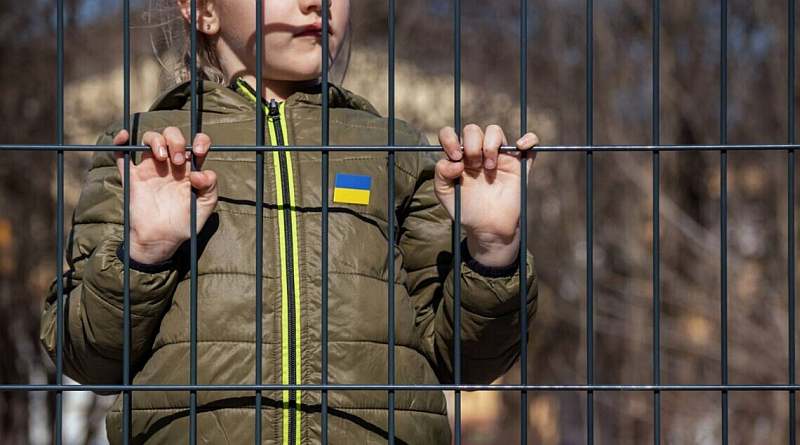
7. Canada imposed sanctions against Russians involved in the deportation of Ukrainian children.
– The Canadian government added eight more Russians to the sanctions list, who are involved in the illegal deportation and forced relocation of Ukrainian children by Russia, as well as their indoctrination and militarization.
– The sanctions list includes the head of the Russian Ministry of Emergency Situations Alexander Kurenkov, the head of the Federal Agency for Youth Affairs (“Rosmolodezh”) Grigory Gurov, the head of the board of the “Movement of the First” Artur Orlov, and the head of the regional branch council of the movement Denis Chernobay.
– Canada is also imposing sanctions against Vladimir Khromov, an advisor in the apparatus of the Commissioner for Children’s Rights, as well as Elena Milska, head of the board of trustees of the National Center for Assistance to Missing and Affected Children.
– The document also includes Alexandra Kulgina and Vitaly Suk. As noted by the Canadian government, these individuals were or are involved in the deportation of Ukrainian children to Russia and their indoctrination and militarization.
8. Russia recruits foreigners for the war against Ukraine under the guise of civilian work.
– Russia uses deception, pressure, and the vulnerable situation of foreigners to recruit them into its armed forces and send them to war against Ukraine. Amnesty International classifies such practices as human trafficking. The human rights organization’s report mentions the recruitment of citizens from Brazil, Colombia, Cuba, Egypt, Sierra Leone, Sri Lanka, Somalia, and South Africa.
– Amnesty conducted interviews with foreign prisoners of war held in Ukrainian camps during 2024–2026.
– One method of recruitment involves luring people to Russia with promises of well-paid civilian jobs.
– Another recruitment channel targets foreigners already in Russia. Authorities exploit migrants’ dependence on documents and legal status, especially those whose work visas have expired. They may be offered military service as an alternative to detention or deportation.
– According to Ukrainian authorities, since 2022, Russia has recruited at least 27,000 foreigners from 135 countries. The main sources of recruitment include Tajikistan, Belarus, and Kazakhstan.
– Amnesty International’s Secretary-General Agnès Callamard stated that economically vulnerable foreigners are effectively used by Russia as “cannon fodder.” The human rights organization believes that the described practices may constitute human rights violations and crimes associated with human trafficking.
Photo: Ukrinform
